 Log In
Search




 Open Access
 mzkxlz@126.com
yjyangjj@126.com
zhangw571012@126.com
mzkxlz@126.com
yjyangjj@126.com
zhangw571012@126.comLize Xiong, Shanghai Fourth People's Hospital Affiliated to Tongji University Translational Research Institute of Brain and Brain-Like Intelligence, School of Medicine, Tongji University, No. 1279 Sanmen Road, Hongkou District, Shanghai 200434, China. E-mail: mzkxlz@126.com. Wei Zhang, Department of Anesthesiology, Pain and Perioperative Medicine, The First Affiliated Hospital of Zhengzhou University, No. 1 Longhu Middle Ring Road, Jinshui District, Zhengzhou 450046, Henan, China. E-mail: zhangw571012@126.com. Jianjun Yang, Department of Anesthesiology and Perioperative Medicine, The First Affiliated Hospital of Nanjing Medical University, No. 300 Guangzhou Road, Gulou District, Nanjing 210029, Jiangsu, China. E-mail: yjyangjj@126.com.
Received September 2, 2025; Accepted September 10, 2025; Published March 31, 2026
Open Accessmzkxlz@126.comyjyangjj@126.comzhangw571012@126.comLize Xiong, Shanghai Fourth People's Hospital Affiliated to Tongji University Translational Research Institute of Brain and Brain-Like Intelligence, School of Medicine, Tongji University, No. 1279 Sanmen Road, Hongkou District, Shanghai 200434, China. E-mail: mzkxlz@126.com. Wei Zhang, Department of Anesthesiology, Pain and Perioperative Medicine, The First Affiliated Hospital of Zhengzhou University, No. 1 Longhu Middle Ring Road, Jinshui District, Zhengzhou 450046, Henan, China. E-mail: zhangw571012@126.com. Jianjun Yang, Department of Anesthesiology and Perioperative Medicine, The First Affiliated Hospital of Nanjing Medical University, No. 300 Guangzhou Road, Gulou District, Nanjing 210029, Jiangsu, China. E-mail: yjyangjj@126.com.
Received September 2, 2025; Accepted September 10, 2025; Published March 31, 2026
With advancements in surgical techniques and increasing complexity of patients' underlying conditions, the management of perioperative bleeding and coagulation disorders has intensified. Clinical practice faces issues such as non-standardized monitoring, inconsistent management protocols for specific patient populations, and unclear thresholds for blood transfusion and hemostatic agent administration. Based on evidence-based principles and integrating the latest evidence since 2020, the task force developed this consensus, titled "Expert Opinion on Perioperative Management of Bleeding and Coagulation in Anesthesiology (2026 Edition)". Focusing on the entire perioperative process, it covered coagulation assessment and monitoring, indications for blood product transfusion, rational use of hemostatic agents, and individualized strategies for special populations, including patients on antithrombotic therapy and those undergoing cardiac, neurosurgical, orthopedic or obstetric surgery. It emphasized preoperative risk screening, intraoperative dynamic monitoring, and post-operative balance between hemostasis and thrombosis prevention. Clinical decision-making should integrate the patient's baseline condition, surgical type, and real-time monitoring results. This opinion aims to provide standardized, multi-disciplinary guidance, optimize management protocols, reduce transfusion-related risks and thrombotic complications, and ultimately enhance perioperative patient safety and improve outcomes.
Perioperative hemorrhage and coagulation abnormalities are major challenges in surgical practice. Uncontrolled bleeding can result in significant blood loss, hemodynamic instability, and a cascade of adverse outcomes, including increased morbidity, prolonged hospitalization, and elevated healthcare costs [1]. On the other hand, excessive correction of coagulation deficiencies may lead to thromboembolic events, posing an equally serious threat to patient safety. The perioperative period, therefore, represents a critical window during which balancing hemostasis and thrombosis is essential [2]. Surgical trauma, anesthesia, and the patient's underlying pathophysiological condition often interact in complex ways, frequently causing coagulation disturbances [3]. The management of perioperative bleeding is further complicated by factors such as pre-existing coagulopathies, the use of anticoagulant or antiplatelet medications, and surgical procedures associated with substantial blood loss [4]. Given these challenges, the need for precise, individualized strategies to manage coagulation and hemorrhage has become increasingly urgent.
Recent advances in diagnostic technologies and therapeutic options have revolutionized perioperative coagulation management. Point-of-care diagnostic tools, such as thromboelastography (TEG) and rotational thromboelastometry (ROTEM), enable real-time dynamic assessments of coagulation status [5]. These innovations facilitate point-of-care monitoring and goal-directed therapy tailored to each patient's coagulation profile. Furthermore, the development of new pharmacological agents, including antifibrinolytics and specific reversal agents for anticoagulants, has broadened the therapeutic options available to anesthesiologists. "Anesthesiologist's consensus on perioperative hemorrhage and coagulation management" was first published in China in 2020 [6]. The 2026 updated version integrates the latest evidence in perioperative coagulation management since 2020, building upon the previous edition. It addresses issues in clinical practice, such as non-standardized monitoring, inconsistent protocols for special populations, and ambiguous blood transfusion thresholds, offering optimization and supplementation to provide diagnostic and therapeutic guidance for the perioperative medicine field both domestically and internationally. This consensus is published in both Chinese and English to facilitate clinical practice exchanges across regions and further enhance perioperative patient safety and outcomes.
2.1 Objectives and scope of the opinion
This opinion aims to establish a standardized, evidence-based framework for the perioperative management of hemorrhage and coagulation disorders. It serves as a comprehensive guide for anesthesiologists and other healthcare professionals involved in perioperative care.
2.2 Target population of the opinion
These recommendations apply to both adult and pediatric surgical patients. Special patient populations include individuals with underlying coagulopathies, those receiving anticoagulant or antiplatelet therapy, obstetric patients, and those undergoing major surgeries, such as cardiothoracic, neurosurgical, and orthopedic procedures.
2.3 Target users of the opinion
The target users are medical personnel involved in the perioperative management of various types of surgeries, including anesthesiologists, surgeons, pharmacists, and nurses.
2.4 Clinical topics
The clinical topics encompass comprehensive strategies for coagulation assessment and monitoring using both traditional laboratory tests and advanced point-of-care diagnostics, the diagnosis and management of coagulation disorders and perioperative bleeding complications, evidence-based protocols for the administration of blood products (including red blood cells [RBCs], platelets, fresh frozen plasma [FFP], and cryoprecipitate), the therapeutic use of hemostatic agents such as antifibrinolytics, procoagulants, and anticoagulant reversal agents, as well as management strategies for mitigating the risk of thrombosis and thromboembolism throughout the perioperative period.
2.5 Opinion development team and process
The consensus panel was carefully selected, comprising 16 experts. A structured three-step Delphi methodology was employed to develop the consensus, conducted between June 2024 and July 2025, with the goal of formulating thorough and practical clinical recommendations. Each panel member independently evaluated the proposed recommendations using a 4-point Likert scale, allowing for a quantitative assessment of the importance of each recommendation. Panel members were also encouraged to propose revisions to enhance clarity and content, ensuring that the recommendations were both practical and accessible.
2.6 Literature search
A comprehensive literature search was conducted to ensure that the recommendations were based on robust evidence. Premier databases such as MEDLINE, Embase, CINAHL, and CENTRAL were searched using key terms, including “perioperative bleeding”, “perioperative coagulopathy”, “hemorrhage management”, “coagulation disorder”, “hemostasis”, “anticoagulant reversal”, “transfusion therapy”, “thromboelastography”, “massive transfusion protocol (MTP)”, and “coagulopathy diagnosis”. In addition to database searches, references familiar to the working group and guidelines from national and international bodies were thoroughly reviewed. The working group predominantly relied on systematic reviews, meta-analyses, and randomized controlled trials to generate evidence-based recommendations. However, it was acknowledged that recommendations concerning laboratory and organizational aspects would largely be based on observational studies. In areas with limited evidence, the working group sought to provide practical, actionable advice by leveraging their combined clinical experience to address knowledge gaps.
Effective perioperative hemorrhage and coagulation management begins with a comprehensive medical history and thorough physical examination. Key aspects of the medical history should include personal and family history of bleeding disorders to identify potential hereditary predispositions, an assessment of chronic liver or kidney dysfunction given their significant impact on hemorrhage and coagulation dynamics, and a thorough review of current medications, as many pharmaceuticals can interfere with the coagulation cascade.
Physical examination should focus on identifying signs of bleeding disorders, including purpura, ecchymosis, and subcutaneous hematomas. Combined insights from medical history and physical examination often offer more value than conventional laboratory tests, such as activated partial thromboplastin time (APTT), international normalized ratio (INR), and platelet count in the preoperative setting. While biochemical immunoassays remain the primary screening tool for preoperative coagulation assessment, genetic testing for hereditary coagulation disorders offers additional safety measures across all perioperative phases. Regarding the vitamin K-dependent coagulation factors (II, VII, IX, and X), which play critical roles in maintaining coagulation homeostasis, clinical attention should be directed toward the supply efficiency of their precursors, especially given the rarity of inactivating mutations [7, 8]. This underscores the importance of a holistic patient assessment as a cornerstone for effective perioperative hemorrhage and coagulation management [9].
Hemorrhage and coagulation monitoring within the perioperative context can be categorized as follows.
3.1 Estimation of blood loss
Quantitative blood loss assessment should employ multiple methods, including examining suction canister contents, evaluating hemostatic gauze saturation, and monitoring surgical drainage tube volumes. These comprehensive evaluations provide crucial data to understand the extent of blood loss and guide subsequent management strategies.
3.2 Monitoring of perfusion and oxygen supply to vital organs
A multimodal monitoring approach is essential, going beyond the simple observation of clinical symptoms and signs. Routine monitoring parameters include blood pressure, heart rate, pulse oximetry, and electrocardiogram recordings. In complex or high-risk cases, additional advanced monitoring techniques may be warranted. These can include: echocardiography to assess cardiac function and perfusion, renal function monitoring via urine output to gauge renal perfusion adequacy, cerebral oxygen saturation monitoring to safeguard cerebral perfusion, arterial blood gas analysis to evaluate gas exchange and acid-base balance, and mixed venous oxygen saturation monitoring to assess tissue oxygen extraction and utilization [10-12]. This comprehensive monitoring enables early detection of perfusion deficits or oxygenation impairments, facilitating prompt interventions to optimize patient outcomes.
3.3 Hemorrhage and coagulation function tests
Hemorrhage and coagulation function testing can be divided into two categories: coagulation cascade evaluation and platelet function analysis. For patients with a documented bleeding history or underlying coagulopathies, preoperative standard laboratory test should include prothrombin time (PT), APTT, INR, fibrinogen (FIB), and D-dimer. These tests help stratify the risk of surgical bleeding and guide preoperative medication optimization. When available, viscoelastic testing should complement conventional assays.
Viscoelastic hemostatic assays (VHA), such as TEG and ROTEM, have become indispensable in modern perioperative care [13]. Integrating VHA into surgical protocols enhances blood product stewardship by establishing evidence-based transfusion thresholds for RBCs, platelets, and plasma during surgery, reducing the overuse of these resources. In settings without VHA access, strict adherence to standard laboratory test with predefined transfusion criteria is essential. During surgery, surgeons must perform real-time visual assessments of the operative field to evaluate coagulation status and identify ongoing surgical bleeding. Notably, VHAs provide superior diagnostic utility in identifying postoperative bleeding causes and guiding anticoagulant therapy.
For patients with suspected platelet dysfunction (e.g., preoperative bleeding history or antiplatelet medication), preoperative platelet count and functional testing are recommended for bleeding risk stratification and medication management. Perioperative platelet monitoring has proven effective in reducing bleeding complications and transfusion requirements in trauma and cardiac surgery patients [2, 14]. While modern techniques such as VHA offer rapid and user-friendly testing, bleeding time measurement is no longer recommended due to its poor reliability from multiple confounding factors.
3.4 Point-of-care testing (POCT)
POCT has become integral to perioperative coagulation management, with several clinically valuable modalities available.
(1) Activated clotting time: Activated clotting time provides rapid bedside coagulation assessment, which is critical during cardiopulmonary bypass (CPB) procedures. Real-time anticoagulation monitoring with activated clotting time helps prevent thrombotic or hemorrhagic events.
(2) TEG and ROTEM: As mentioned earlier, TEG and ROTEM have revolutionized coagulation monitoring by offering dynamic visualization of the entire clotting process, from fibrin formation to clot dissolution. These technologies enable data-driven transfusion decisions and targeted hemostatic interventions during surgeries.
4.1 RBCs
A restrictive strategy for RBC transfusion is recommended in perioperative management. For most patients, maintaining a hemoglobin (Hb) concentration greater than 7 g/dL throughout the perioperative period is generally appropriate. Specifically, for hemodynamically stable adult patients, an Hb threshold of 7 g/dL is suggested as the reference value for considering transfusion. However, if Hb levels drop to 10 g/dL, a comprehensive evaluation of the overall clinical context is necessary. This evaluation should consider factors such as cardiopulmonary compensatory capacity, the patient’s metabolic status, and the presence of active bleeding before deciding on RBC transfusion. For patients undergoing cardiac surgery, a threshold of 7.5 g/dL is recommended, while for those undergoing orthopedic surgery, a target of 8 g/dL is more appropriate [15].
In elderly patients and those with impaired cardiopulmonary function, clinical evaluation should focus on the balance between oxygen supply and demand. The decision to administer RBC transfusions to enhance oxygen-carrying capacity should not be based solely on Hb levels. Instead, it should involve a comprehensive assessment that integrates the patient’s overall physiological condition, comorbidities, and the specific demands of the surgical procedure. This holistic approach ensures judicious use of RBC transfusions, optimizing patient outcomes while minimizing the risks associated with excessive transfusion [16].
The West-China-Liu’s Score provides a framework for determining both the Hb concentration, at which transfusion should be initiated, and the target Hb level after transfusion [17]. The specific methodologies for applying the West-China-Liu’s Score are outlined in Table 1. The West-China-Liu’s Score comprises four components.

Table 1. Huaxi perioperative blood transfusion indication score

Note: *Core body temperature is measured at the nasopharynx, oropharynx, tympanic membrane, rectum, or esophagus. Axillary temperature with an additional 0.5 °C is considered core temperature.
(1) Minimum FiO2 to maintain SpO2≥95%: The minimum FiO2 required to maintain SpO2≥95% serves as a key indicator of pulmonary functional reserve, as attempting to measure the lowest room-air SpO2 in patients with poor lung function is clinically unsafe.
(2) Adrenaline infusion rate: The adrenaline infusion rate is defined as the rate of adrenaline (or an equivalent vasoactive agent) required to maintain adequate cardiac output. It is important to note that the specific agent used may vary according to different institutional protocols.
(3) Core body temperature: Core body temperature reflects the level of total body oxygen consumption, providing insight into the patient’s systemic metabolic demands.
(4) History of angina: A history of angina is a critical factor to consider, as it reflects the heart’s high oxygen demand and its particular sensitivity to imbalances between oxygen supply and consumption. In such patients, the severity of angina is a key clinical consideration.
The West-China-Liu’s Score consists of 6 baseline points, with up to 2 additional points from each of four dimensions, yielding a total score ranging from 6 to 10 (scores are capped at 10). The score correlates with Hb concentration levels, ranging from 6 g/dL to 10 g/dL, to determine the RBC transfusion trigger and target. If the final score is equal to or lower than the current Hb concentration, RBC transfusion is not required. If the final score exceeds the Hb concentration, transfusion is indicated, with the required units of RBCs being twice the difference between the score and the Hb concentration. This calculation assumes that one unit of RBCs is derived from 200 mL of whole blood in China, and transfusion typically raises the Hb level by approximately 0.5 g/dL in most adults.
4.2 Platelets
Platelet transfusion plays a crucial role in perioperative management, particularly for patients with thrombocytopenia or platelet dysfunction accompanied by abnormal bleeding [16]. The decision to transfuse platelets is guided by both numerical thresholds and clinical judgment.
(1) Platelet count ≥100×10⁹/L: Platelet transfusion is generally not indicated when the count exceeds this threshold.
(2) Platelet count <50×10⁹/L: Platelet transfusion is strongly recommended. A count below 50×10⁹/L significantly increases the risk of perioperative bleeding, and prophylactic transfusion can effectively reduce this risk.
(3) Platelet count between 50×10⁹/L and 100×10⁹/L: In this intermediate range, the decision to transfuse requires careful consideration of clinical factors. The presence of spontaneous bleeding or excessive bleeding at the surgical site should be evaluated. If such symptoms are present, platelet transfusion may be necessary to improve hemostatic function.
(4) Intraoperative uncontrolled bleeding: If uncontrollable bleeding occurs during surgery and platelet dysfunction is confirmed, immediate platelet transfusion is essential, regardless of the platelet count. In such critical situations, the priority is to restore effective hemostasis and prevent life-threatening hemorrhage.
4.3 Plasma
FFP is the most commonly used plasma product in the perioperative setting and is essential for correcting coagulation factor deficiencies [16]. The following scenarios outline the primary indications for FFP use.
(1) Abnormal coagulation parameters: FFP is indicated when the PT or APTT exceeds 1.5 times the normal range, or when the INR is greater than 2.0, particularly in the presence of diffuse bleeding at the surgical site. Such abnormalities suggest coagulation factor deficiencies, and active bleeding warrants intervention.
(2) Acute massive bleeding: In cases of significant blood loss, or when large volumes of stored blood or RBCs are transfused (approaching the patient’s total blood volume), FFP supplementation is crucial to prevent or correct dilutional coagulopathy.
(3) Coagulation disorders: FFP is essential for patients with congenital or acquired coagulation dysfunction, whether due to genetic predisposition or underlying medical conditions. Addressing coagulation factor deficits is critical to avoid excessive bleeding.
(4) Reversal of warfarin: In urgent situations requiring reversal of warfarin’s anticoagulant effects, FFP can be administered at a dose of 5-8 mL/kg.
(5) Prophylactic use in high-risk procedures: For patients with abnormal coagulation undergoing invasive procedures or high-risk surgeries, prophylactic FFP administration should be considered to reduce hemorrhage risk.
After FFP infusion, comprehensive clinical evaluation and repeat coagulation tests are necessary. Additional doses may be required based on the results to ensure optimal coagulation and patient safety.
4.4 Cryoprecipitate
Cryoprecipitate is a valuable hematological product rich in essential components, such as factor VIII, FIB, von Willebrand factor (vWF), fibronectin, and factor XIII. In cases of severe hemorrhage with FIB levels below 1.5 g/L, cryoprecipitate administration is strongly recommended [16]. This underscores the critical role of FIB in the coagulation cascade, as its deficiency can significantly impair hemostasis.
5.1 FIB
In cases of significant hemorrhage accompanied by a decline in FIB levels or impaired FIB function, the administration of a FIB concentrate is recommended [18]. FIB therapy should be initiated when the plasma FIB concentration is between 1.5 and 2.0 g/L, and TEG or ROTEM testing indicates FIB dysfunction. The initial infusion dose of FIB concentrate typically ranges from 25-50 mg/kg.
5.2 Coagulation factor XIII (FXIII)
If progressive or diffuse hemorrhage persists despite adequate administration of FIB concentrate, and the patient remains in a hypocoagulable state, this may indicate a significant reduction in FXIII activity. In such cases, when FXIII activity is markedly diminished (<60%), it is recommended to administer FXIII at a dose of 30 IU/kg [19].
5.3 Four-factor prothrombin complex concentrate (PCC)
For patients experiencing severe perioperative hemorrhage while on oral anticoagulant therapy (involving coagulation factors II, VII, IX, and X), the administration of PCC in conjunction with vitamin K is recommended [1]. Additionally, genetic testing for VKORC1 and CYP2C9*3 polymorphisms is recommended.
For patients not receiving oral anticoagulants but presenting with hemorrhage and prolonged coagulation times, PCC should be administered at a dosage of 20-30 IU/kg. However, it is important to note that a prolonged PT/INR alone should not serve as the sole criterion for PCC administration, especially in critically ill patients.
For patients prescribed novel oral anticoagulants, such as dabigatran, reversal of the anticoagulant effect may be needed during emergency surgical procedures, interventional maneuvers, or life-threatening hemorrhagic complications. In these situations, the specific antidote Praxbind is the preferred therapeutic option. PCC may also be considered when the reversal effect of other agents is suboptimal. PCC is recommended for reversing the anticoagulant action of Factor Xa inhibitors in urgent clinical scenarios.
5.4 Recombinant activated factor VII (rFVIIa)
rFVIIa is not recommended for prophylactic use due to its potential to increase the risk of thrombosis. However, when conventional surgical and interventional radiotherapeutic approaches fail to achieve hemostasis, or when comprehensive treatment strategies are ineffective, rFVIIa should be considered. It can also be used to address coagulation disorders associated with hypothermia or acidosis. The recommended dosage is 90-120 μg/kg, which may be administered repeatedly if necessary [1].
5.5 Lysine analogues
(1) Tranexamic acid (TXA): TXA is recommended for the prevention and/or treatment of hemorrhage associated with major surgical procedures or fibrinolysis. The recommended dosage is 20-25 mg/kg, which may be repeated or administered as a continuous intravenous infusion at 1-2 mg/kg/h. Prolonged use may increase the risk of seizures [20].
(2) ε-aminocaproic acid: ε-aminocaproic acid has been shown to reduce intraoperative blood loss and transfusion requirements for blood products in cardiac, hepatic, and orthopedic surgeries through perioperative infusion [1].
5.6 Desmopressin (DDAVP)
Desmopressin, a synthetic analog of arginine vasopressin, increases the plasma levels of coagulation factor VIII and vWF, simultaneously enhancing platelet adhesion [21]. However, current evidence does not conclusively support its efficacy in reducing perioperative bleeding or allogeneic blood transfusion requirements in patients without congenital bleeding disorders. Therefore, its use should be reserved for specific scenarios, such as acquired von Willebrand syndrome. Repeated dosing may diminish its therapeutic effects.
5.7 Calcium supplements
Maintaining normal calcium levels (≥0.9 mmol/L) is essential for optimal coagulation. Clinicians should routinely monitor and supplement calcium as needed during the perioperative period to maintain the integrity of the coagulation system.
6.1 Preoperative management
6.1.1 Screening for bleedin
The risk of perioperative bleeding can be assessed using seven predictive factors: hematoma formation (>2 cm), bleeding history, menorrhagia, surgical history, bleeding after tooth extraction or delivery, and family history of abnormal coagulation [22].
6.1.2 Treatment of preoperative anemia
Preoperative anemia should be managed with erythropoietin and other agents. This condition, associated with an elevated risk of allogeneic transfusion and postoperative complications, requires comprehensive evaluation and timely intervention.
Iron deficiency anemia, the most common form of preoperative anemia, should be treated with iron supplementation. The choice and route of iron therapy should be based on the severity of anemia, the preoperative preparation timeline, and individual variations in iron absorption and tolerance. Two types of therapeutic iron exist: inorganic iron (e.g., ferrous sulfate) and organic iron (e.g., iron dextran and ferrous fumarate), with inorganic formulations generally causing more significant side effects.
Oral iron should be taken after meals to minimize gastrointestinal side effects, which are typically mild and manageable. Iron absorption is inhibited by the concurrent consumption of cereals, dairy products, or tea, and enhanced by the intake of fish, meat, or vitamin C. Therapeutic efficacy is evidenced by rising reticulocyte counts (peaking 5-10 days post-initiation), Hb elevation (apparent after two weeks), and normalization of Hb levels (achieved within approximately two months). Iron therapy should continue for 4-6 months after Hb normalization and only be discontinued when serum ferritin levels stabilize within the normal range.
For patients with oral iron intolerance or malabsorption, intravenous iron supplementation should be considered. Available intravenous formulations, including low-molecular-weight iron dextran, ferric carboxymaltose, iron sucrose, and iron isomaltoside, demonstrate comparable effectiveness. Typical dosing involves 1,000-1,500 mg, administered via slow intravenous infusion once or twice daily. Most patients show Hb improvement within three days, with substantial increases observed after two weeks. Although intravenous iron may trigger allergic reactions, severe anaphylaxis remains exceedingly rare [23].
In megaloblastic anemia caused by folate or vitamin B12 deficiency, treatment should focus on correcting the underlying cause while supplementing folic acid or vitamin B12.
6.2 Intraoperative management
6.2.1 Prevention of perioperative hypothermia
Vigilant prevention of perioperative hypothermia should be maintained through proactive warming measures, aiming to preserve a body temperature >36 °C whenever possible. Temperatures <34 °C may impair platelet function and delay thrombin activation [24].
6.2.2 Management of severe acidosis and anemia
6.2.3 Autologous transfusion
6.2.4 Development of standardized massive transfusion protocols
6.3 Postoperative management
6.3.1 Causes of postoperative coagulation dysfunction
6.3.2 Clinical manifestations of postoperative coagulation dysfunction
6.3.3 Prevention of postoperative venous thromboembolic complications
7.1 Patients on antithrombotic therapy
7.1.1 Commonly used antithrombotic agents in clinical practice
7.1.1.1 Antithrombin drugs
7.1.1.2 Antiplatelet drugs
7.1.1.3 Fibrinolytic drugs
7.1.2 Perioperative management of antithrombotic drugs
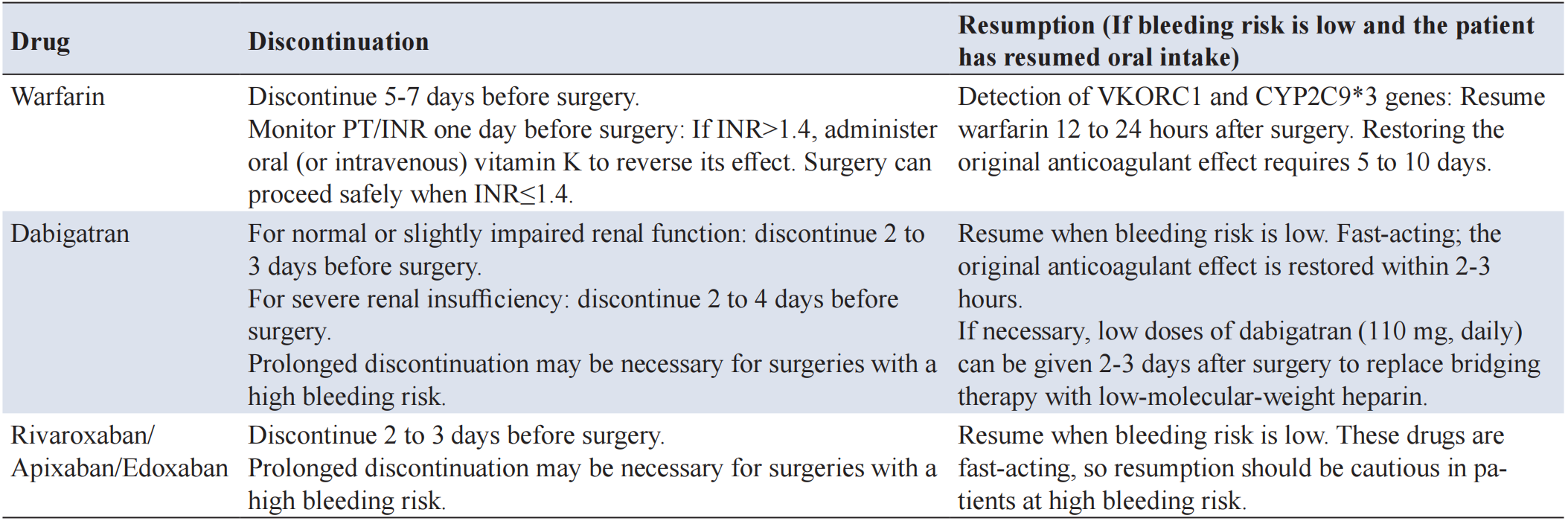
7.1.2.1 Bridging therapy
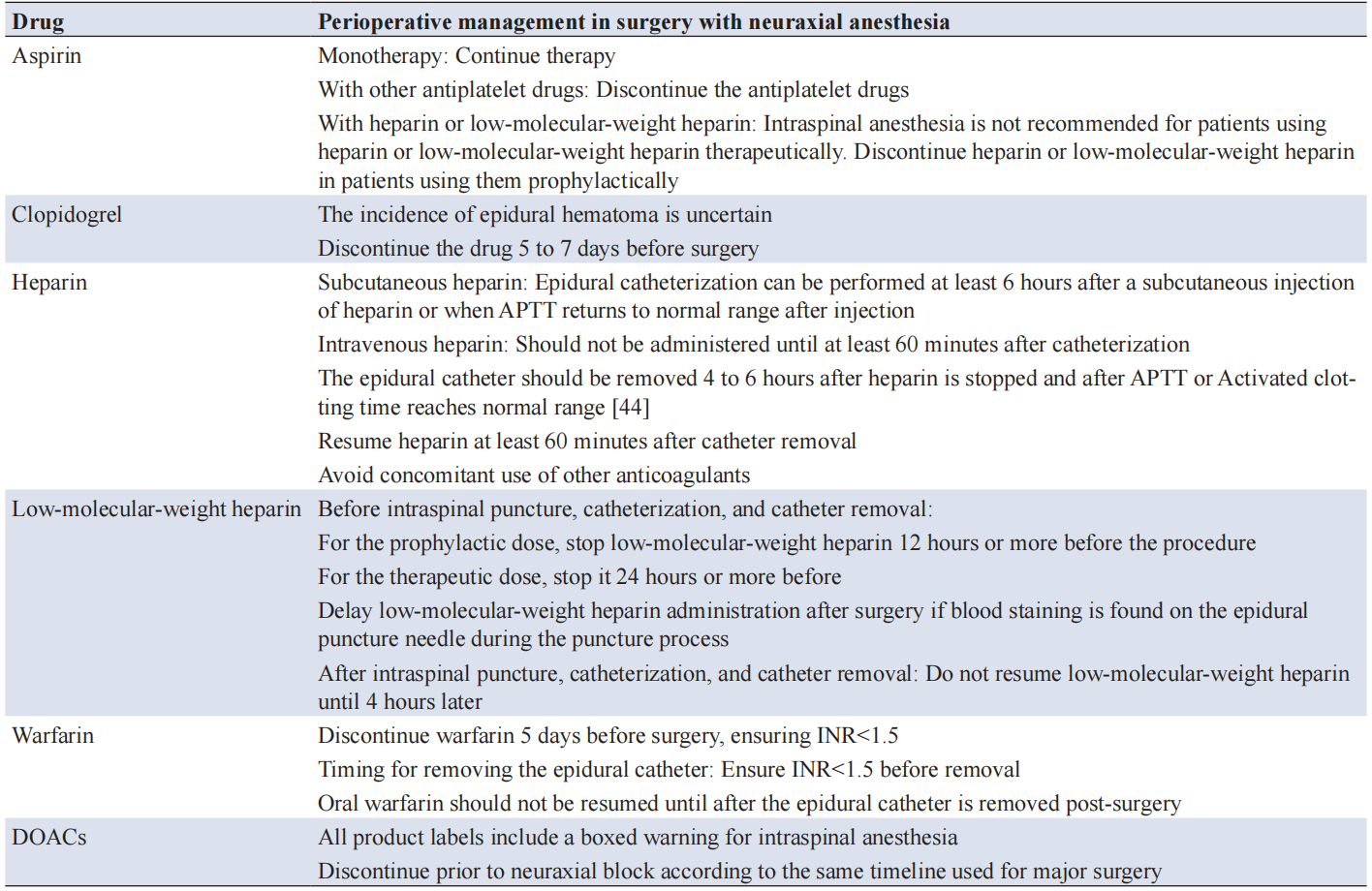
7.1.2.2 The bleeding risk in neuraxial anesthesia
7.2 Patients undergoing cardiovascular surgery
7.2.1 Preoperative preparation
7.2.2 Drugs to reduce bleeding
7.2.2.1 Prophylactic use of antifibrinolytic agents
7.2.2.2 DDAVP
7.2.2.3 FIB concentrate
7.2.2.4 PCC
7.2.2.5 rFVIIa
7.2.3 Other coagulation management measures
7.2.3.1 Heparin anticoagulation and protamine neutralization
7.2.3.2 POCT
7.2.3.3 Autologous plateletpheresis
7.3 Patients undergoing neurosurgical procedures
7.3.1 RBC transfusion
7.3.2 Platelet transfusion
7.3.3 Correction of coagulation disorder
7.3.4 Autologous blood transfusion
7.4 Patients undergoing orthopedic surgery
7.4.1 Trauma orthopedic patients
7.4.2 Antifibrinolytic and anticoagulant treatment for orthopedic surgery patients
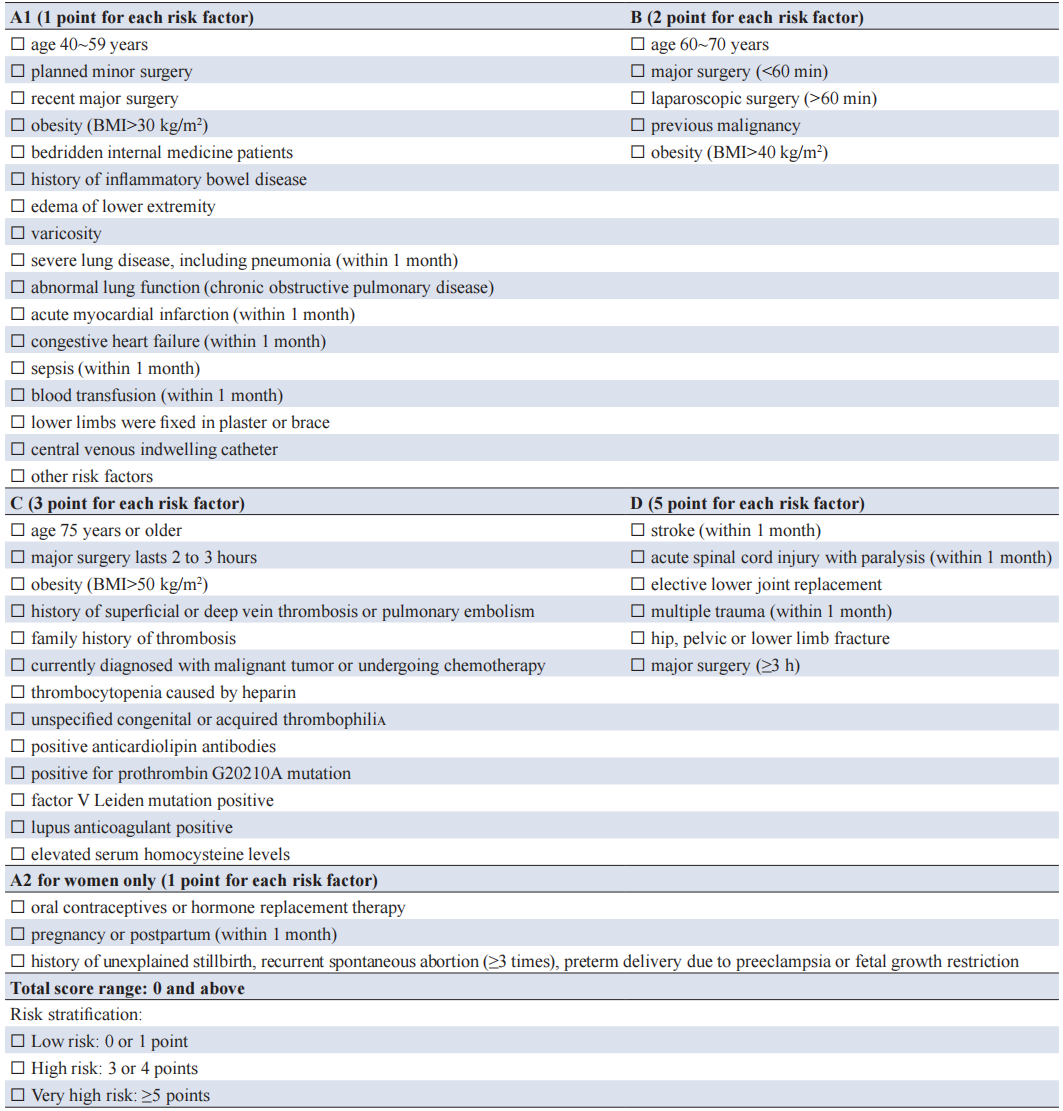
7.5 Patients undergoing obstetric surgery
7.5.1 Assessment of postpartum hemorrhage (PPH)
7.5.2 Coagulation monitoring
7.5.3 Component transfusion
7.5.4 Intraoperative cell salvage
7.5.5 Interventional therapy
7.5.6 Amniotic fluid embolism with disseminated intravascular coagulation (DIC)
7.5.7 TXA
ISSN: 2957-5443
Volume 4, Issue 1
March 2026
Pages: 1-148


 Log In

 On This Page
 CITE
CITE