 Log In
Search




 Open Access
 15101296355@163.comOpen Access15101296355@163.com
Objectives: This study aimed to identify acupoint selection patterns for breast cancer-related pain using the Knowledge Discovery in Databases (KDD) method, construct a data-informed candidate acupoint prescription, and preliminarily evaluate its clinical efficacy when combined with the World Health Organization three-step analgesic ladder. Methods: Databases including China National Knowledge Infrastructure, VIP Information, WanFang, PubMed, and Web of Science were searched from inception to May 2024. An Excel-based dataset was developed to analyze acupoint frequency and meridian attribution. Acupuncture prescriptions for cancer pain without specifying cancer type were retained as potentially informative references for breast cancer-related pain. Sixty eligible patients were randomized into two groups. The control group received standard three-step analgesics, including celecoxib, tramadol sustained-release, or oxycodone sustained-release according to pain severity. The intervention group received the same regimen plus a KDD-derived acupuncture prescription consisting of bilateral Hegu (LI4), Zusanli (ST36), Neiguan (PC6), Taichong (LR3), Sanyinjiao (SP6), and Ashi points. Needles were retained for 30 minutes using balanced stimulation, five sessions per week for three weeks. Outcomes included pain intensity, breakthrough pain frequency, duration of pain relief, Karnofsky Performance Status, sleep quality, depressive symptoms, analgesic efficacy, quality of life, and safety. Results: The KDD-derived candidate prescription was associated with a higher overall response rate than analgesics alone. Patients receiving adjunctive acupuncture showed greater reductions in pain intensity and breakthrough pain episodes, as well as improvements in functional status, sleep quality, and depressive symptoms. Fewer adverse events were reported in the acupuncture group. Conclusions: This study proposes a potential acupoint combination for relieving breast cancer-related pain based on distal meridian points and local tender points. Combined acupuncture and conventional pharmacotherapy may improve analgesic outcomes, quality of life, and psychological status, with a favorable safety profile.
Breast cancer accounts for approximately one-quarter of all female cancers and is responsible for approximately 15% of cancer-related deaths among women worldwide [1, 2]. The global burden of the disease is unevenly distributed: high-income countries often exhibit a pattern of higher incidence but lower mortality, whereas low- and middle-income regions demonstrate the opposite trend [3, 4]. In China, both the incidence and mortality of breast cancer continue to rise, with the highest incidence observed in women aged 45–59 years [5]. Although the implementation of widespread screening and treatment has led to national improvements, with a 5-year survival rate exceeding 70%, less developed regions report survival rates of only approximately 60%, indicating persistent geographic disparities [6]. A substantial proportion of patients with breast cancer experience cancer-related pain, which seriously impairs quality of life (QoL) and therapeutic outcomes, particularly in advanced stages of the disease.
Breast cancer may present as a painless breast lump or with more advanced features, including skin alterations, nipple discharge and retraction, local pain, and axillary lymphadenopathy [2]. The etiology of breast cancer is complex and depends on a combination of factors, including estrogen exposure, genetic predisposition, environmental factors, body constitution type, reproductive history, as well as socioeconomic and psychosocial issues [7, 8]. According to the International Association for the Study of Pain, pain is defined as an unpleasant sensory and emotional experience associated with, or resembling that associated with, actual or potential tissue damage [9]. Pain is among the most common and disabling symptoms in oncology [10, 11]. When poorly managed, pain has a far-reaching impact on physical fitness, emotional well-being, and cognitive function, frequently precipitating anxiety, depression, and significant deterioration in QoL [12, 13]. The sources of breast cancer-related pain can be grouped into five domains: (1) Tumor-related pain: resulting from invasion or direct compression of surrounding tissues, nerves, and vasculature by the primary tumor, or from subclinical inflammatory responses elicited by tumors. (2) Bone metastasis: bone is one of the most common distant metastatic sites in advanced breast cancer, with involvement reported in approximately 65–75% of patients with metastatic disease [14, 15]. (3) Treatment-related pain: arising from surgical trauma, fibrosis or neuropathies caused by radiotherapy, and tissue or nerve injury related to chemotherapy. (4) Pain due to other chronic conditions. (5) Psychosocial aspects: including anticipation of death, surgical trauma, disability, and economic stress; all of these factors increase the perception and intensity of pain.
Tumor-related pain frequently occurs in the context of active treatment and progressive disease. In 1982, the World Health Organization (WHO) established the WHO three-step analgesic ladder, which serves as a guide for treating cancer pain [16]. Optimal pain control usually employs a multimodal strategy incorporating both pharmacological and non-pharmacological components. Pharmacotherapy may consist of non-opioid analgesics (including paracetamol or NSAIDs), adjuvant agents (such as antidepressants, anticonvulsants, topical formulations, and corticosteroids), and, when appropriate, opioid analgesics [17]. For opioid-naïve patients with mild to moderate pain, weak opioids such as codeine, hydrocodone, or tramadol are recommended, with no meaningful differences in analgesic efficacy reported among these agents [18, 19]. These agents are often used in combination with paracetamol or other non-opioid analgesics, including NSAIDs. When pain becomes moderate to severe, strong opioids like morphine, oxycodone or hydromorphone are recommended. Management should start with low doses and titration to an optimum between satisfactory analgesia and acceptable side effects [20]. The evolution of neuropathic pain classification has contributed to a paradigm shift in symptom management. In modern oncology, the WHO three-step analgesic ladder, including NSAIDs, opioids, and adjuvant analgesics such as anticonvulsants or antidepressants, remains the main pharmacotherapeutic approach for cancer pain relief.
However, pharmacological management of cancer pain also has important limitations. NSAIDs are associated with gastrointestinal toxicity, whereas opioids may cause sedation, dependence, and respiratory depression, which can significantly affect the QoL of patients with advanced cancer. Pharmacological treatment nevertheless remains the foundation of cancer pain management and may include non-opioid analgesics (such as NSAIDs or paracetamol), opioid analgesics, and adjuvant agents (including antidepressants, anticonvulsants, topical agents, and corticosteroids). However, symptom control may remain inadequate in some patients, and treatment is often limited by adverse effects [17]. Since the pain of cancer is multidimensional, covering physical, psychosocial and spiritual domains, it should also be addressed in an integrated way beyond pharmacological paradigms. Drug based approaches have to date received the most attention yet there is growing evidence suggesting that multi-domain non-pharmacological interventions directed at body, cognitive, psychosocial and spiritual domains are important adjuncts [21-23]. Such approaches include radiotherapy, transcutaneous electrical nerve stimulation (TENS), mind-body therapies, behavioural and exercise-based interventions, physical modalities, surgical procedures, and acupuncture [10]. Chinese herbal formulas are commonly used in cancer pain management and have provided clinical benefits based on traditional Chinese internal treatments, but many patients do not tolerate the oral administration of highly concentrated herbal decoctions very well due to their high dosage or bitter taste and may also harbor concerns about exacerbating gastrointestinal toxicity. Conversely, studies are increasingly supporting acupuncture as a safe and effective therapeutic modality in the management of cancer pain, with immediate effects, low toxicities, and high acceptability among patients [24]. Acupuncture, as a unique part of Chinese medicine, is considered to have therapeutic effect through adjusting meridians and regulating Qi and blood. Acupuncture has been used for pain for centuries and is safe, non-pharmacological and has practically no side effects. It has since gained a substantial evidence base supporting its role in the management of pain associated with cancer.
The present study addresses the limited research and lack of standardized protocols for acupuncture in managing breast cancer–related pain. Applying a Knowledge Discovery in Databases (KDD) method, literature-derived acupuncture prescription data were systematically analyzed to explore acupoint selection patterns and generate a data-informed candidate acupuncture prescription. This candidate prescription was then preliminarily evaluated in a clinical setting for its analgesic effect and broader therapeutic outcomes. The integration of the KDD-derived acupuncture prescription with the WHO three-step analgesic ladder may provide a clinically relevant adjuvant approach for breast cancer-related pain management.
2.1 Literature review
2.1.1 Literature sources and search strategy
From database inception to May 2024, a systematic search was performed across CNKI, VIP, WanFang, PubMed and Web of Science for clinical studies evaluating acupuncture for breast cancer-related pain. A combination of subject terms and free-text keywords was used for searches. The search strategy for Chinese databases was: (“Acupuncture” OR “Needling” OR “Electroacupuncture” OR “Needle”) AND (“Cancer pain” OR “Malignant pain” OR “Breast cancer-related pain”). The English search strategy was: (“cancer pain” [Title/Abstract] OR “breast cancer-related pain” [Title/Abstract]) AND (“acupuncture” [Title/Abstract] OR “needle” [Title/Abstract] OR “electroacupuncture” [Title/Abstract] OR “acupuncture therapy” [Title/Abstract]).
2.1.2 Inclusion criteria for the literature
Studies were included if they met the following criteria:
(1) Clinical research examining acupuncture for breast cancer-related pain or cancer pain without a specific type of cancer (Studies focusing on cancer-induced pain but without specifying the type were retained due to the practical applicability of identifying frequently used acupuncture protocols for managing cancer pain that could potentially provide a reference for treating breast cancer-related pain).
(2) Participants with cancer-related pain, including breast cancer patients specifically reported.
(3) Acupuncture as the primary intervention or combined with others (e.g., pharmacological treatment).
(4) Any pain-related outcome measure including scores of the intensity of pain.
(5) Relevant dissertations or peer-reviewed articles where only one dataset with complete and usable information was found.
2.1.3 Exclusion criteria for the literature
Studies were excluded if they fulfilled any of the following criteria:
(1) Review articles, case reports, animal studies, expert opinions, or proceedings.
(2) Studies whose interventions were primarily based on scalp acupuncture, wrist–ankle acupuncture, or three-edged needle techniques.
(3) Inappropriate or incomparable intervention designs across treatment and control groups.
(4) Case reports or studies that did not include a well-defined acupuncture prescription.
(5) Articles for which the full text was not accessible.
2.1.4 Data processing
A dedicated database was constructed in Excel 2021 to compile acupuncture prescriptions for breast cancer-related pain. Acupoint extraction followed these principles: If a study reported common acupoints for multiple types of cancer pain and also listed adjunct points specific to breast cancer-related pain, both primary and adjunct points were included; If a study provided a prescription for cancer pain without specifying the cancer type, only the primary acupoints were extracted and used as potentially informative references rather than breast cancer-specific evidence.
Acupoint names were standardised according to Nomenclature and Location of Acupoints (GB/T 12346–2006); for example, “Renzhong” was standardised to “Shuigou (GV26)”.
Excel 2021 was used to conduct descriptive analyses of the frequency analysis of acupoints, meridian distribution, anatomical distribution, and special acupoint types. The Apriori algorithm in SPSS Modeler 18.0 was used to carry out association rule analysis of acupoint combinations. Experimental data were analyzed and clustered using SPSS 27.0 to perform high-frequency acupoint cluster analysis and generate dendrograms.
Caution should be exercised in interpreting these acupoint patterns, as the KDD literature mining process could be affected by incomplete coverage of databases, variations in reporting, and possible publication bias.
2.2 Clinical data collection
2.2.1 Clinical case sources
Patients with breast cancer-related pain who met the inclusion criteria and were treated in the inpatient or outpatient oncology departments of Gansu University of Chinese Medicine between June 2024 and February 2025 were enrolled in this study.
2.2.2 Diagnostic criteria
(1) Western medicine diagnostic criteria: The diagnosis of breast cancer was based on medical history, physical examination, imaging studies, and pathological assessment, with definitive confirmation relying on histopathology. Diagnostic criteria followed the Guidelines for the Diagnosis and Treatment of Breast Cancer (2022 edition). Pain assessment was conducted in accordance with the Guidelines for the Diagnosis and Management of Cancer Pain (2018 edition).
(2) Traditional Chinese Medicine (TCM) diagnostic criteria: TCM diagnosis was based on the criteria for Ruyan (“breast rock”) as outlined in the Traditional Chinese Surgery textbook of the National TCM Higher Education “13th Five-Year Plan” series.
2.2.3 Inclusion criteria for patients
Patients were eligible for inclusion if they met the following conditions:
(1) Histopathologically confirmed diagnosis of breast cancer.
(2) Aged 30–70 years with an expected survival of more than 3 months.
(3) Karnofsky Performance Status (KPS) score >30.
(4) Receiving and consistently adhering to WHO three-step analgesic ladder during the study period.
(5) Intact verbal communication ability and capacity to complete symptom and quality-of-life assessments.
(6) Willingness to participate and provision of written informed consent.
2.2.4 Exclusion criteria for patients
Patients were excluded if they met any of the following conditions:
(1) Hypoxic respiratory depression or severe hepatic or renal insufficiency.
(2) History of syncope with needling or fear of acupuncture.
(3) Pregnancy or breastfeeding.
(4) History of breast surgery within the past month.
(5) Severe infection, ulcerated skin lesions, or communicable diseases.
(6) Long-term use of psychotropic medications.
2.2.5 Criteria for withdrawal and dropout
Patients were withdrawn or considered dropouts under any of the following conditions:
(1) Occurrence of adverse reactions during the study leading to refusal to continue treatment.
(2) Poor adherence or inability to complete the prescribed treatment course.
(3) Clinical deterioration during the intervention that rendered continuation inappropriate.
(4) Inability to continue treatment due to external or unavoidable circumstances (e.g., social or environmental factors).
2.3 Research methods
2.3.1 Sample size estimation
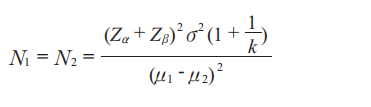
Sample size was calculated using the formula for comparing two independent means with equal group sizes. The Numerical Rating Scale (NRS) was selected as the primary outcome. According to published data, the mean NRS reduction after 3 weeks was 3.30 in the control group and 4.11 in the intervention group, with a standard deviation σ=1.05. With a two-sided α=0.05, β=0.20, and a group allocation ratio K=1, the required sample size was determined using the standard formula. To account for potential attrition and withdrawals, the calculated sample size was increased by 10%, resulting in a final planned enrolment of 60 participants.
The sample size formula was as follows:
2.3.2 Randomization and control
(1) Randomization: Sixty eligible participants were randomly assigned to either the intervention or control group. Sixty opaque, sequentially numbered envelopes were prepared corresponding to the order in which participants were enrolled. Each envelope contained a pre-generated group assignment card, and envelopes were randomly categorized into the treatment or control arm. Participants were allocated according to the group designation within their corresponding envelope. The randomisation sequence was generated using a computer-based random number table by an independent researcher.
(2) Control: Participants were divided into two study groups. Patients in the intervention group received acupuncture combined with the WHO three-step analgesic ladder, whereas those in the control group were managed with the WHO three-step analgesic regimen alone. After treatment, within-group and between-group comparisons were carried out to evaluate the efficacy and safety of acupuncture against breast cancer-related pain.
2.3.3 Treatment protocols
(1) Basic treatment: Both the intervention and control groups received standard analgesic therapy based on the WHO three-step analgesic ladder. Analgesics were selected according to the patient’s baseline pain intensity: Patients with mild pain (NRS≤3) received oral celecoxib 200 mg twice daily (Approval No. H20193414, Jiangsu Chiatai Qingjiang Pharmaceutical Co., Ltd.); those with moderate pain (4≤NRS≤6) were given oral tramadol hydrochloride sustained-release tablets 100 mg twice daily (Approval No. H19980214, Mundipharma (China) Pharmaceutical Co., Ltd.); and patients with severe pain (NRS≥7) took oral oxycodone hydrochloride sustained-release tablets 20 mg twice daily (Approval No. H20140314, Mundipharma (China) Pharmaceutical Co., Ltd.). Appropriate analgesics were initially selected according to the patient’s pain severity, and doses were adjusted based on clinical response and tolerability.
(2) Treatment groups: Patients in the control group were treated with the WHO three-step analgesic ladder alone, whereas those in the intervention group received conventional WHO-recommended three-step analgesia combined with acupuncture; the acupoint prescription of acupuncture was formulated based on data mining of published literatures.
(3) Treatment duration and frequency: The study comprised three treatment cycles. Each cycle consisted of five acupuncture sessions per week followed by a two-day rest period, for a total of three consecutive cycles.
(4) Acupoint selection, localization, and needling procedure (intervention group): Acupuncture was performed at bilateral Hegu (LI4), Zusanli (ST36), Neiguan (PC6), Taichong (LR3), Sanyinjiao (SP6), as well as local Ashi points, with all acupoint locations defined in accordance with the national standard Nomenclature and Location of Acupoints (GB/T 12346-2006). Disposable sterile Huacheng filiform needles (manufacturer: Keyuanda Medical Supplies Co., Ltd.; Registration No. 20172201110; Hebei Provincial Medical Products Administration Medical Device Production License No. 20220039), An’erdian III skin disinfectant and disposable sterile cotton swabs were adopted for the acupuncture procedure. All patients were maintained in the supine position with their chests and limbs adequately exposed prior to acupuncture intervention. The operator’s hands were disinfected with 75% medical alcohol, followed by routine disinfection of each acupoint area using povidone-iodine swabs. Disposable sterile Huacheng filiform acupuncture needles (0.25 mm×25 mm or 0.25 mm×40 mm) were used for needling. All acupoints were treated with perpendicular insertion, with individualized depths as follows: 0.5–1.0 cun for LI4, 1.0–1.5 cun for ST36, 0.5–1.0 cun for PC6, 0.5–0.8 cun for LR3, and 1.0–1.5 cun for SP6. The insertion depth of Ashi points was adjusted based on local anatomical conditions, while tumor-involved tissues were strictly avoided during the procedure. Rapid needle insertion was performed using the three-finger needling technique. Standard lifting-thrusting and twisting-rotating manipulations were delivered to elicit the Deqi sensation, and all needles were retained for 30 minutes after manipulation completion.
2.3.4 Quality control
Case collection was conducted in strict accordance with the predefined inclusion and exclusion criteria. Acupuncture procedures were performed by operators who received standardized training and supervised instruction to ensure consistency and technical proficiency. Outcome assessments were conducted by two trained researchers to minimize measurement variability.
2.3.5 Ethical approval
This study was reviewed and approved by the Ethics Committee of the Affiliated Hospital of Gansu University of Chinese Medicine (Approval No. [2024]127).
2.3.6 Outcome measures
(1) Numerical Rating Scale (NRS): Pain intensity was recorded at baseline and after three treatment cycles using the NRS. To minimize variability, all assessments were performed by the same physician.
(2) Frequency of breakthrough cancer pain episodes (BTcP) within 24 h: Evaluated according to the Expert Consensus on Cancer Breakthrough Pain (2019 edition). The same physician documented the number of episodes before treatment and after three cycles to capture dynamic changes in pain.
(3) Duration of pain relief: Used to assess the effectiveness of the treatment regimen. The duration of pain relief following analgesic treatment, defined as the patient-reported time interval during which noticeable pain reduction was maintained, was recorded by the same physician at baseline and after three treatment cycles.
(4) Karnofsky Performance Status (KPS): The KPS scale was used to evaluate functional status, with higher scores indicating better overall health. Because of the subjective nature of this measure, the same physician assessed KPS before and after the intervention.
(5) Pittsburgh Sleep Quality Index (PSQI): A self-administered questionnaire assessing sleep quality over the preceding month. Scores were collected by the same physician at baseline and following three treatment cycles. Given that the PSQI assesses sleep quality over the previous month, the post-treatment PSQI collected after the 3-week intervention mainly reflected sleep during the intervention period but also partially overlapped with the pre-intervention baseline window.
(6) Self-Rating Depression Scale (SDS): Based on the Chinese Guideline for Prevention and Treatment of Depressive Disorders (2nd edition), the SDS is a 20-item self-report tool assessing emotional and somatic symptoms of depression. Higher scores indicate greater depressive severity. The same physician recorded scores before and after three treatment cycles.
2.3.7 Criteria for efficacy assessment
Therapeutic efficacy was evaluated according to the degree of pain relief, with the efficacy index defined as the percentage reduction in NRS score from baseline to post-treatment (see Table 1).


Note: The efficacy index is calculated as the percentage reduction in NRS score from baseline to post-treatment. NRS, Numerical Rating Scale.
2.3.8 Adverse event monitoring
Adverse events related to acupuncture-such as needling discomfort, vasovagal reactions, bleeding, subcutaneous hematoma, local erythema, or blistering at acupoint sites-were recorded. Patients were also monitored for potential adverse reactions to WHO three-step analgesics ladder, including constipation, drowsiness, dizziness, dry mouth, and nausea or vomiting. All events were documented, and appropriate management measures were implemented as needed.
2.3.9 Statistical analysis
Statistical analyses were performed using SPSS version 27.0. For continuous variables that met assumptions of normality and homogeneity of variance, independent-sample t tests were used for between-group comparisons, and paired t tests for within-group comparisons. Normality was assessed separately for each variable at each time point using appropriate tests, and the choice of parametric or non-parametric tests was made accordingly. When variances were unequal, adjusted t tests were applied, and data were expressed as mean ± standard deviation x±s. For non-normally distributed data, outcomes were reported as median and interquartile range [M (P25, P75)]. Categorical variables were analysed using the chi-square test or Fisher’s exact test, as appropriate, and ordinal data were assessed using rank-sum tests. Differences were considered statistically significant at P<0.05 and highly significant at P<0.01. The primary analysis was conducted on participants who completed the study (per-protocol population). Given the exploratory nature of this study and the relatively small sample size, no formal adjustment for multiple comparisons was performed.
3.1 Literature screening
A total of 161 studies met the predefined inclusion and exclusion criteria, yielding 161 acupuncture prescriptions encompassing 92 distinct acupoints and 614 cumulative usages, excluding Ashi points. Among all acupoints, including Ashi points, 28 appeared ≥5 times. Among them, the top ten acupoints were Hegu (LI4): 92 times; Zusanli (ST36): 83 times; Ashi points: 65 times; Neiguan (PC6): 63 times; Taichong (LR3): 49 times; Sanyinjiao (SP6): 47 times; Quchi (LI11): 16 times; Baihui (DU20): 12 times; Guanyuan (RN4): 10 times and Qihai (RN6): 9 times (Table 2). Seventy-seven special-acupoint category assignments were identified in 161 prescriptions, with a total usage frequency of 805 (Table 3). The Five-Shu Stream points, Yuan-Source points and Crossing points were the three most commonly used categories which appeared together 452 times (56.16%). Among these categories, Crossing points, represented mainly by SP6, accounted for a large proportion, while Five-Shu Stream points were mainly represented by ST36 and LR3.
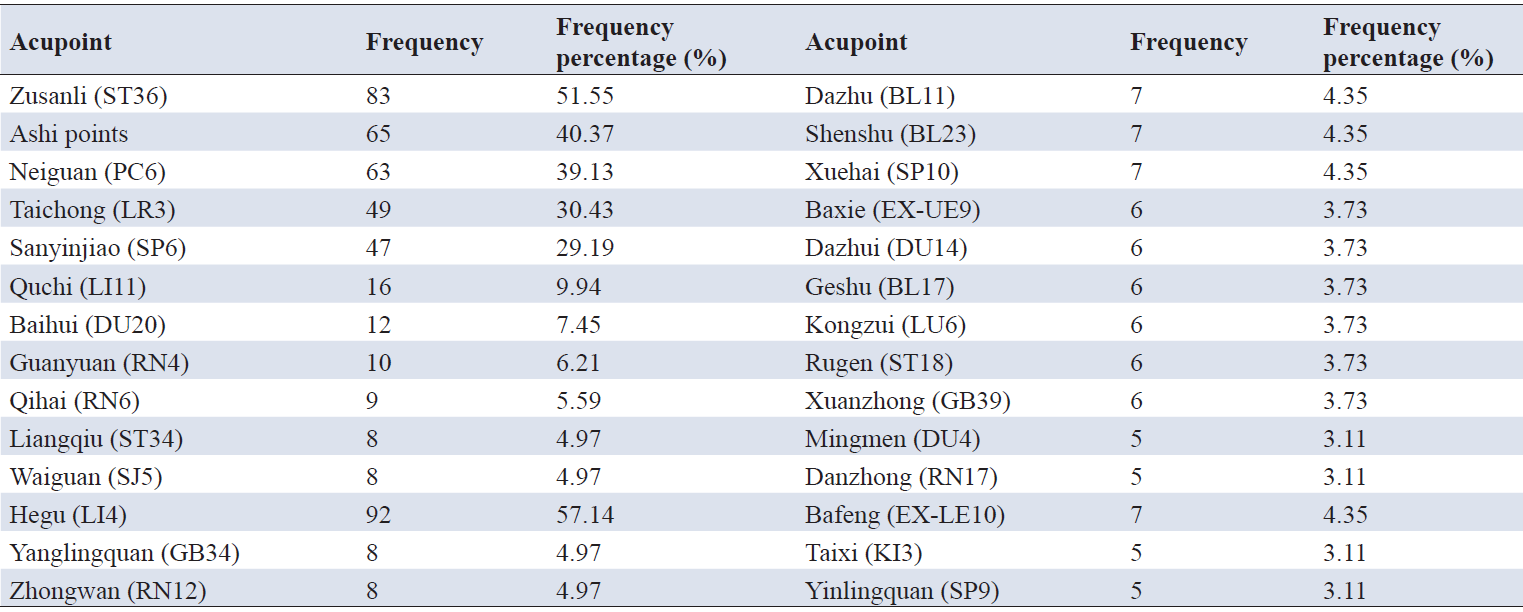
Note: Frequency percentage is calculated as frequency/number of prescriptions ×100%. Acupoint codes follow international standard nomenclature. BL, Bladder meridian; DU, Governor Vessel; EX, Extra points; GB, Gallbladder meridian; HT, Heart meridian; KI, Kidney meridian; LI, Large Intestine meridian; LR, Liver meridian; LU, Lung meridian; PC, Pericardium meridian; RN, Conception Vessel; SI, Small Intestine meridian; SJ, Sanjiao meridian; SP, Spleen meridian; ST, Stomach meridian.
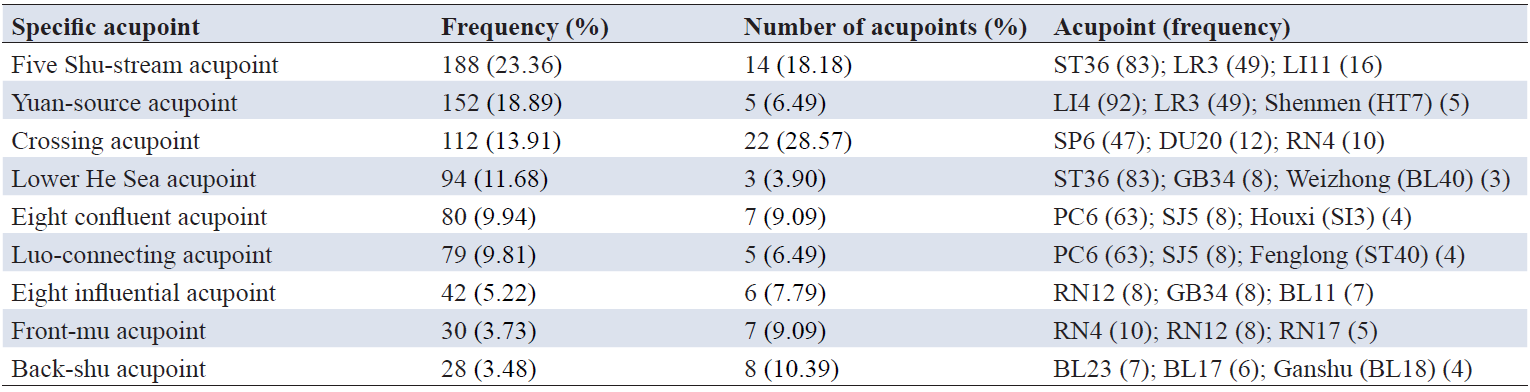
Note: The “Acupoint (frequency)” column lists the top three acupoints by frequency within each category. The percentage in the “Frequency (%)”column was calculated based on the total frequency of special acupoint usage (n=805), whereas the percentage in the “Number of acupoints (%)”column was calculated based on the total number of special acupoints identified (n=77).
Apart from Ashi points, the acupoints were allocated across 14 meridians and extra-point categories, as shown in Table 4. The ST, LI and PC meridians were the most commonly used (287 uses: 46.90%). The largest numbers of distinct acupoints were found in the Bladder (BL), ST, and Governor Vessel (DU) meridians, whereas the Heart (HT) and Small Intestine (SI) meridians were the least represented (Table 4).
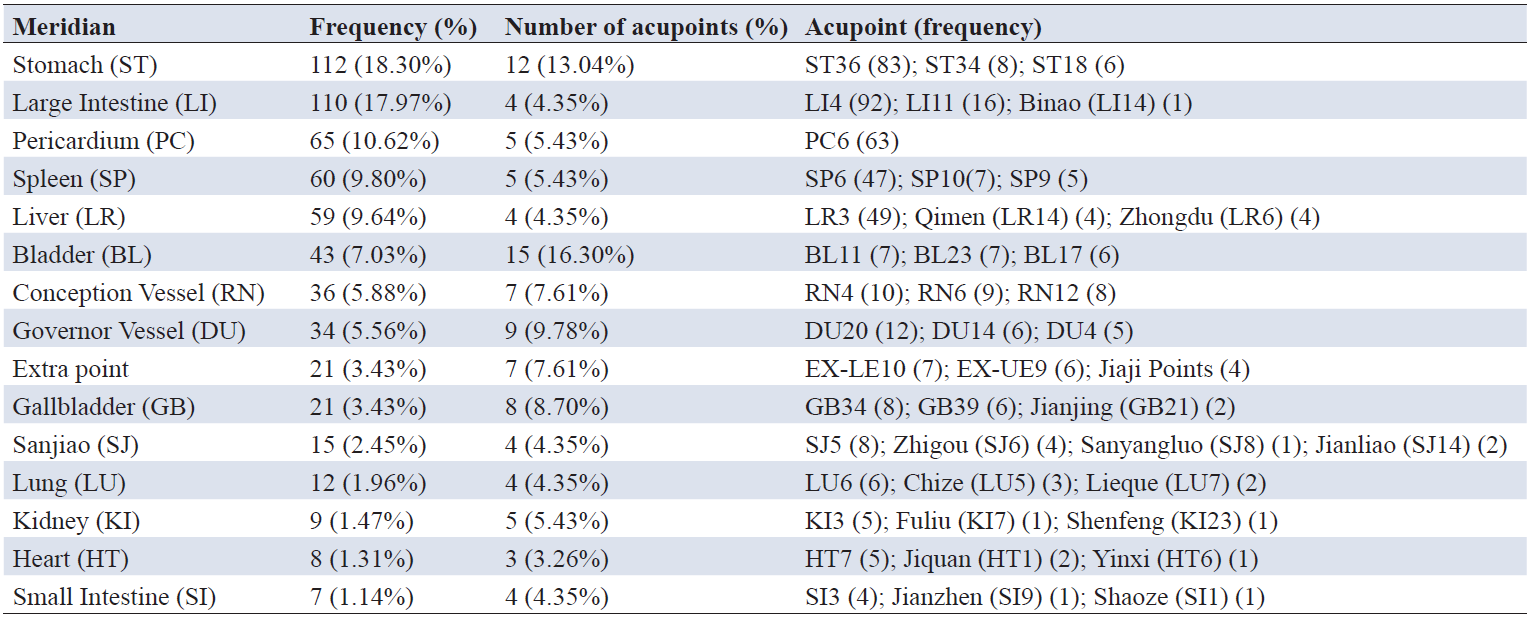
Note: The “Acupoint (frequency)” column lists the three most frequently used acupoints for each meridian rather than all acupoints identified in the prescriptions.
Regarding anatomical distribution, acupoints located on the upper and lower limbs were most frequently used, involving 45 acupoints with a combined frequency of 471 (76.71%). This was followed by lumbar-back and abdominal regions, comprising 28 acupoints with a total of 85 uses (13.84%) (Table 5).
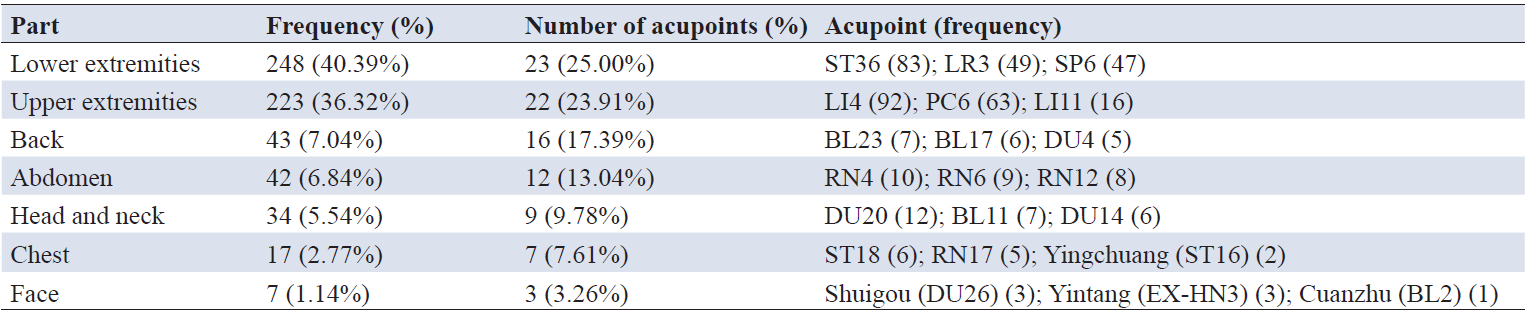
Note: The ‘acupoint (frequency)’ column lists the top three acupoints by frequency for each anatomical region. The percentage in the ‘Number of acupoints (%)’ column was calculated based on the total number of acupoints identified (n=92).
Association rule mining in SPSS Modeler 18.0 was performed using a minimum support of 10%, minimum confidence of 80%, and a maximum of two antecedent acupoints. Ten acupoint combinations were identified. The combination with the highest support was LI4-LR3, followed by ST36-SP6 and LI4-SP6 (Table 6). In association rule mining, the antecedent indicates preceding acupoint(s), while the consequent identifies the co-occurring acupoint. A complex-network relationship diagram is shown in Figure 1.
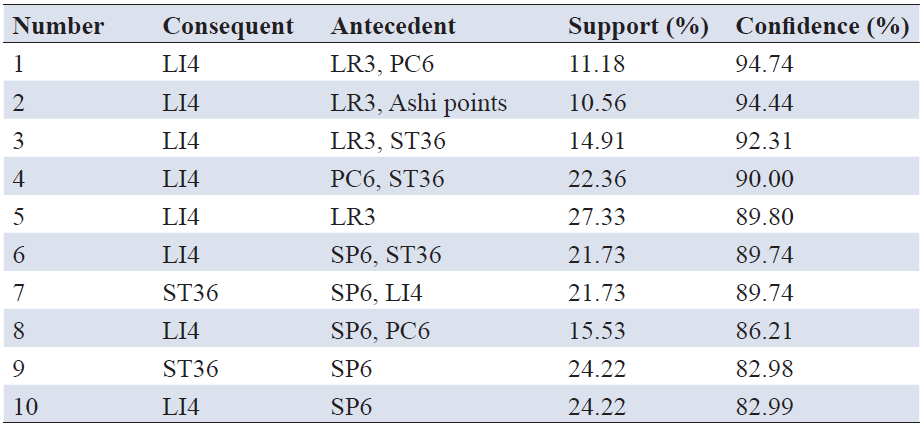
Note: Association rules were generated using the Apriori algorithm with minimum support of 10% and minimum confidence of 80%. “Antecedent” indicates the preceding acupoint(s), and “Consequent” indicates the co-occurring acupoint.
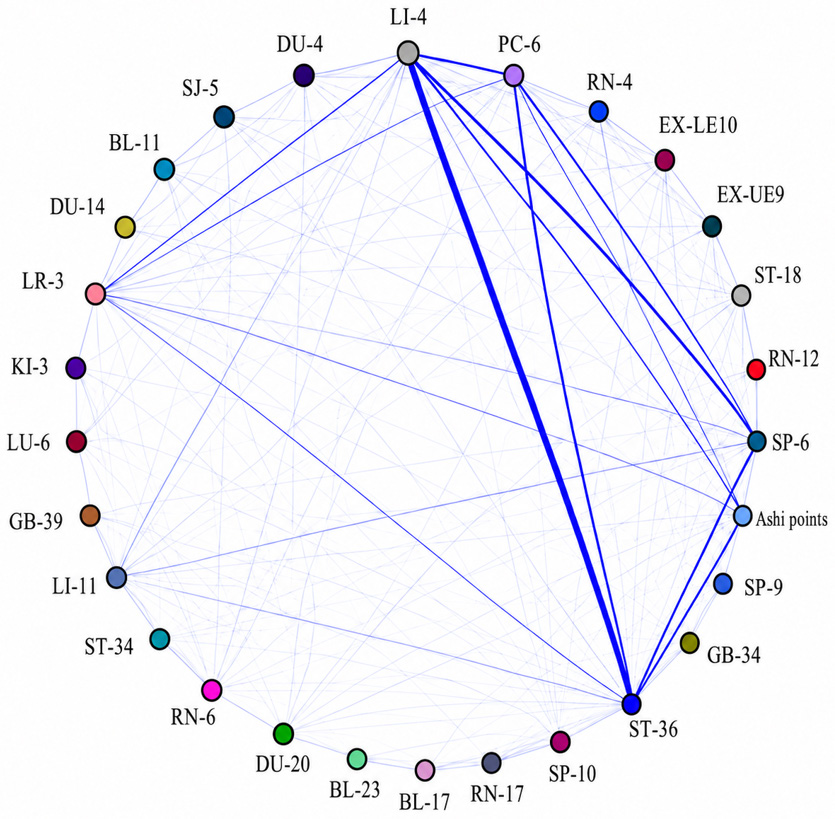
Figure 1. Complex network of acupoint co-occurrence based on association rule mining. Nodes represent acupoints and edges indicate co-occurrence relationships; Association rules were generated with a minimum support of 10% and a minimum confidence of 80%.
Cluster analysis was conducted on acupoints used ≥5 times using SPSS 27.0. The hierarchical dendrogram (Figure 2) and cluster membership plot (Figure 3) indicated that 28 acupoints clustered into three major groups:
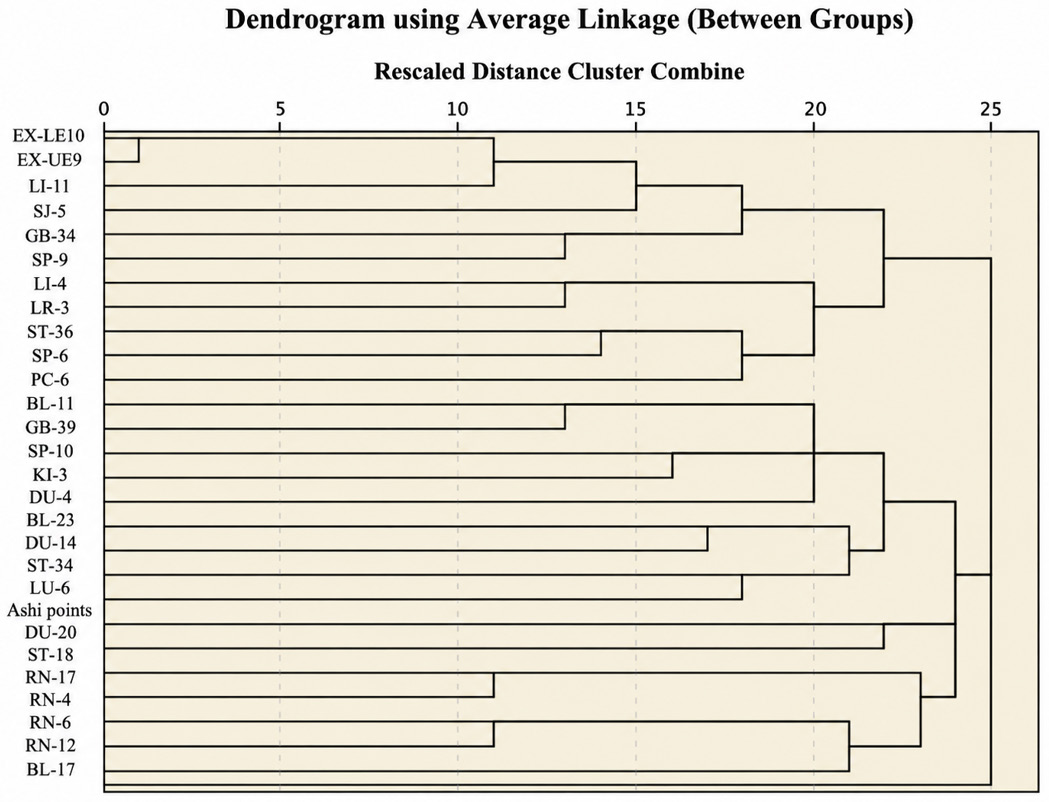
Figure 2. Hierarchical clustering dendrogram of high-frequency acupoints (≥5 occurrences). The dendrogram illustrates similarity relationships among frequently used acupoints; a lower linkage height indicates greater similarity.
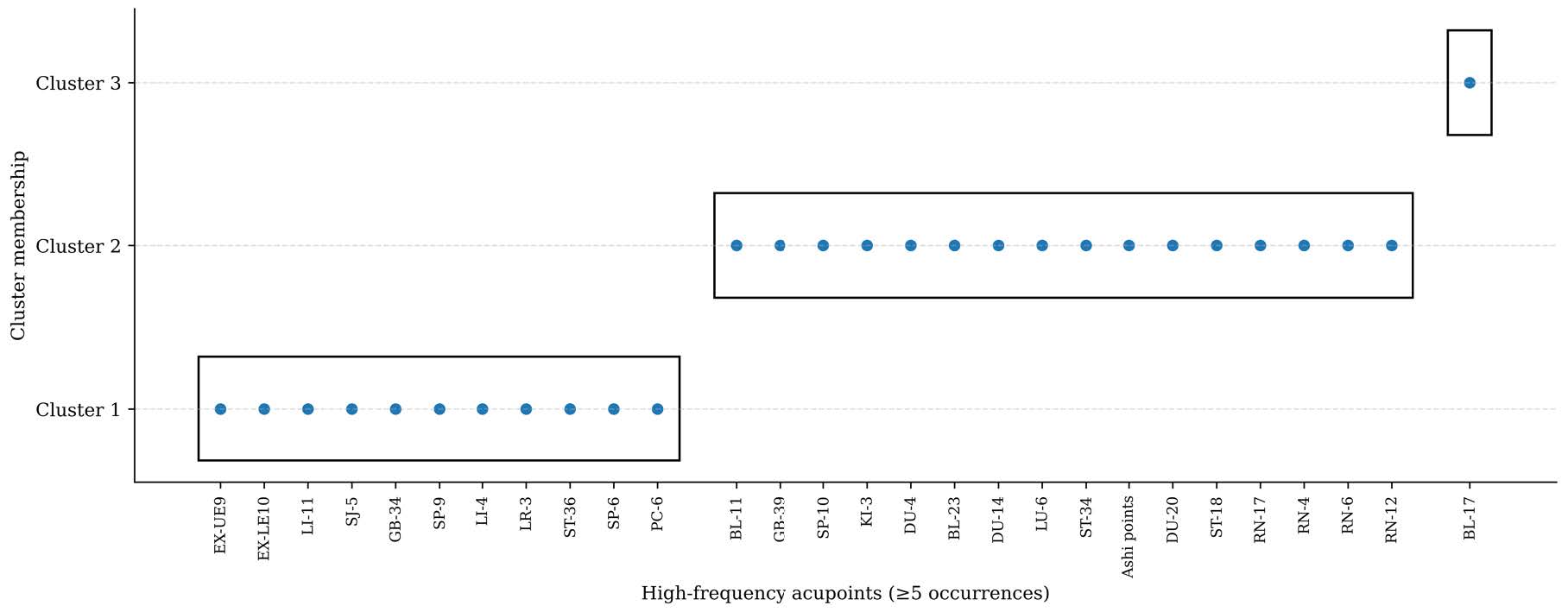
Figure 3. Cluster membership plot of hierarchical clustering results for high-frequency acupoints (≥5 occurrences). The plot summarizes the three-cluster membership pattern identified by hierarchical clustering and corresponds to the cluster groups described in the main text.
Cluster 1: EX-UE9, EX-LE10, LI11, SJ5, GB34, SP9, LI4, LR3, ST36, SP6, PC6
Cluster 2: BL11, GB39, SP10, KI3, DU4, BL23, DU14, LU6, ST34, Ashi points, DU20, ST18, RN17, RN4, RN6, RN12
Cluster 3: BL17
These findings suggest that acupoint selection for breast cancer-related pain may exhibit identifiable patterns, with LI4, ST36, PC6, LR3, and SP6 emerging as frequently used candidate core points and limb acupoints showing predominance across included prescriptions.
3.2 Clinical study findings
A total of 60 patients meeting the inclusion and exclusion criteria were enrolled, with 30 allocated to the intervention group and 30 to the control group. During treatment, two patients in the control group withdrew due to disease progression that prevented completion of follow-up assessments, resulting in 30 evaluable cases in the intervention group and 28 in the control group for per-protocol analysis. Baseline characteristics, including age, disease duration and NRS scores, were normally distributed and showed homogeneity of variance. Independent-sample t tests demonstrated no significant between-group differences (P>0.05), indicating good baseline comparability. Pain locations-distributed across the chest, abdomen, head, lumbar region, shoulder–back region and limbs-also showed no significant group differences (X2 test, P>0.05; Table 7). Initial analgesic use, based on the WHO three-step analgesic ladder, was similarly comparable between groups (X2 test, P>0.05; Table 8).

Note: Data are presented as number of cases (n). Between-group comparisons showed no significant difference (χ2=1.055, P=0.983). Statistical analyses were performed using the chi-square test or Fisher’s exact test, as appropriate. A two-sided P<0.05 was considered statistically significant. χ2, chi-square test.

Note: Data are presented as n (%). Between-group comparisons were performed using the chi-square test (χ2). A two-sided P<0.05 was considered statistically significant.
Both groups exhibited significant reductions in NRS scores following treatment, with the intervention group showing a greater mean reduction (3.37±1.27) than the control group (2.18±0.90). Although baseline NRS scores did not differ significantly between groups, post-treatment values were significantly lower in the intervention group (Mann-Whitney U test, P<0.05), and the between-group difference in NRS change scores was also statistically significant (P<0.05; Table 9), suggesting better short-term analgesic outcomes with adjunctive acupuncture.
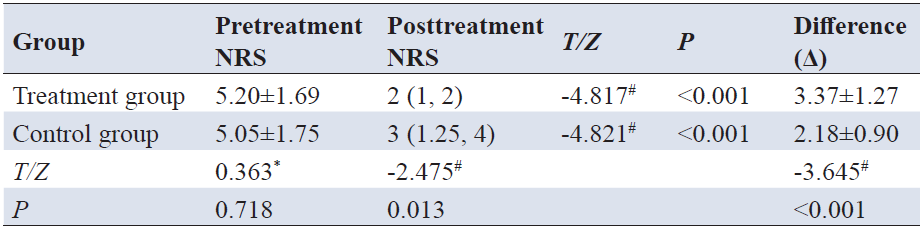
Note: Data are presented as mean ± SD or median (P25, P75), as appropriate. Δ indicates the change from baseline to post-treatment and is presented as mean ± SD for descriptive purposes. # indicates Wilcoxon signed-rank test or Mann–Whitney U test, as appropriate; * indicates Student’s t test. A two-sided P<0.05 was considered statistically significant. SD, standard deviation; Δ, change from baseline.
Likewise, the frequency of 24-hour breakthrough pain episodes decreased significantly within both groups (intervention: Z=-4.434, P<0.001; control: Z=-4.350, P<0.001). Baseline values were similar but post-treatment measures were significantly lower in the intervention group (P<0.05; Table 10). The duration of pain relief was significantly prolonged in both groups post-treatment, with the intervention group demonstrating a significantly longer duration compared to the control group (Mann-Whitney U test, P<0.05; Table 11).
Table 10. Comparison of 24-hour breakthrough pain episodes before and after treatment between the two groups [M (P25, P75)]
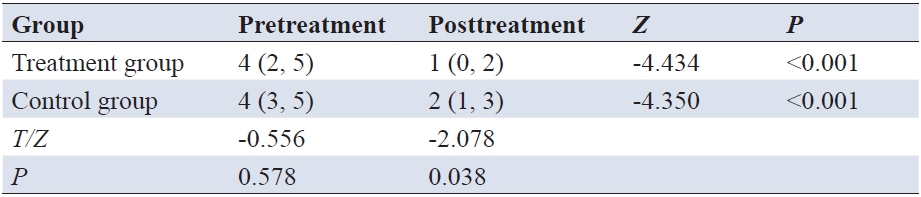
Note: Data are presented as median (P25, P75). Within-group comparisons were performed using Wilcoxon signed-rank test; between-group comparisons were performed using Mann–Whitney U test, as appropriate. A two-sided P<0.05 was considered statistically significant. BTcP, breakthrough cancer pain.
Table 11. Comparison of pain-relief duration before and after treatment between the two groups
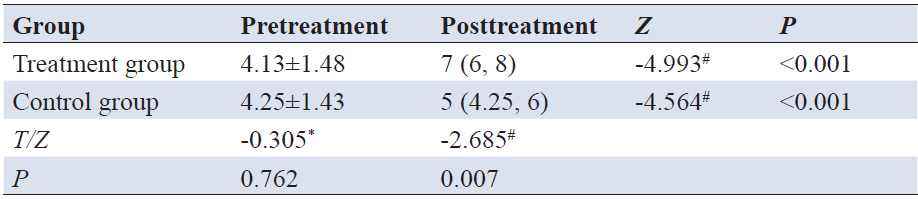
Note: Data are presented as mean ± SD or median (P25, P75), as appropriate. # indicates Wilcoxon signed-rank test or Mann–Whitney U test, as appropriate; * indicates Student’s t test. A two-sided P<0.05 was considered statistically significant.
Sleep quality, assessed by PSQI, improved significantly in both groups. The control group showed significant improvement using paired t testing (P<0.001), whereas the intervention group showed significant improvement using rank-sum testing (P<0.001). Baseline PSQI scores were comparable (P>0.05), but post-treatment scores were significantly lower in the intervention group (Mann–Whitney U test, Z=-3.520, P<0.001; Table 12). Both groups also showed significant reductions in SDS scores (intervention: Z=-4.791; control: Z=-4.641; both P<0.05), with post-treatment SDS values significantly lower in the intervention group (rank-sum test, P<0.05; Table 13).
Table 12. Comparison of PSQI scores before and after treatment between the two groups
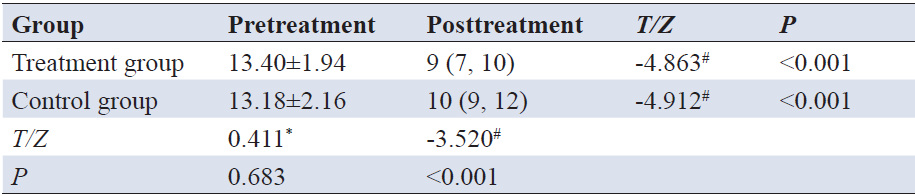
Note: Data are presented as mean ± SD or median (P25, P75), as appropriate. # indicates Wilcoxon signed-rank test or Mann–Whitney U test, as appropriate; * indicates Student’s t test. A two-sided P<0.05 was considered statistically significant. PSQI, Pittsburgh Sleep Quality Index.
Table 13. Comparison of SDS scores before and after treatment between the two groups
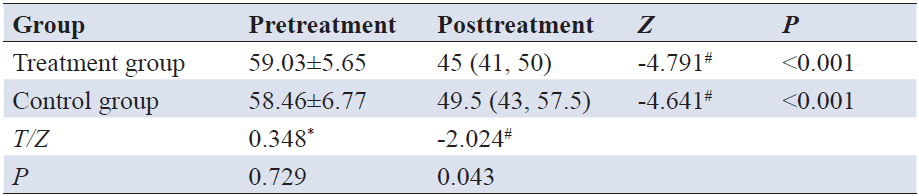
Note: Data are presented as mean ± SD or median (P25, P75), as appropriate. # indicates rank-sum test; * indicates Student’s t test. A two-sided P<0.05 was considered statistically significant. SDS, Self-Rating Depression Scale.
KPS scores increased significantly in both groups (intervention: P<0.01; control: P<0.05). While baseline values did not differ significantly, post-treatment KPS scores were significantly higher in the intervention group (rank-sum test, P<0.05; Table 14), indicating greater improvement in functional status and quality of life. After three treatment cycles, the total effective rate was 86.67% in the intervention group and 71.43% in the control group. Comparison of the ordinal efficacy categories showed a significant difference between groups (Z=-3.392, P=0.001; Table 15), suggesting that acupuncture combined with standard analgesics was associated with better overall therapeutic outcomes than analgesics alone.
Table 14. Comparison of KPS scores before and after treatment between the two groups [M (P25, P75)]
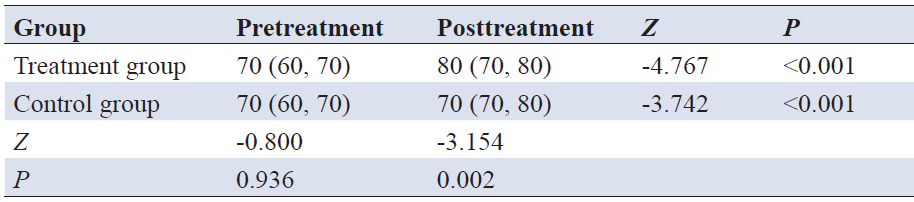
Note: Data are presented as median (P25, P75). Between-group comparisons were performed using rank-sum test. A two-sided P<0.05 was considered statistically significant. For KPS, quartile values were presented using the nearest valid scale category because the scale is recorded in 10-point increments. KPS, Karnofsky Performance Status.

Note: Data are presented as n (%). Between-group comparisons were performed using rank-sum test; Z denotes the test statistic. A two-sided P<0.05 was considered statistically significant. The four-level efficacy outcomes were treated as ordinal data and analyzed using the rank-sum test. Z, test statistic.
In summary, acupuncture with pharmacotherapy had stable advantages in the clinical endpoints rather than the improvement of a single outcome. Aside from a higher intensity of pain reduction, subjects who received adjunctive acupuncture also reported fewer breakthrough pain episodes and more prolonged analgesia as well as short-term improvements in functional status, sleep quality during the treatment phase, and emotional well-being. These findings were associated with a higher overall response rate and a lower incidence of adverse events, suggesting a multidimensional supportive role of acupuncture. However, because cumulative analgesic exposure was not quantitatively analyzed, safety outcomes should be interpreted with caution. Overall, the available evidence suggests that acupuncture may be a potentially useful adjunct in the management of cancer-related symptoms.
3.3 Safety evaluation
Safety analysis showed that all adverse events occurred as single incidents, with no patient experiencing more than one type of reaction. In the intervention group, constipation was reported in three cases and dizziness in two cases, with no instances of nausea or vomiting, resulting in an overall adverse event rate of 16.67%. In contrast, the control group reported eight cases of constipation, three cases of dizziness, and three cases of nausea or vomiting, yielding an overall incidence of 50.00%. Statistical comparison showed a lower incidence of adverse events in the intervention group than in the control group (P<0.05; Table 16). However, because analgesic doses were adjusted according to clinical response and cumulative analgesic exposure was not quantitatively analyzed, the safety findings should be interpreted cautiously.

Note: Data are presented as number of cases (n) unless otherwise specified. Between-group comparisons were performed using Fisher’s exact test. A two-sided P<0.05 was considered statistically significant. Overall incidence was defined as the proportion of patients experiencing at least one adverse event.
Breast cancer continues to be a major threat to women’s health worldwide, and its burden is rising, especially in low- and middle-income countries [25]. Cancer pain, one of the most common complications in advanced disease, is primarily treated through the use of the WHO three-step analgesic ladder. However, not all patients embrace long-term opioid use because of constipation, respiratory depression, and dependence. In TCM, the pathogenesis of tumors is often related to qi stagnation, phlegm accumulation and blood stasis obstructing the meridians, leading to clinical symptoms such as cancer pain [26]. As an important external therapy in TCM, acupuncture has multidimensional and multitarget regulation functions and is widely used for analgesia because of its simplicity, safety and low cost.
According to previous fundamental studies, electroacupuncture or wrist-ankle acupuncture has been reported to modulate the descending pain regulatory system, including increased release of endogenous opioid peptides such as β-endorphin and enkephalin, regulation of serotonergic activity, and activation of μ-opioid receptor-mediated pathways [27, 28]. These mechanisms are considered to contribute to the analgesic effects observed in animal models of bone cancer pain [27]. Modern neurobiological studies have indicated that acupuncture analgesia may involve multiple central and peripheral mechanisms, including the modulation of pain perception and endogenous opioid-mediated analgesic pathways [29]. Based on these mechanistic insights, this study evaluated the clinical outcomes and safety of acupuncture combined with three-step analgesic therapy in patients with breast cancer-related pain using NRS scores, frequency of breakthrough pain, duration of pain relief, KPS, PSQI, and SDS assessments.
Through KDD analysis, we identified an acupoint profile potentially relevant to the management of breast cancer-related pain. High-frequency acupoints included LI4, ST36, Ashi points, PC6, and LR3 distributed primarily on the upper and lower limbs which reflects a combination of distal points with local Ashi points. The dominant involved meridians are ST and Large Intestine meridian, both characterized by abundant qi and blood, together with Pericardium meridian closely related to the maintenance of emotional regulation. The most commonly used among special acupoints are the Five-Shu, Yuan-Source and crossing points. Association rule mining identified recurrent acupoint associations, including combinations centered on LI4, LR3, PC6, ST36, and SP6. Cluster analysis grouped the high-frequency acupoints into several clinically interpretable categories. Together, these findings supported the formulation of a candidate acupuncture prescription aimed at harmonizing qi and blood and relieving pain.
Previous clinical studies of acupuncture for cancer-related pain have generally demonstrated that acupuncture interventions can decrease the intensity of the pain experience, against a background of both anecdotal reports and trial results suggesting additional quality-of-life–related benefits including sleep impact and emotional status, and overall the findings from this study align with this evidence trend [30, 31]. Nonetheless, the heterogeneity of outcomes across studies has often been high due to variation in intervention variables and yet clinical protocols are not tightly regulated for consistency and comparability [32]. Against this background, the novelty of the current study lies in proposing a method to derive a relatively structured candidate acupoint prescription systematically from literature data within a KDD framework before preliminary clinical evaluation, thereby establishing a “data-mining–to–clinical-evaluation” research pathway. Methodologically, this approach may help reduce heterogeneity in acupoint selection and improve the reproducibility and clinical applicability of acupuncture interventions. Integratively, combining this evidence-derived acupuncture prescription system with the WHO three-step analgesic ladder may yield an interesting structured and spatiotemporal guiding basis for application as well as a systematic approach complementary to the management of breast cancer–related pain.
Anatomically and physiologically, the breast is associated with multiple meridians, especially ST and Liver meridians; therefore, treating any related zang-fu organs can affect breast diseases. LI4, via Yuan-Source point of Large Intestine meridian, regulates qi and frees channels. Its pairing with LR3, known as the “Four Gates”, when combined, harmonizes qi and blood and directly addresses the TCM principle of “no obstruction, no pain”. In this regard, ST36 (He-Sea point of ST meridian), combined with SP6, tonifies qi and blood, strengthens the Spleen/Liver/Kidney systems, thus acting on the principle that “when nourished there is no pain”. Ashi points, in accordance with the dictum “where there is pain, there is a point”, work directly where the problem lies by dispersing stagnation and quickly relieving symptoms. PC6 belongs to the Pericardium meridian and connects with the Sanjiao, relieving chest oppression while also regulating qi and mitigating emotional distress. Given that the pericardial pathway is traditionally considered related to the breast region, PC6 may offer potential benefits for breast cancer-related pain and related psychological symptoms.
The present study sought to develop and evaluate a KDD-based candidate acupoint prescription in a randomized controlled trial. The combined treatment was associated with greater reductions in pain scores, fewer episodes of BTcP, and a longer duration of pain relief compared with standard analgesic therapy alone. Improvements were also observed in functional status, sleep quality, and depressive symptoms. In addition, a lower incidence of adverse events was observed in the combined-treatment group, and no acupuncture-related adverse events were recorded. However, because analgesic doses were adjusted according to clinical response and cumulative analgesic exposure was not quantitatively analyzed, this safety finding should be interpreted cautiously. Overall, these findings suggest that acupuncture may serve as a potentially useful adjunctive therapy for alleviating breast cancer-related pain.
Although the present study yielded encouraging clinical outcomes, several limitations should be acknowledged. These constraints are generally consistent with findings from previous systematic reviews, which have noted that clinical studies of acupuncture for cancer-related pain are often characterized by relatively small sample sizes and considerable methodological heterogeneity [33]. This study had a small clinical sample size, with 60 patients enrolled and 58 completing the trial (30 and 28, respectively). In addition, two participants in the control group withdrew due to disease progression, and the analysis was conducted on the per-protocol population, which may have introduced potential bias. One limitation is that the literature-mining dataset contained some studies related to cancer pain without specifying the cancer type. These prescriptions were retained only as a potentially informative reference, and the acupoint patterns identified cannot be construed to be evidence for specific therapy for breast cancer. In addition, since the PSQI identifies sleep quality in the last month, the post-treatment result collected following the three-week procedure partially overlapped with the baseline assessment period, potentially impacting the precision of all interpretation associated with sleep. Thus, this relatively small sample size may have compromised the statistical power and thus, to a certain extent, the external validity of some of the findings. Future studies should be multicenter randomized controlled trials with larger sample sizes and more rigorous methodological designs to improve the stability and generalizability of these findings.
The primary outcome measures (NRS, PSQI, and SDS) were mostly determined using subjective self-reported assessments. Though these instruments are widely validated, by nature the subjective aspect may introduce measurement bias. Moreover, the lack of concurrent objective biological measurements—such as inflammatory cytokine profile monitoring, neuroimmune biomarkers, or pain-related molecular markers—complicates mechanistic interpretation at a deeper level. The inclusion of objective treatment evaluation tools and biomarker analyses, alongside patient-reported outcomes, would contribute to the scientific rigor and robustness of acupuncture analgesia research [34].
The results obtained in this trial show a beneficial adjuvant effect of acupuncture (performed according to the KDD-derived candidate prescription—LI4, ST36, Ashi points, PC6, LR3 and SP6) when given in conjunction with standard analgesic treatment based on the WHO three-step analgesic ladder for patients suffering from breast cancer-related pain. However, there are some limitations that should be noted. It is plausible that the KDD process was impacted by limitations in the retrieval of literature and the coverage of databases specifically relevant to acupuncture and cancer pain research. Moreover, the clinical trial had a small number of subjects and a short intervention duration of only 3 weeks with no long-term follow-up to assess the durability and sustainability of therapeutic effects. Outcome measures were mostly subjective rating scales, and biological markers were absent. The exact mechanisms involved in acupuncture analgesia are still only partially understood.
Larger multicenter studies with longer follow-up are warranted to assess the long-term therapeutic effects of acupuncture. Mechanistic investigations, such as animal models, behavioral assessments, molecular profiling and multi-omics approaches, may aid in delineating the neuroimmune regulatory pathways and important molecular targets contributing to acupuncture-elicited analgesia. This work, in turn, may ultimately lay the groundwork to enable standardized and evidence-informed acupuncture interventions for women with breast cancer to be developed and rationally integrated into routine clinical pain management.
Author contributions
Zhaoyu Li, Yali Wei, and Jinxia Bai contributed equally to this work. Zhaoyu Li, Yali Wei, and Jinxia Bai conducted the study, collected and analyzed the data, and drafted the manuscript. Lingna Ma and Kai Sun contributed to data interpretation and manuscript revision. Wei Wang conceived and supervised the study and critically revised the manuscript. All authors have read and approved the final version of the manuscript.
Funding
This research received no external funding.
Data availability
The data supporting the findings of this study are available within the article.
Ethics approval and consent to participate
This study was approved by the Ethics Committee of the Affiliated Hospital of Gansu University of Chinese Medicine (Approval No. [2024]127). Written informed consent was obtained from all participants.
Consent for publication
Not applicable.
Competing interests
The authors declare that they have no conflicts of interest.
Acknowledgements
Not applicable.
[1] Xu Y, Gong M, Wang Y, Yang Y, Liu S, Zeng Q. Global trends and forecasts of breast cancer incidence and deaths. Sci Data. 2023 May 27;10(1):334. https://doi.org/10.1038/s41597-023-02253-5
[2] Xiong X, Zheng L, Ding Y, Chen Y, Cai Y, Wang L, et al. Breast cancer: Pathogenesis and treatments. Signal Transduct Target Ther. 2025 Feb 19;10(1):49. https://doi.org/10.1038/s41392-024-02108-4
[3] Heer E, Harper A, Escandor N, Sung H, McCormack V, Fidler-Benaoudia MM. Global burden and trends in premenopausal and postmenopausal breast cancer: A population-based study. Lancet Glob Health. 2020 Aug;8(8):e1027-e1037. https://doi.org/10.1016/S2214-109X(20)30215-1
[4] Oluwasanu M, Olopade OI. Global disparities in breast cancer outcomes: New perspectives, widening inequities, unanswered questions. Lancet Glob Health. 2020 Aug;8(8):e978-e979. https://doi.org/10.1016/S2214-109X(20)30307-7
[5] Sun K, Zhang B, Lei S, Zheng R, Liang X, Li L, et al. Incidence, mortality, and disability-adjusted life years of female breast cancer in China, 2022. Chin Med J. 2024 Oct 20;137(20):2429-2436. https://doi.org/10.1097/CM9.0000000000003278
[6] Soerjomataram I, Cabasag C, Bardot A, Fidler-Benaoudia MM, Miranda-Filho A, Ferlay J, et al. Cancer survival in Africa, central and south America, and Asia (SURVCAN-3): A population-based benchmarking study in 32 countries. Lancet Oncol. 2023 Jan;24(1):22-32. https://doi.org/10.1016/S1470-2045(22)00704-5
[7] Cavalieri E, Chakravarti D, Guttenplan J, Hart E, Ingle J, Jankowiak R, et al. Catechol estrogen quinones as initiators of breast and other human cancers: Implications for biomarkers of susceptibility and cancer prevention. Biochim Biophys Acta. 2006 Aug;1766(1):63-78. https://doi.org/10.1016/j.bbcan.2006.03.001
[8] Alegre MM, Knowles MH, Robison RA, O'Neill KL. Mechanics behind breast cancer prevention-focus on obesity, exercise and dietary fat. Asian Pac J Cancer Prev. 2013;14(4):2207-2212. https://doi.org/10.7314/APJCP.2013.14.4.2207
[9] Raja SN, Carr DB, Cohen M, Finnerup NB, Flor H, Gibson S, et al. The revised international association for the study of pain definition of pain: Concepts, challenges, and compromises. Pain. 2020 Sep 1;161(9):1976-1982. https://doi.org/10.1097/j.pain.0000000000001939
[10] Zugaj MR, Zueger A, Kessler J. Factors influencing analgesic use patterns in patients with chronic tumor-associated pain: A qualitative pilot study considering different groups of medications. Schmerz. 2024 Dec;38(6):422-432. https://doi.org/10.1007/s00482-023-00765-y
[11] Lara-Solares A, Ahumada Olea M, Basantes Pinos ALÁ, Bistre Cohén S, Bonilla Sierra P, Duarte Juárez ER, et al. Latin-american guidelines for cancer pain management. Pain Manag. 2017 Jul;7(4):287-298. https://doi.org/10.2217/pmt-2017-0006
[12] Kroenke K, Theobald D, Wu J, Loza JK, Carpenter JS, Tu W. The association of depression and pain with health-related quality of life, disability, and health care use in cancer patients. J Pain Symptom Manage. 2010 Sep;40(3):327-341. https://doi.org/10.1016/j.jpainsymman.2009.12.023
[13] Ośmiałowska E, Misiag W, Chabowski M, Jankowska-Polańska B. Coping strategies, pain, and quality of life in patients with breast cancer. J Clin Med. 2021 Sep 28;10(19):4469. https://doi.org/10.3390/jcm10194469
[14] Coleman RE. Metastatic bone disease: Clinical features, pathophysiology and treatment strategies. Cancer Treat Rev. 2001 Jun;27(3):165-176. https://doi.org/10.1053/ctrv.2000.0210
[15] Weilbaecher KN, Guise TA, McCauley LK. Cancer to bone: A fatal attraction. Nat Rev Cancer. 2011 Jun;11(6):411-425. https://doi.org/10.1038/nrc3055
[16] Ventafridda V, Stjernsward J. Pain control and the World Health Organization analgesic ladder. JAMA. 1996 Mar 20;275(11):835-836. https://doi.org/10.1001/jama.1996.03530350017014
[17] Swarm RA, Youngworth JM, Agne JL, Anitescu M, Are M, Buga S, et al. Adult cancer pain, version 2.2025, NCCN clinical practice guidelines in oncology. J Natl Compr Canc Netw. 2025 Jul;23(7):e250032. https://doi.org/10.6004/jnccn.2025.0032
[18] Aman MM, Mahmoud A, Deer TR, Sayed D, Hagedorn JM, Brogan SE, et al. The American society of pain and neuroscience (ASPN) best practices and guidelines for the interventional management of cancer-associated pain. J Pain Res. 2021 Jul 16;14:2139-2164. https://doi.org/10.2147/JPR.S315585
[19] Caraceni AT, Hanks GW, Kaasa S, Bennett MI, Brunelli C, Cherny NI, et al. Use of opioid analgesics in the treatment of cancer pain: Evidence-based recommendations from the EAPC. Lancet Oncol. 2012 Feb;13(2):e58-e68. https://doi.org/10.1016/S1470-2045(12)70040-2
[20] Mestdagh F, Steyaert A, Lavand'homme P. Cancer pain management: A narrative review of current concepts, strategies, and challenges. Curr Opin Anaesthesiol. 2022 Jun 1;35(3):330-337. https://doi.org/10.1097/ACO.0000000000001132
[21] Deng GE, Rausch SM, Jones LW, Gulati A, Kumar NB, Greenlee H, et al. Complementary therapies and integrative medicine in lung cancer: Diagnosis and management of lung cancer: American college of chest physicians evidence-based clinical practice guidelines. Chest. 2013 May;143(5 Suppl):e420S-e436S. https://doi.org/10.1378/chest.12-2364
[22] Greenlee H, DuPont-Reyes MJ, Balneaves LG, Carlson LE, Cohen MR, Deng G, et al. Clinical practice guidelines on the evidence-based use of integrative therapies during and after breast cancer treatment. CA Cancer J Clin. 2017 May 6;67(3):194-232. https://doi.org/10.3322/caac.21397
[23] Lyman GH, Greenlee H, Bohlke K, Bao T, DeMichele AM, Deng GE, et al. Integrative therapies during and after breast cancer treatment: ASCO endorsement of the SIO clinical practice guideline. J Clin Oncol. 2018 Sep 1;36(25):2647-2655. https://doi.org/10.1200/JCO.2018.79.2721
[24] Garcia MK, Cohen L, Spano M, Spelman A, Hashmi Y, Chaoul A, et al. Inpatient acupuncture at a major cancer center. Integr Cancer Ther. 2018 Mar;17(1):148-152. https://doi.org/10.1177/1534735416685403
[25] Force LM, Kocarnik JM, May ML, Bhangdia K, Crist A, Penberthy L, et al. The global, regional, and national burden of cancer, 1990-2023, with forecasts to 2050: A systematic analysis for the global burden of disease study 2023. Lancet. 2025 Oct 11;406(10512):1565-1586. https://doi.org/10.1016/S0140-6736(25)01635-6
[26] Ji Q, Luo Y, Wang W, Liu X, Li Q, Su S. Research advances in traditional Chinese medicine syndromes in cancer patients. J Integr Med. 2016 Jan;14(1):12-21. https://doi.org/10.1016/S2095-4964(16)60237-6
[27] Zhang C, Xia C, Zhang X, Li W, Miao X, Zhou Q. Wrist-ankle acupuncture attenuates cancer-induced bone pain by regulating descending pain-modulating system in a rat model. Chin Med. 2020 Feb 4;15:13. https://doi.org/10.1186/s13020-020-0289-y
[28] Lin J, Chen W. Acupuncture analgesia: A review of its mechanisms of actions. Am J Chin Med. 2008;36(04):635-645. https://doi.org/10.1142/S0192415X08006107
[29] Zhao Z. Neural mechanism underlying acupuncture analgesia. Prog Neurobiol. 2008 Aug;85(4):355-375. https://doi.org/10.1016/j.pneurobio.2008.05.004
[30] Yang M, Baser RE, Liou KT, Li SQ, Piulson L, Panageas KS, et al. Effect of acupuncture versus usual care on sleep quality in cancer survivors with chronic pain: Secondary analysis of a randomized clinical trial. Cancer. 2023 Jul 1;129(13):2084-2094. https://doi.org/10.1002/cncr.34766
[31] Faria M, Teixeira M, Pinto MJ, Sargento P. Efficacy of acupuncture on cancer pain: A systematic review and meta-analysis. J Integr Med. 2024 May;22(3):235-244. https://doi.org/10.1016/j.joim.2024.03.002
[32] Li L, Huang Y, An C, Jing N, Xu C, Wang X, et al. Acupuncture in the treatment of chemotherapy-induced peripheral neuropathy: A meta-analysis and data mining. Front Neurol. 2024 Oct 29;15:1442841. https://doi.org/10.3389/fneur.2024.1442841
[33] Paley CA, Johnson MI, Tashani OA, Bagnall AM. Acupuncture for cancer pain in adults. Cochrane Database Syst Rev. 2011 Jan 19;(1):CD007753. https://doi.org/10.1002/14651858.CD007753.pub2
[34] Kang I, Kim SN. Circulating microrna biomarkers for chronic pain and acupuncture response: An exploratory high-dimensional small-sample study. J Pain Res. 2025 Dec 6;18:6591-6605. https://doi.org/10.2147/JPR.S567154
ISSN: 2957-5443
Volume 4, Issue 2
June 2026
Pages: 149-224


 Log In

 On This Page
 CITE
CITE