 Log In
Search




 Open Access
 wudehua74@163.com
Dehua Wu, Department of Anesthesiology, Songjiang Hospital Affiliated to Shanghai Jiao Tong University School of Medicine, No. 748 Middle Zhongshan Road, Songjiang District, Shanghai 201600, China. E-mail: wudehua74@163.com.
Received March 17, 2026; Accepted May 9, 2026; Published June 18, 2026
Open Accesswudehua74@163.comDehua Wu, Department of Anesthesiology, Songjiang Hospital Affiliated to Shanghai Jiao Tong University School of Medicine, No. 748 Middle Zhongshan Road, Songjiang District, Shanghai 201600, China. E-mail: wudehua74@163.com.
Received March 17, 2026; Accepted May 9, 2026; Published June 18, 2026
Objective: To evaluate the effectiveness of integrating medical dispute case analysis into doctor-patient communication training for undergraduate medical students. Methods: During the 2025 academic year, the Medical Humanities teaching team at Songjiang Hospital, Affiliated to Shanghai Jiao Tong University School of Medicine, redesigned the Doctor-Patient Communication course for undergraduates at Kangda College, Nanjing Medical University. The reform group (n=42, 2025 cohort) received instruction integrating medical dispute case analysis, while the traditional group (n=42, 2024 cohort) received conventional teaching. Outcomes were evaluated using satisfaction surveys, course experience questionnaires, regular assessments, final exams, and video-based analyses of classroom engagement. Results: Compared with the traditional group, the reform group demonstrated significantly higher rates of students reporting "very satisfied" with learning interest, teaching method evaluation, and perceived self-improvement (P<0.05 or P<0.01). The reform group also had a higher overall positive classroom experience rate [100.0% (210/210) vs. 97.1% (204/210), P<0.05], greater course attractiveness (97.6% vs. 92.8%, P<0.05), and significantly higher scores in both regular assessments and final examinations (P<0.01). Conclusion: Incorporating medical dispute case analysis into doctor-patient communication teaching may enhance educational outcomes for medical students. It provides a reference model for promoting high-quality medical teaching in China.
Keywords: Doctor-patient communication, Case analysis, Integrated teaching, Teaching effectiveness
The problem of doctor-patient relationship remains unresolved in Chinese society [1]. Many medical conflicts are caused by inadequate or ineffective communication between physicians and patients during treatment [2]. Studies have indicated deficiencies in medical humanities education and patient communication skills among physicians, residents, and medical students in China [3-5]. Therefore, effective doctor-patient communication should be considered both an essential competency of healthcare workers and a skill that medical students must acquire urgently.
Currently, doctor-patient communication courses in China face several challenges, including a lack of professional instructors, insufficient use of real clinical cases in classroom teaching, and poor overall teaching quality, all of which limit their practical applicability [2, 6, 7]. One potential approach is to focus on the training of medical students in doctor-patient communication through classroom-based teaching, emphasizing not only theoretical knowledge accumulation but also practical applications of communication skills. This approach lays a solid foundation for their professional development.
This study aims to collect and summarize clinical case studies, implement a teaching model that incorporates medical dispute case analysis into communication courses, and compare its effectiveness with that of traditional teaching methods. The objective is to introduce an efficient teaching approach for doctor-patient communication to educators and practitioners in this field.
2.1 General information
The Medical Humanities Teaching Team at Songjiang Hospital, Affiliated to Shanghai Jiao Tong University School of Medicine, is responsible for teaching the compulsory Doctor-Patient Communication course for senior undergraduate clinical medicine students in the resident program of Kangda College, Nanjing Medical University. Based on student questionnaires and feedback from the previous teaching years, starting from the 2025 teaching cycle, the team implemented an innovative design for the course. To improve the learning outcomes and student satisfaction, medical dispute case analyses were incorporated into classroom teaching for undergraduates.
The reform group (n=42) included 22 males and 20 females, aged 20–22 years, with an average age of 21.7±0.6 years. The traditional group comprised 42 students from the 2024 academic cycle, including 18 males and 24 females, aged 20–22 years, with an average age of 21.5±0.7 years. There were no significant differences in baseline characteristics between the two groups (P>0.05), indicating comparability between groups.
Inclusion criteria: All enrolled students were included as observation subjects. Exclusion criteria: Students on leave, absent from more than two classes due to illness, those failed to complete the entire course or refused to participate in the survey were excluded.
2.2 Methods
The Doctor-Patient Communication course at Nanjing Medical University consists of 30 credit hours, in accordance with the university’s teaching requirements. The selected textbook is Doctor-Patient Communication (3rd Edition) written by Wang Jinfan and Yin Mei, published by the People’s Medical Publishing House under the National Health Commission’s “13th Five-Year Plan”. The course is scheduled for one class per week, with each class lasting for 2 credit hours. During the first month, the course covers basic concepts, including an introduction, fundamental principles, and pre-pathways of doctor-patient communication. From the second month, practical training sessions are conducted across various clinical settings, covering outpatient and emergency department, internal medicine, surgery, obstetrics and gynecology, pediatrics, general practice, traditional Chinese medicine, and other clinical departments.
.
Traditional group teaching method: Teachers prepared lessons individually based on the textbook content, created PPT slides, and used a teacher-centered lecture approach. The class schedule followed the teaching syllabus, including pre-tests, lectures, teacher-student discussions, and homework assignments.
Reform group teaching method: The reform group received a refined teaching approach based on the traditional method, integrating medical dispute case analyses into classroom instruction to enhance practical communication skills.
The study protocol was approved by the Research Ethics Committee of Songjiang Hospital Affiliated to Shanghai Jiao Tong University School of Medicine. Written informed consent was waived.
2.2.1 Preliminary case preparation
A total of 442 concluded or settled medical disputes (all personal data removed) from several hospitals in a specific area of Shanghai during 2019–2023 were collected. Among these, 197 were inpatient cases and 245 were outpatient cases. The distribution of closed cases by major disciplines is shown in Table 1.


2.2.2 Collective lesson preparation and case-based teaching integration
During each teaching cycle, one collective lesson preparation was held per week at the end of each month to plan the next month’s teaching activities. During these sessions, each teacher presented their own PPT slides outlining the course content, including what would be taught and how it would be delivered. Presentations were shared within the teaching team, which strictly followed the scheduled plan and content arrangements. Team members provided feedback to improve engagement and make the teaching content more attractive to students. Specific requirements for instructors included: releasing teaching content in WeChat groups before class for preview, and allocating approximately 50% of total class time to encouraging students to share knowledge and topics they found most interesting. Instructors provided timely feedback during student presentations, ensuring discussions remained focused on the lesson objectives.
The second task of collective lesson preparation involved categorizing and analyzing all collected medical dispute cases. Team members reviewed each case to identify shortcomings in effective doctor-patient communication. According to this analysis, cases were divided into two categories: medical disputes that could have been improved through effective communication and disputes that could have been entirely avoided with good communication. Forty representative cases were selected as practical training materials for the course. These real-life cases provided an immersive learning experience, combining theory with practice, thereby enhancing knowledge acquisition and fostering greater student interest in this course. The duration of this section was reasonably extended to encourage active student engagement, guided by instructors.
2.3 Observation indicators
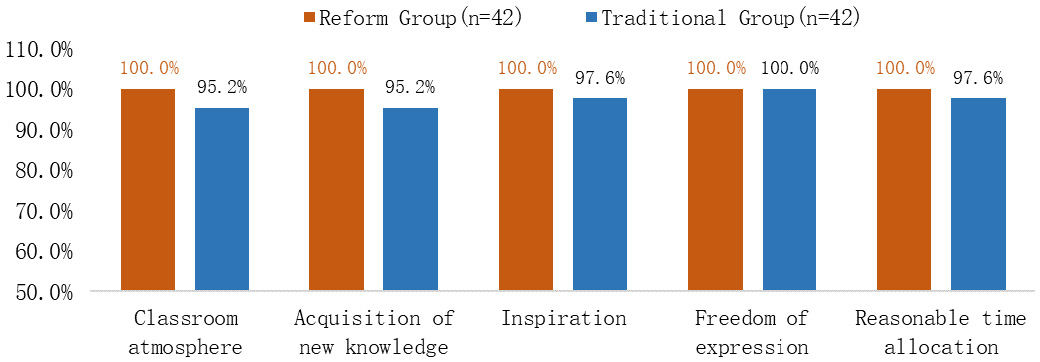
At the end of this course, students completed self-developed satisfaction surveys and course experience questionnaires to gather student-reported information. The satisfaction survey evaluated aspects including course content arrangement, knowledge acquisition, learning interest, instructor performance, teaching methods, self-improvement, and overall course satisfaction. The course experience questionnaire assessed classroom atmosphere, acquisition of new knowledge, inspiration, freedom of expression, and appropriateness of time allocation.
In addition, five randomly selected class sessions were video-recorded and analyzed. Students with more than ten minutes of inattentive or off-task behavior during a 90-minute session were classified as having ineffective attendance. Ineffective attendance was defined using observable operational criteria: (1) Head resting on desk or looking away from the presenter/screen for ≥10 minutes without engaging in task-relevant activity; (2) Using electronic devices (e.g., phone, tablet) for non-course purposes for ≥10 minutes; or (3) Other behaviors clearly unrelated to the class activities, as jointly identified and confirmed by two instructors through observation. Each student was counted no more than once per session as having ineffective attendance. The average class engagement rate was calculated using the formula: Average Class Engagement Rate = 1 − (Average Number of Ineffective Attendances per Session/Total Number of Students). This metric provides a relatively objective measure of student engagement and the effectiveness of course content in maintaining attention.
At the end of each term, students were evaluated for two parts. The first part consisted of regular tasks, including analysis and reflection on assigned clinical doctor-patient communication cases, participation in simulated doctor-patient communication practice, and attendance. The second part was a final exam designed to assess their overall learning and mastery of the course content.
2.4 Statistical methods
Statistical analyses were conducted using Stata 8.0 software. Continuous variables with normal distribution were presented as mean ± standard deviation (x̄±s) and were compared between groups using independent samples t-tests. Categorical data were expressed as number (n) and percentage (%) and were compared using chi-square tests. A P-value <0.05 was considered statistically significant. To account for multiple comparisons, Bonferroni correction was applied, adjusting the significance level to P<0.017 (0.05/3).
3.1 Comparison of students’ satisfaction levels between two teaching cohorts
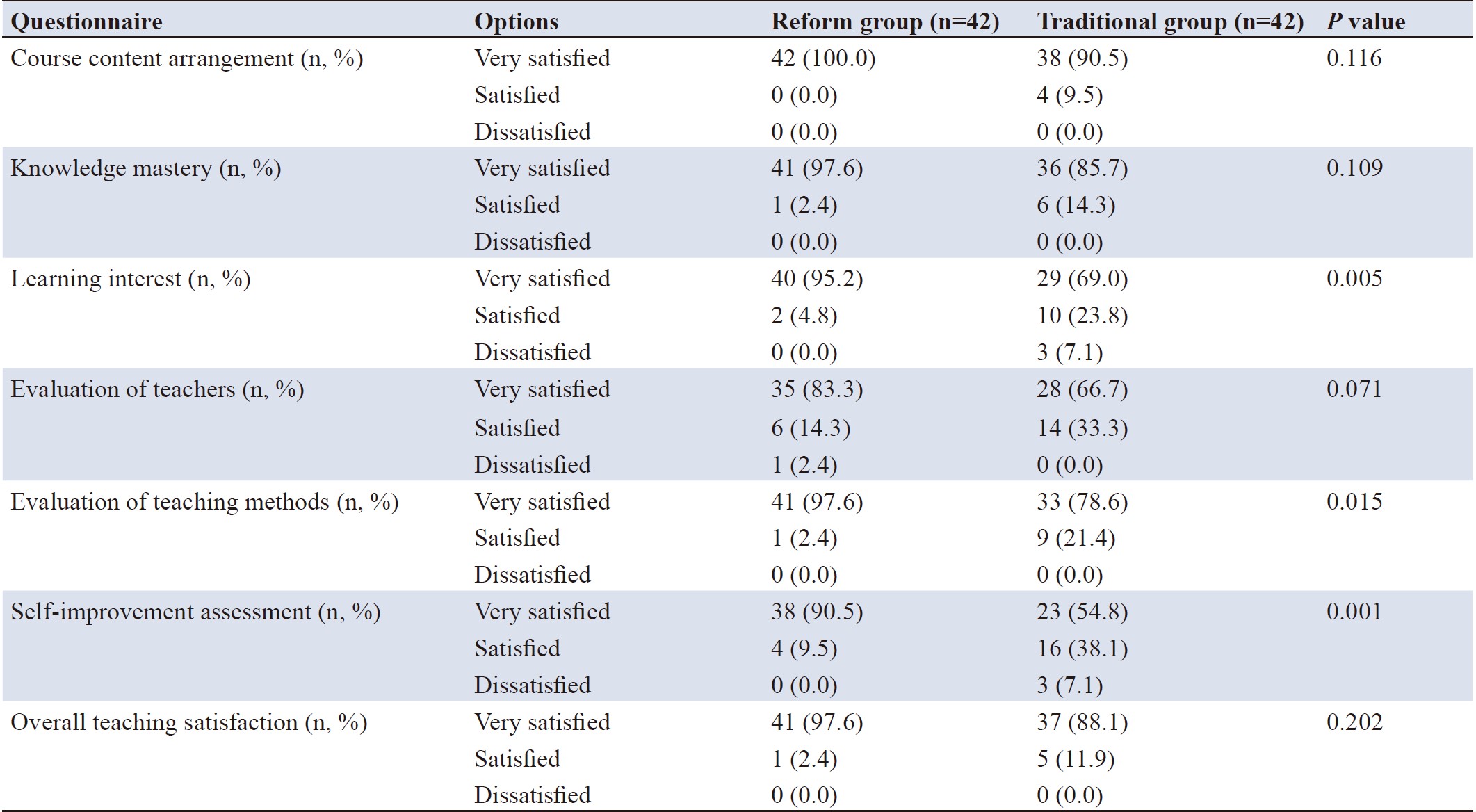
Questionnaire survey results indicated that, compared with the traditional group, the reform group reported significantly higher proportions of “very satisfied” responses in terms of learning interest, evaluation of teaching methods, and self-improvement assessment (P<0.05 or P<0.01; Table 2).
3.2 Comparison of students’ classroom experiences between two teaching cohorts
No statistically significant differences were observed between the two groups for individual items on the course experience questionnaires (all P>0.05). However, in terms of the overall score of all indicators, the reform group demonstrated a higher overall positive classroom experience rate (100.0% [210/210] vs. 97.1% [204/210], P<0.05; Figure 1).
3.3 Comparison of classroom engagement and academic performance between two teaching cohorts
Video analysis revealed that the students in the reform group were more engaged with class content compared with the traditional group (92.8% vs. 97.6%, P<0.05). At the end of the semester, both the regular assessment scores and final exam scores were significantly higher in the reform group than in the traditional group (P<0.01; Table 3).

Note: *Five class videos were randomly chosen for video recording analysis, yielding the denominator for calculating engagement of 210 (42×5=210).
Clinical clerkships and internships represent a critical transition in medical education, during which trainees move from students to practitioners. Developing effective doctor-patient communication skills during this period is essential. On November 1, 2005, the Ministry of Education of China included Doctor-Patient Communication Studies in the national plan textbook directory for medical education under the “Eleventh Five-Year Plan”. Despite its inclusion in many medical courses, a substantial number of students still regard it as unimportant [8, 9]. Many students focus more on acquiring specialized medical knowledge than on developing professional ethics and communication skills. Consequently, they are often unable to communicate effectively, which may compromise the quality of their future clinical practice. Moreover, according to surveys conducted in previous years and observations by our teaching team, students exhibit low levels of active participation during lectures.
Many researchers have explored various teaching strategies to enhance educational outcomes and to guide learners in acquiring essential knowledge of doctor-patient communication, with the aim of fostering ethical behavior in clinical interactions. Nevertheless, overall outcomes remain suboptimal [10, 11]. Langewitz et al. applied standardized patients in teaching doctor-patient communication, but students’ performance during training often lacked the complexity of real clinical situations [12]. In addition, standardized patients are typically healthy individuals or those with limited life experiences that are selected from their workplaces to serve in three roles: actor, assessor, and instructional guide [10]. Recruiting such individuals from the public poses practical challenges.
Simulation-based teaching has also been applied to train undergraduate students in doctor-patient communication. Although simulations can motivate students to learn actively, their implementation remains challenging [13, 14]. Furthermore, student discussions during simulations may become scattered and unable to achieve the expected teaching goals. Previous studies demonstrated that well-designed blended teaching models, which combine doctor-patient communication theory with clinical cases, can enhance students’ understanding of core concepts and improve familiarity with real-world clinical situations [15, 16]. However, such blended models also have limitations. Improvement in clinical intern’s communication and coordination abilities largely depends on the guidance provided by instructors. Variations in instructor’s individual skills, overall qualifications, and pedagogical competence can differently affect learning outcomes.
To address this issue, our Medical Humanities teaching team has continuously innovated both the methods and forms for medical humanities education. Our objective is to make medical humanities, especially doctor-patient communication education, more engaging, to enhance students’ recognition of its importance, and to actively guide their full participation in the course. Based on existing student survey results and practical explorations, we implemented the integration of medical dispute case analyses into the training plan for doctor-patient communication courses. This mode maintains the basic structure of didactic teaching while strengthening pre-class teacher preparation and enhancing the alignment between clinical practice and training content. In the first stage, about 1–4 weeks before a planned class, the designated instructor organized internal practice sessions with the entire teaching team. The team provided feedback on both content and presentation, collaboratively identifying areas for improvement. Based on this feedback, the instructor refined the teaching materials to optimize instructional outcomes. In the second stage, the teaching team jointly reviewed 442 closed clinical cases from recent years, classifying them by department, clinical scenario, and communication issues. Forty representative cases were selected for inclusion in the course. Each case was analyzed in detail to outline recommended patient-doctor communication strategies at each stage of care, specifying what, how, when, and where to communicate. This approach aims to establish procedural guidance for preventing conflicts and managing potential medical disputes proactively.
Based on the findings of this study, compared with the traditional teaching model, a significantly higher proportion of students in the reform group are highly satisfied with both the teaching methods and their own improvements and demonstrated greater interest in learning. Moreover, students rated the reformed course higher in terms of engagement, knowledge acquisition, stimulation of creativity, and freedom of expression. Objective evaluation through video analysis further confirmed that the reformed design was more engaging for students. Finally, both end-of-term exam scores and regular assessment outcomes showed that the reformed teaching method significantly improved student performance.
While traditional lectures may deliver large amounts of knowledge systematically, they often fail to capture students’ attention and participation. In contrast, the reformed teaching approach incorporates clinical case studies and problem-based learning, which encourages students to discuss actively, think independently, communicate proactively, and truly master the subject matter. Analysis of selected classic cases further potentiates students to explore each case in detail and critically identify potential issues. Therefore, students can better internalize and integrate the knowledge. By integrating new knowledge with their existing understanding and experiences, students develop individualized approaches to doctor-patient communication and clinical interaction [17-19].
This pedagogical reform integrates the analysis of medical dispute cases into doctor-patient communication training. Through a team-led class preparation method, the course content is made more relevant and engaging by leveraging the professional expertise of all instructors. This approach effectively integrates theory with practice to deepen students’ understanding of theoretical concepts. Moreover, a more objective assessment metric—measuring student attentiveness through video analysis—was introduced to evaluate classroom effectiveness, providing a clearer reflection of the instructional model’s appeal. The results of this study show that the reformed method achieves better educational outcomes, offering references and insights for future improvements in doctor-patient communication training.
Developing a structured teaching model for doctor-patient communication in medical education promotes students’ holistic development by enhancing clinical knowledge and skills while simultaneously improving their communicative abilities, empathy, and humanistic awareness. This prepares future physicians to respond more attentively to patients’ needs and emotions, thereby improving healthcare satisfaction and outcomes. Furthermore, it fosters more caring and competent communicators, strengthening doctor-patient relationships and reducing conflicts and complaints. This approach also supports a shift in medical education from focus on knowledge transmission to greater emphasis on communication skills and the cultivation of humanities. Such reorientation better responds to the demands of today’s healthcare system and contributes to improved quality, service performance, and competitiveness of medical institutions. In the future, we plan to further explore and refine this model in practical settings, with the aim of systematically enhancing clinicians’ communication abilities. The model offers a practical example to address persistent doctor-patient conflicts in China and offers guidance for developing effective strategies.
There were some limitations in the current study. First, the non-randomized, historical control design may introduce several potential biases, including cohort differences between year groups, instructor maturation effects, and unmeasured confounding variables. However, some unmeasured baseline characteristics, such as prior academic performance (e.g., Chinese National College Entrance Examination scores), were comparable between the two cohorts (2024 vs. 2025). The teaching team remained unchanged, and the same instructor taught the same chapters using the different teaching methods described above. Second, no formal sample size calculation or power analysis was performed in this study. Given the exploratory nature of this investigation, the sample size (42 students per group) was determined based on practical considerations and the feasibility of recruiting participants within the study period. Therefore, this study should be interpreted as an exploratory pilot study, and the results are primarily hypothesis-generating. Future studies with larger sample sizes and adequate statistical power are needed to confirm the observed effects.
Integration of medical dispute case analysis into doctor-patient communication teaching may enhance the educational outcomes for medical students. First, unlike most existing studies that focus on routine or “standard” clinical communication—where patient and provider goals are largely aligned—our study deliberately centers on medical dispute cases, which are inherently conflict-oriented scenarios. Second, our study utilizes a uniquely large database (n=442) of real-world, documented medical disputes, from which 40 representative cases were carefully selected. Third, the course emphasizes conflict prevention in communication training, which has been shown to increase students’ engagement and interest in learning through real-world cases.
Author contributions
Dehua Wu helped with the conception of study, design of study, analysis, interpretation of data, and manuscript drafting for intellectual content. Weixing Wang, Xiang Gao, Cuili Zhu, Yanqin Fan and Xinbao Zheng helped with design of study, acquisition, analysis, interpresation of data.
Funding
This study received support from grants by Shanghai Higher Education Association Planning Research Project (2QYB24105).
Data availability
Data can be available from corresponding author by email.
Ethics approval and consent to participate
The study protocol was approved by the Research Ethics Committee of Songjiang Hospital (Approval No.: 2025-109), affiliated to Shanghai Jiao Tong University School of Medicine, and written informed consent was waived.
Consent for publication
All authors consent to the publication of this manuscript.
Competing interests
The authors declare that they have no competing interests.
Acknowledgements
Not applicable.
[1] Nowsworthy J. The future of care-preserving the patient-physician relationship. N Engl J Med. 2019 Dec 4;381(23):2265-2269. https://doi.org/10.1056/NEJMsr1912662
[2] Chen X, Liu C, Yan P, Wang H, Xu J, Yao K. The impact of doctor-patient communication on patient satisfaction in outpatient settings: Implications for medical training and practice. BMC Med Educ. 2025 Jun 4;25(1):830. https://doi.org/10.1186/s12909-025-07433-y
[3] Lin L, Mao Q, Luo X, Wang P, Zhang X. The association between doctor-patient relationship and media discourse in emergency departments: A cross-sectional study in China. J Health Organ Manag. 2025 Oct 28;39(7):1401-1416. https://doi.org/10.1108/JHOM-01-2024-0003
[4] Han C, Wu Q, Liu C, Wang P. Patient's perceived empathy can predict doctor-patient relationship in medical interaction. BMC Med Educ. 2025 May 21;25(1):741. https://doi.org/10.1186/s12909-025-07117-7
[5] Chen L, Tang H, Guo Y. Effect of patient-centered communication on physician-patient conflicts from the physicians' perspective: A moderated mediation model. J Health Commun. 2022 Mar 4;27(3):164-172. https://doi.org/10.1080/10810730.2022.2071505
[6] Jiang Y, Shi L, Cao J, Zhu L, Sha Y, Li T, et al. Effectiveness of clinical scenario dramas to teach doctor-patient relationship and communication skills. BMC Med Educ. 2020 Nov 26;20(1):473. https://doi.org/10.1186/s12909-020-02387-9
[7] Du L, Xu J, Chen X, Zhu X, Zhang Y, Wu R, et al. Rebuild doctor-patient trust in medical service delivery in China. Sci Rep. 2020 Dec 15;10(1):21956. https://doi.org/10.1038/s41598-020-78921-y
[8] Huang L, Cai Q, Cheng L, Kosik R, Mandell G, Wang SJ, et al. Analysis of curricular reform practices at Chinese medical schools. Teach Learn Med. 2014;26(4):412-419. https://doi.org/10.1080/10401334.2014.910463
[9] Qian Y, Han Q, Yuan W, Fan C. Insights into medical humanities education in China and the West. J Int Med Res. 2018 Sep;46(9):3507-3517. https://doi.org/10.1177/0300060518790415
[10] Wilbur K, Elmubark A, Shabana S. Systematic review of standardized patient use in continuing medical education. J Contin Educ Health Prof. 2018 Winter;38(1):3-10. https://doi.org/10.1097/CEH.0000000000000190
[11] Brouwers M, Rasenberg E, Van Weel C, Laan R, Van Weel-Baumgarten E. Assessing patient-centred communication in teaching: a systematic review of instruments. Med Educ. 2017 Nov;51(11):1103-1117. https://doi.org/10.1111/medu.13375
[12] Langewitz W, Pleines Dantas Seixas U, Hunziker S, Becker C, Fischer MR, Benz A, et al. Doctor-patient communication during the corona crisis - web-based interactions and structured feedback from standardized patients at the University of Basel and the LMU Munich. GMS J Med Educ. 2021 Apr 15;38(4):Doc81. https://doi.org/10.3205/zma001477
[13] Csongor A, Egyed C, Fekete J, Hambuch A, Nagy R. Transforming doctor-patient communication: Internet and telemedicine in simulation-based medical training. Commun Med. 2025 Oct 9;20(1):3-11. https://doi.org/10.3138/cam-2025-0201
[14] Wang S, Ren X, Ye J, Wang W, Huang H, Qin C. Exploration of simulation-based medical education for undergraduate students. Medicine (Baltimore). 2021 May 21;100(20):e25982. https://doi.org/10.1097/MD.00000000000025982
[15] Langberg EM, Dyhr L, Davidsen AS. Development of the concept of patient-centredness - a systematic review. Patient Educ Couns. 2019 Jul;102(7):1228-1236. https://doi.org/10.1016/j.pec.2019.02.023
[16] Rosewilliam S, Indramohan V, Breakwell R, Liew BXW, Skelton J. Patient-centred orientation of students from different healthcare disciplines, their understanding of the concept and factors influencing their development as patient-centred professionals: a mixed methods study. BMC Med Educ. 2019 Sep 11;19(1):347. https://doi.org/10.1186/s12909-019-1787-4
[17] Ruiyu X, Jun Y, Guanglie C, Zhenzhu L. The "Gesture" teaching model in clinical education and doctor-patient communication for the anatomy of optic nerve canal. Asian J Surg. 2023 May;46(5):2098-2099. https://doi.org/10.1016/j.asjsur.2022.11.035
[18] Rocha SR, Romao GS, Setubal MSV, Lajos GJ, Luz AG, Collares CF, et al. Cross-cultural adaptation of the communication assessment tool for use in a simulated clinical setting. Teach Learn Med. 2020 Jun-Jul;32(3):308-318. https://doi.org/10.1080/10401334.2020.1717958
[19] Zeng N, Lu H, Li S, Yang Q, Liu F, Pan H, et al. Application of the combination of CBL teaching method and SEGUE framework to improve the doctor-patient communication skills of resident physicians in otolaryngology department. BMC Med Educ. 2024 Feb 27;24(1):201. https://doi.org/10.1186/s12909-024-05185-9
ISSN: 3007-0007
Volume 2, Issue 1
April 2026
Pages: 1-63


 Log In

 On This Page
 CITE
CITE