 Log In
Search




 Open Access
 121522271@qq.com
Rong Zhang, Department of Nursing, The First Affiliated Hospital of Baotou Medical College, No.41 Shady Road, Kundulun District, Baotou 014010, Inner Mongolia Autonomous Region, China. Tel: +86-15848848666. E-mail: 121522271@qq.com.
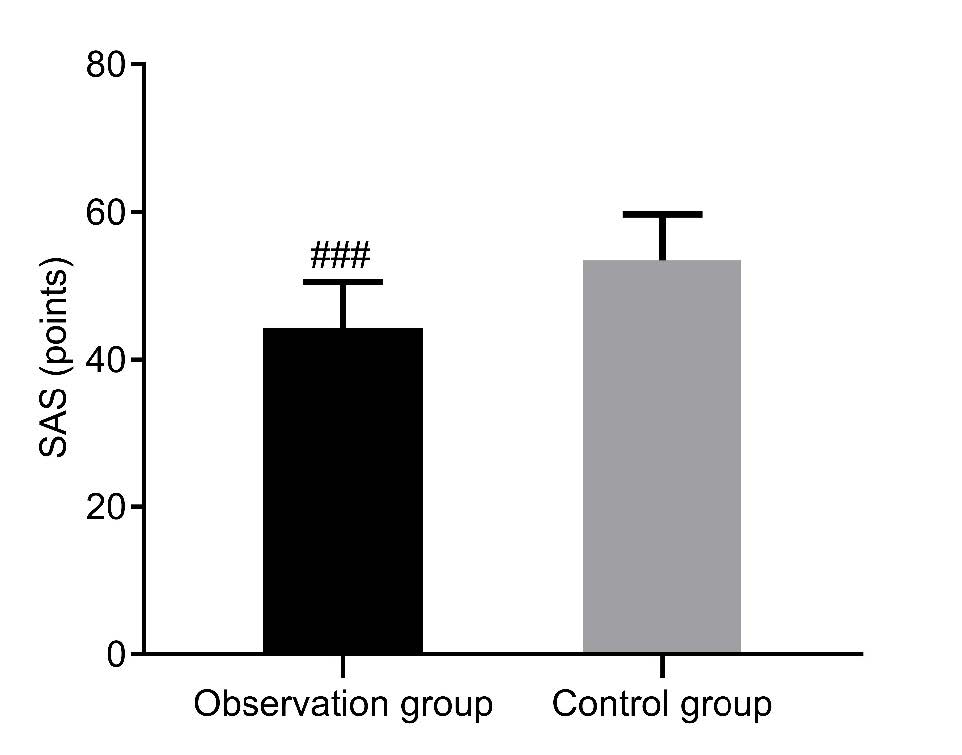
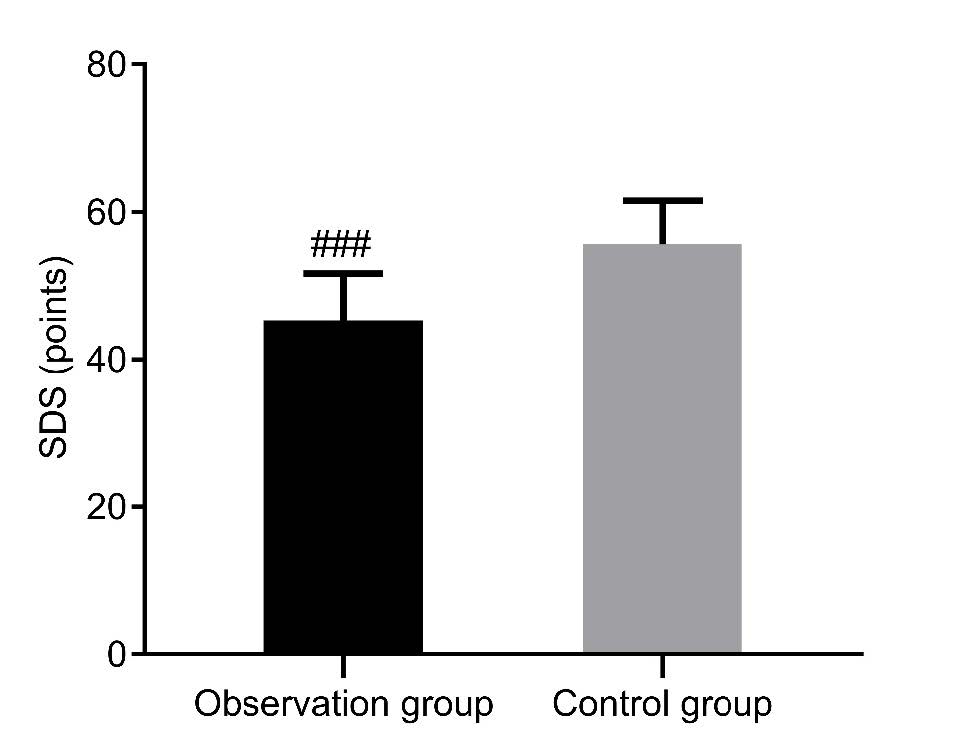
High-quality nursing intervention significantly reduced anxiety and depression levels in gynecological patients after laparoscopy, with the observation group showing lower self-rating anxiety scale and self-rating depression scale scores compared to the control group.
The observation group reported significantly lower pain scores at 6, 24, 48, and 72 hours post-surgery compared to the control group, indicating effective postoperative pain management.
The observation group exhibited better quality of life, enhanced self-care abilities, and higher nursing satisfaction compared to the control group, with significant improvements in physical function, mental health, and selfcare skills.
Open Access121522271@qq.comRong Zhang, Department of Nursing, The First Affiliated Hospital of Baotou Medical College, No.41 Shady Road, Kundulun District, Baotou 014010, Inner Mongolia Autonomous Region, China. Tel: +86-15848848666. E-mail: 121522271@qq.com.
High-quality nursing intervention significantly reduced anxiety and depression levels in gynecological patients after laparoscopy, with the observation group showing lower self-rating anxiety scale and self-rating depression scale scores compared to the control group.
The observation group reported significantly lower pain scores at 6, 24, 48, and 72 hours post-surgery compared to the control group, indicating effective postoperative pain management.
The observation group exhibited better quality of life, enhanced self-care abilities, and higher nursing satisfaction compared to the control group, with significant improvements in physical function, mental health, and selfcare skills.
Objective: To explore the effects of high-quality nursing intervention on negative emotions and quality of life in gynecological patients after laparoscopy. Methods: A total of 132 gynecological patients after laparoscopy were randomly divided into an observation group (n=66) and a control group (n=66) in a prospective study. The con-trol group received routine nursing care, while the observation group received high-quality nursing intervention. Anxiety, depression, quality of life, postoperative pain, self-care ability, and patient satisfaction were compared between the two groups. Results: The Self-Rating Anxiety Scale and Self-Rating Depression Scale scores were sig-nificantly lower in the observation group compared to the control group (both P<0.001). Pain scores at 6, 24, 48, and 72 hours post-surgery were also lower in the observation group (all P<0.001). The observation group showed significantly higher scores in physical function, general health, social function, emotional role, and mental health (all P<0.001). Furthermore, the observation group demonstrated better self-care skills, self-concept, self-care responsibility, and health knowledge (all P<0.001). Nursing satisfaction during hospitalization was significantly higher in the observation group than in the control group (P<0.05). Conclusion: High-quality nursing intervention is effective in improving depression, anxiety, postoperative pain, and quality of life in gynecological patients after laparoscopy. It also enhances self-care ability and patient satisfaction, making it worthy of clinical promotion and application.
In recent years, minimally invasive surgery, represented by laparoscopy, has developed rapidly and is widely used in clinical practice, showing good efficacy [1-4]. At present, laparoscopic surgery for gynecological diseases primarily includes hysterectomy, myomectomy, ovarian cystectomy, surgery for ectopic pregnancy, tubal surgery, infertility exploration, and pelvic dissection [5-7]. Although laparoscopic surgery for gynecological diseases offers high clinical value and is considered relatively safe, it remains an invasive procedure. Postoperative complications such as bleeding, nausea, and other symptoms may occur, negatively affecting patient prognosis and quality of life, and causing psychological distress [8, 9]. Therefore, implementing appropriate nursing interventions to alleviate these negative emotions and improve quality of life is essential for promoting patient recovery. It has been reported that high-quality nursing interventions can reduce perioperative depression and anxiety in patients with thyroid cancer and those with liver metastases after laparoscopic colorectal cancer resection [10, 11]. Comfort nursing for gynecological patients undergoing laparoscopic surgery for ovarian cysts has also been shown to improve comfort and reduce anxiety [12]. However, there is no research on the impact of high-quality nursing on the self-care abilities of gynecological patients after laparoscopy. Therefore, this study aimed to evaluate the effects of high-quality nursing interventions on anxiety, depression, quality of life, postoperative pain, self-care ability, and patient satisfaction in gynecological patients after laparoscopy, providing theoretical guidance for clinical nursing practice.
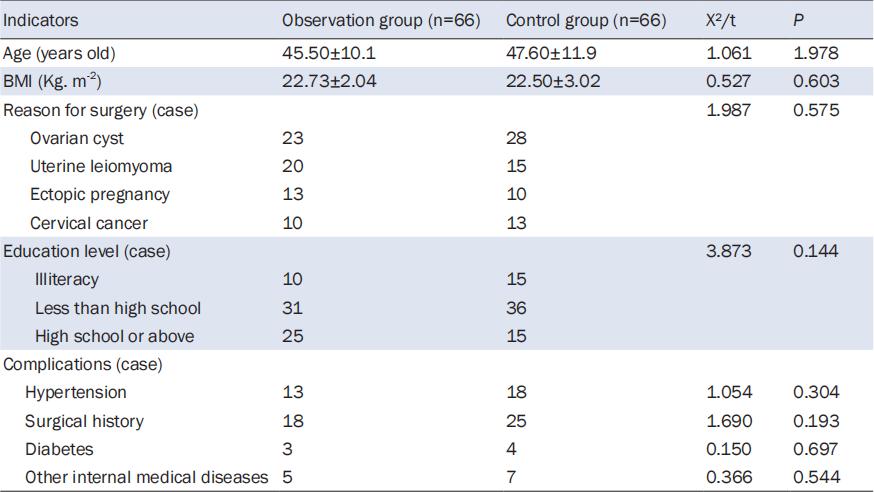
General data
This prospective study included 132 gynecological patients who underwent laparoscopy at the First Affiliated Hospital of Baotou Medical College between June 21, 2022, and June 25, 2023. The patients were randomly assigned to either the observation group (n=66) or the control group (n=66). The control group received routine nursing care, while the observation group received high-quality nursing. This study was approved by the medical ethics committee of the First Affiliated Hospital of Baotou Medical College, and all participants provided informed consent.
Inclusion criteria: Gynecological patients requiring laparoscopic surgery; Patients with normal cognitive function; Patients aged over 18 years old.
Exclusion criteria: Patients with severe heart, liver, or kidney disorders; Patients with a history of psychosis; Patients who did not cooperate; Patients with allergic reactions to therapeutic drugs; Patients with incomplete data.
Methods
Routine care was provided to the control group, which included health education, electrocardiogram monitoring, and close observation of vital signs such as heart rate and blood pressure. Intravenous access was established to provide nutritional support as needed.
The observation group received high-quality nursing, with the following specific measures [12]:
Establishment of nursing team: A high-quality nursing team was established, consisting of one attending physician, one head nurse, two nursing group leaders, and one charge nurse. The team developed a scientific and rational nursing plan, which was used as the basis for unified training for the nursing staff. All team members were required to implement the measures according to the training plan to ensure consistent nursing care.
Preoperative nursing: Preoperative education was provided to inform patients about the surgical process and precautions. Patients were encouraged to ensure adequate sleep and closely monitored for vital signs. Psychological status was assessed, and if anxiety or depressive tendencies were detected, the nursing staff communicated with the patients and their families, sharing successful case examples to boost confidence and ensure a positive attitude toward surgery.
Intraoperative care: During surgery, attention was paid to ensuring the integrity of the periumbilical skin. Heat preservation was maintained, and the nursing staff assisted the surgical team in monitoring the operation time.
Postoperative care: The incision was cleaned promptly, and the staff monitored for any signs of exudation. For patients with severe incision pain, analgesics and oxygen therapy were administered. Patients were instructed in pain relief techniques such as deep nasal breathing. The drainage tube was kept unobstructed, and the color, quantity, and shape of the drainage fluid were observed; any abnormalities were promptly reported to the physician. Early mobilization was encouraged, and family members were instructed to perform clockwise abdominal massage to alleviate abdominal distension. Patients were advised to eat light foods after gastrointestinal function recovery, with increased intake of vegetables and fruits. The nursing staff assisted patients with turning and encouraged them to cough to clear respiratory secretions and prevent pulmonary infections. Postoperatively, patient communication focused on surgical complications, with close attention paid to emotional changes. If anxiety or depressive tendencies were observed, targeted psychological interventions were provided immediately.
Aseptic Technique: Strict aseptic procedures were followed, including hand hygiene and adherence to aseptic protocols during invasive procedures.
Outcome measures
Primary outcome measures
The self-rating depression scale (SDS) was used to assess the depression status of patients. Mild depression: 53–62 points; moderate depression: 63–72 points; severe depression: ≥72 points. The higher the SDS score, the more severe the depression [14].
The medical outcomes study 36 - item short - form health survey scale was used to evaluate the quality of life of patients. This scale includes five dimensions: physical function, general health, social function, emotional role, and mental health. The maximum score for each dimension is 100, with higher scores indicating better quality of life in the corresponding dimension [15].
Secondary outcome measures
The exercise of self-care agency scale was used to assess patients' self-care abilities, including four dimensions: self-care skills, self-concept, self-care responsibility, and health knowledge level. A higher score indicates stronger self-care ability [17].
Patients completed a self-developed satisfaction survey from our hospital to assess nursing satisfaction. Satisfaction scores were categorized as: satisfactory (90–100 points), basically satisfactory (60–89 points), and unsatisfactory (<60 points). Nursing satisfaction= (satisfactory + basically satisfactory) cases/total cases*100%.
Statistical analysis
Comparison of general baseline data between the two groups

Table 1. Comparison of general baseline data between the two groups (n,x̄
±s)
Comparison of anxiety status between the two groups
Comparison of depression status between the two groups
Comparison of postoperative pain between the two groups

Comparison of quality of life between the two groups

Comparison of self-care ability between the two groups

Comparison of nursing satisfaction between the two groups

High-quality nursing intervention is based on a patient-centered approach, fully implements the nursing responsibility system, enhances the quality of care, and consequently improves patient and societal satisfaction [18]. Since its introduction into clinical practice, high-quality nursing intervention has been widely applied in the management of severe diseases, postoperative recovery, and chronic conditions, yielding positive outcomes and improving patient prognosis and nursing quality [19-21].
Anxiety and depression can result in symptoms such as increased heart rate, rapid breathing, sleep disturbances, depressed mood, and gastrointestinal issues. In severe cases, they may lead to hallucinations, delusions, and other psychotic symptoms. Studies have shown that gynecological patients undergoing laparoscopic surgery often experience anxiety and depression due to pain and the fear of postoperative complications [22]. Another study suggested that anxiety and depression can exacerbate postoperative pain in patients undergoing gynecological laparoscopic surgery [23]. Li et al. studied 90 patients with ovarian cysts, where the control group received routine care and the observation group received the high-quality care model. The results revealed significantly lower General Comfort Questionnaire and Hospital anxiety and depression scale scores in the observation group compared to the control group after intervention, concluding that the high-quality care model reduced the likelihood of anxiety [24].
Liu et al. conducted a study on 110 patients with uterine fibroids who underwent laparoscopic myomectomy [25]. The study found that the observation group had better outcomes, including shorter medication time, reduced bed rest, and shorter postoperative hospital stay, while nursing satisfaction and General Comfort Questionnaire scores were higher. The study concluded that high-quality nursing significantly reduced postoperative stress, improved patient satisfaction, and promoted rehabilitation [25]. In the present study, the observation group received the high-quality nursing model. Compared with the control group receiving routine nursing, the SAS and SDS scores of patients in the observation group were lower, indicating that the high-quality nursing model alleviated anxiety and depression. This effect may be attributed to health education on disease knowledge, the necessity of laparoscopic surgery, and postoperative complications, which helped patients actively cooperate with treatment and build confidence. Additionally, attention was paid to patients' emotional well-being postoperatively, with targeted psychological counseling to address anxiety and depression, helping to eliminate negative post-surgery emotions.
Pain is a complex physiological and psychological experience. Prolonged pain can become an unbearable affliction, amplifying negative emotions and increasing pain perception. Studies, such as that by Zhong et al., have shown that high-quality nursing can effectively alleviate pain in patients with severe intrauterine adhesions after hysteroscopic resection [26]. In this study, the observation group, receiving the high-quality nursing model, had significantly lower pain scores compared to the control group. These results suggest that the high-quality nursing model effectively relieved patient pain, likely due to the reduction of negative emotions, which in turn decreased the perceived pain.
Self-care refers to activities performed by an individual to sustain life, health, and comfort. Studies have shown that high-quality care improves the self-care abilities of patients with chronic diseases and those recovering from surgery [10]. In this study, the observation group received the high-quality nursing model. Compared with the routine nursing model in the control group, the results demonstrated that the self-care ability of the observation group was superior. This suggests that the high-quality nursing model can enhance the self-care abilities of gynecological patients undergoing laparoscopic surgery. The improvement may be attributed to health education, psychological counseling, and other interventions that reduce patients' adverse emotions. These strategies help patients better understand the surgery and prognosis, maintain optimal psychological states, alleviate pain, and ultimately improve their physical well-being and self-care abilities.
Studies have indicated that gynecological patients undergoing laparoscopic surgery are often at risk for complications such as pain, infection, bleeding, bladder and ureteral injury, intestinal obstruction, subcutaneous emphysema, and lower extremity deep venous thrombosis, all of which negatively impact their quality of life [12]. In this study, the observation group, receiving high-quality nursing, exhibited significantly higher quality of life scores across all dimensions compared to the control group. This suggests that the high-quality nursing model can improve the quality of life for gynecological patients undergoing laparoscopic surgery, likely due to the enhancement of patients' self-care abilities.
Finally, this study assessed nursing satisfaction in both groups. The results revealed significantly higher nursing satisfaction in the observation group compared to the control group. This could be attributed to the fact that high-quality nursing interventions reduced pain, anxiety, and depression, improved self-care abilities and quality of life, enhanced clinical outcomes, and provided a better subjective experience for patients seeking medical care. However, the study had limitations, including a small sample size, a single-center design, and a short follow-up period. Additionally, the study did not evaluate anxiety and depression after discharge or assess the negative emotions of core caregivers. Future studies with larger sample sizes and longer follow-up periods are needed to confirm the feasibility and significance of the high-quality nursing model for gynecological patients following laparoscopy. Further research is also needed to explore the broader application value of high-quality care.
In conclusion, the application of high-quality nursing for gynecological patients after laparoscopy shows positive effects. It can alleviate depression, anxiety, and postoperative pain, improve quality of life, enhance self-care abilities, and increase patient satisfaction. These findings suggest that the high-quality nursing model is worthy of clinical promotion and application.
Author Contributions
Yixuan Tian designed the study, conducted the data analysis, and drafted the manuscript. Chen Zhao contributed to the study design, data collection, and interpretation of the results. Wenxiu Yang assisted with the data collection, statistical analysis, and provided critical revisions to the manuscript. Rong Zhang supervised the study, contributed to the interpretation of the data, and reviewed and edited the manuscript. All authors have read and approved the final manuscript.
[1] Khandpur RS. Laparoscope. Compendium of Biomedical Instrumentation, 2019.
[2] Chen J, Yu S, Xu L. Laparoscopic Partial Splenectomy: A Safe and Feasible Treatment for Splenic Benign Lesions. Surg Laparosc Endosc Percutan Tech 2018;28(5):287-290.
[3] Liao KX, Cao L, Wang YZ, et al. Laparoscopic partial splenectomy in the treatment of splenic ectopic pregnancy. Hepatobiliary Surg Nutr 2024;13(3):569-572.
[4] Romboli A, Annicchiarico A, Morini A, et al. Laparoscopic Partial Splenectomy: A Critical Appraisal of an Emerging Technique. A Review of the First 457 Published Cases. J Laparoendosc Adv Surg Tech A 2021;31(10):1130-1142.
[5] Liu CH, Liu WM, Wang PH. Laparoscopic-aid procedure for complicated gynecologic surgery. Taiwan J Obstet Gynecol 2022;61(2):195-196.
[6] Liu ML, Gong GF, Xiao YM, et al. Evidence based nursing practice for patients undergoing gynecological laparoscopic surgery in day ward. J Nurs 2019;26(15):31-35.
[7] Joo J, Moon HK, Moon YE. Identification of predictors for acute postoperative pain after gynecological laparoscopy (STROBE-compliant article). Medicine (Baltimore) 2019;98(42):e17621.
[8] Sánchez-Margallo FM, Moreno-Naranjo B, Pérez-López MDM, et al. Laparoscopic uterine graft procurement and surgical autotransplantation in ovine model. Sci Rep 2019;9(1):8095.
[9] Carlson S, Batra S, Billow M, El-Nashar SA, et al. Perioperative Complications of Laparoscopic versus Open Surgery for Pelvic Inflammatory Disease. J Minim Invasive Gynecol 2021;28(5):1060-1065.
[10] Li DX, Ye W, Yang YL, et al. Enhanced recovery nursing and mental health education on postoperative recovery and mental health of laparoscopic liver resection. World J Gastrointest Surg 2023;15(8):1728-1738.
[11] Cui Y, Li YX. Effect of high-quality nursing on alleviating depression and anxiety in patients with thyroid cancer during perioperative period: A protocol for systematic review. Medicine (Baltimore) 2020;99(45):e23018.
[12] Li A, Du F, Jin Y, et al. Clinical Evaluation of Comfort Nursing in Gynecological Patients Undergoing Laparoscopic Surgery. Altern Ther Health Med 2023;29(6):311-315.
[13] Dunstan DA, Scott N, Todd AK. Screening for anxiety and depression: reassessing the utility of the Zung scales. BMC Psychiatry 2017;17(1):329.
[14] Sepehry AA. Zung Self-Rating Depression Scale. Springer New York, 2011.
[15] Vitorino D, Martins F, Souza A, et al. Utilização do SF-36 em ensaios clínicos envolvendo pacientes fibromiálgicos. Revista Neurociências 2019;12(3):147-151.
[16] Maxwell C. Sensitivity and accuracy of the visual analogue scale: a psycho-physical classroom experiment. Br J Clin Pharmacol 1978;6(1):15-24.
[17] Riesch SK, Hauck MR. The exercise of self-care agency: an analysis of construct and discriminant validity. Res Nurs Health. 1988;11(4):245-55.
[18] Sepulveda C, Habiyambere V, Amandua J, et al. Quality care at the end of life in Africa. BMJ 2003;327(7408):209-213.
[19] Ma T, Zhang LJ. Observation on psychological state and nursing satisfaction of patients with hysteromyoma after total hysterectomy with high quality nursing intervention. Guizhou Med J 2018;42(6):767-768.
[20] Li C, Liu J, Yuan C, et al. Effect of high-quality nursing intervention in obstetrics and gynecology nursing. Panminerva Med 2023;65(1):113-114.
[21] Qian X, Gong L, Zhou F, et al. High-Quality Nursing Combined with the Whole-Course Responsibility Nursing Intervention Reduces the Incidence of Complications in Severe Aneurysmal Subarachnoid Hemorrhage. Evid Based Complement Alternat Med 2022;2022:3252718.
[22] Yin YN, Chen J, Long DR. Investigation on anxiety and depression symptoms and influencing factors in 2121 patients with gynecological surgery. Mod Prev Med 2018;45(12):2293-2296.
[23] Liu YQ, Luo QY, Huang SQ, et al. Effect of anxiety and depression on postoperative pain in patients undergoing gynecological laparoscopic surgery. J Clin Anesthesiol 2018;34(3):254-257.
[24] Li A, Du F, Jin Y, Zhuang L. Clinical Evaluation of Comfort Nursing in Gynecological Patients Undergoing Laparoscopic Surgery. Altern Ther Health Med 2023;29(6):311-315.
[25] Liu Z, Gao Z, Li F, et al. Application Effect of Laparoscopic Myomectomy and Comprehensive Rehabilitation Nursing on Patients with Uterine Fibroids. Comput Math Methods Med 2022;2022:4018803.
[26] Zhong CX, Liu HY, Gu LH, et al. Effect of high quality nursing on quality of life and pain of patients with severe intrauterine adhesions after hysteroscopic resection. J Mod Integr Chin West Med 2018;27(23):105-108.


 Log In

 On This Page
 CITE
CITE