 Log In
Search




 Open Access
 louqw@tkhealthcare.com
Received April 9, 2024; Accepted January 15, 2025; Published January 31, 2025
Cognitive intervention combined with aerobic limb rehabilitation significantly improves neurological and motor functions in hemiplegic patients with hypertensive intracerebral hemorrhage.
This approach enhances psychological resilience and quality of life, showing substantial benefits for patient recovery.
Integrating professional education, psychological support, and family involvement promotes comprehensive rehabilitation outcomes.
Open Accesslouqw@tkhealthcare.comReceived April 9, 2024; Accepted January 15, 2025; Published January 31, 2025
Cognitive intervention combined with aerobic limb rehabilitation significantly improves neurological and motor functions in hemiplegic patients with hypertensive intracerebral hemorrhage.
This approach enhances psychological resilience and quality of life, showing substantial benefits for patient recovery.
Integrating professional education, psychological support, and family involvement promotes comprehensive rehabilitation outcomes.
Objective: To explore the effect of cognitive intervention combined with aerobic limb rehabilitation exercise on neurological and limb functions in hemiplegic patients with hypertensive intracerebral hemorrhage. Methods: A prospective study was conducted with eighty-six hemiplegic patients with hypertensive intracerebral hemorrhage admitted to Taikang Xianlin Drum Tower Hospital from October 2021 to October 2023. The patients were randomly divided into a study group (43 cases) and a control group (43 cases). After 6 months of intervention, neurological function, motor and limb function, psychological state, and quality of life scores were compared between the two groups to assess the effects of the intervention. Results: After the intervention, neurological function indexes in the study group, including S100B protein, myelin basic protein and National Institutes of Health Stroke Scale score, were significantly lower than those in the control group (all P<0.05). In contrast, brain-derived neurotrophic factor and Mini-Mental State Examination scores were significantly higher in the study group (all P<0.05). Additionally, motor function, Barthel score, Fugl-Meyer score, and muscle strength (grades V and IV) were significantly higher in the study group compared to the control group (all P<0.05). Psychological resilience, including scores for toughness, optimism, and strength, as well as the total resilience score, were significantly higher in the study group (all P<0.05). Moreover, the Generic Quality of Life Inventory score was also significantly higher in the study group (P<0.05). Conclusion: Cognitive intervention combined with aerobic limb rehabilitation exercises can alleviate neurological damage in hemiplegic patients with hypertensive intracerebral hemorrhage, enhance muscle strength, promote limb and motor function recovery, and improve psychological state and quality of life.
If hypertension persists over time, it can cause fibrous in the walls of cerebral basilar arterioles or vitreous lesions, focal necrosis, and reduced elasticity of blood vessel walls. When blood pressure suddenly rises due to excessive physical labor, mental stress, intellectual work, or intense emotional stimulation, pathological blood vessels may rupture, leading to cerebral hemorrhage, commonly referred to as hypertensive intracerebral hemorrhage (HICH) [1]. HICH has a rapid onset, fast progression, and poor prognosis. Its main clinical manifestations include sudden headache, vomiting, lethargy, and coma, which can reach peak severity within minutes. The mortality rate accounts for more than 20% of total stroke-related deaths [2]. With advancements in emergency treatment technologies, the mortality rate of HICH has been significantly reduced. At present, surgical treatment remains the most effective therapy for HICH, with the primary goal being to reduce neurological damage and promote functional recovery [3]. However, data show that half of the patients who survive cerebral hemorrhage experience sequelae such as motor, cognitive, or neurological dysfunction. Among them, three-fourths are prone to varying degrees of hemiplegia, with more than 40% suffering from severe hemiplegia—this being the most common sequela after acute-stage HICH treatment [4]. Previous studies have consistently shown that rehabilitation training is the primary rehabilitation method to promote nerve function recovery in HICH patients, improve motor function in limbs, enhance quality of life, and improve prognosis [5, 6].
However, the rehabilitation process is lengthy, and patient compliance often remains a challenge. Some studies have suggested that cognitive intervention can enhance patients' awareness of their condition, help establish positive rehabilitation beliefs, and improve their problem-solving and self-management skills through regular training in attention, willpower, memory, and cognitive ability, encouraging active participation in disease prevention [7]. Nevertheless, previous research has mostly focused on simple rehabilitation training, rarely incorporating cognitive intervention, and often only measuring single outcomes such as motor or neurological function, which lacks comprehensiveness [8]. Therefore, this study aims to combine rehabilitation for nerve, muscle, and joint function in HICH hemiplegic patients with cognitive intervention to explore their combined effects on improving nerve and limb function.
General information
In this study, 86 patients with hemiplegia due to hypertensive intracerebral hemorrhage, admitted to Taikang Xianlin Drum Tower Hospital from October 2021 to October 2023, were recruited and randomly assigned to either the study group (treated with cognitive intervention combined with aerobic rehabilitation exercise) or the control group (treated with routine rehabilitation intervention), with 43 cases in each group. The study was approved by the medical ethics committee of Taikang Xianlin Drum Tower Hospital.
Inclusion criteria: Patients diagnosed with cerebral hemorrhage via CT or MRI, with a history of hypertension prior to onset [9]. Patients who were conscious and presented with hemiplegia of varying severity. Patients who had received treatment in Department of Health Management Center and were in a stable bleeding phase with stable vital signs. Patients aged ≥50 years. Patients with complete data required for analysis in this study.
Exclusion criteria: Patients with primary limb dysfunction. Patients with severe cognitive dysfunction or consciousness disorders. Patients with tumors or other serious systemic diseases. Patients whose cerebral hemorrhage was caused by other factors or who had other brain diseases. Patients with a history of severe coagulation disorders, liver or kidney dysfunction, or mental illness.
Methods
Patients in the control group received routine rehabilitation intervention [10]. This included guidance on stretching the shoulder, elbow, and wrist joints; the use of tools to assist in increasing the range of motion; rapid traction for muscle expansion and contraction stimulation; and resistance training to stabilize the shoulder, elbow, and wrist joints. Rehabilitation nurses supervised daily training sessions, which lasted approximately 30 minutes. Additionally, patients were encouraged to perform both-handed handshake exercises as needed.
In contrast, patients in the study group received a combination of cognitive intervention and aerobic limb rehabilitation exercises.
Cognitive intervention
Healthcare nurses followed a progressive approach, from simple to complex, in delivering cognitive function interventions to patients [11]. The specific components were as follows:
Disease knowledge awareness: Many patients and their families were not healthcare professionals and lacked a clear understanding of the disease, often leading to panic. Therefore, healthcare workers should educate patients and their families on disease knowledge, rehabilitation mechanisms, the significance of training, and potential complications. This began with a general lecture to provide an overview of the disease, followed by smaller group sessions to focus on specific rehabilitation mechanisms. These sessions should ensure patients and their families understand the rehabilitation process. Additionally, during rehabilitation, healthcare personnel should inform patients and families about possible complications to prevent panic during emergencies.
Psychological awareness: After hemiplegia, many conscious patients often experienced a lack of self-confidence and enthusiasm for rehabilitation. They may also develop negative emotions such as anxiety and depression due to limited mobility and decreased self-care abilities. Rehabilitation courses tended to be lengthy, and the effects were often slow, which led to feelings of discouragement and despair in both patients and their families. Therefore, psychological interventions were essential to help patients restore their belief in active recovery [12]. First, healthcare workers should communicate actively with patients and families to identify the sources of negative emotions. Based on the patient's personality, tailored interventions can be provided. For patients who have lost confidence, successful rehabilitation examples from previous patients can be shared to boost morale. The importance and effectiveness of active rehabilitation should also be emphasized, reinforcing the patient’s psychological readiness to engage in rehabilitation. Finally, patients should be given scientific guidance on how to adjust negative emotions, promoting the understanding that maintaining a positive mindset was crucial.
Family awareness: After discharge, home care relied heavily on family members, making it crucial to enhance their understanding of the importance and necessity of rehabilitation training. Initially, family members should receive training before discharge to ensure they can effectively and correctly assist with rehabilitation exercises. Emphasis should also be placed on the critical role of family in supervising and supporting rehabilitation. After the patient returns home, healthcare workers should regularly follow up with the family through phone calls or text messages to reinforce their understanding and involvement in the rehabilitation process.
Lifestyle awareness: Post-rehabilitation, patients also have specific lifestyle needs. Both patients and their families should be educated on maintaining a healthy lifestyle. In terms of diet, family members should be instructed to ensure a balanced and nutritious diet, emphasizing foods rich in protein and vitamins while avoiding greasy foods. In daily life, it is important for families to encourage patients to spend time outdoors, promote good sleep hygiene, and engage in regular conversations to improve overall mental well-being.
Aerobic limb rehabilitation exercises
The rehabilitation nurse evaluated the patient's limb mobility and guided them in aerobic limb rehabilitation exercises through video presentations and face-to-face explanations. Family members were also instructed to assist with the exercises. The training mode was tailored to the patient's hemiplegia grade. For patients with grades 0–II, who could only lie in bed, passive exercises were applied, including instructions to raise, flex, and rotate their limbs in bed. For patients with hemiplegia grade II or higher, active exercises were introduced, and the patients were encouraged to perform limb movements independently, including both upper and lower limb exercises [13]. The specific exercises were as follows:
Upper limb movements: This included exercises for the wrists, fingers, shoulders, and arms. First, the rehabilitation nurse assisted patients in swinging their shoulders back and forth, with forearms close to the upper arms for stretching, flexion, and extension. Then, patients were instructed to flex their wrists, bend their fingers, and stretch them as much as possible, with additional assistance in stretching or bending muscles, ligaments, and nerves.
Lower limb movements: Exercises targeted the lower leg, ankle, toes, and knee joints. Initially, the rehabilitation nurse instructed patients to lie prone, assisted with lower leg flexion and extension, and ensured one leg remained upright while practicing with both legs. Next, patients were guided to bend and rotate their ankle joints, move surrounding muscles, ligaments, and nerves, and perform toe movements, such as bending the toes backward while alternating feet. Finally, patients were instructed on knee movements, including joint flexion, and exercises targeting knee muscles, nerves, and surrounding ligaments.
Outcome measures and evaluation criteria
Main outcome measures
Nerve Function Recovery: Nerve function was assessed using the following biomarkers: S100B protein, myelin basic protein (MBP), and brain-derived neurotrophic factor (BDNF). Fasting venous blood was collected from the patients in the early morning, centrifuged at 3,000 rpm for 3 minutes, and analyzed using an enzyme-linked immunosorbent assay (ELISA) kit (Wuhan Xinqidi Biological Technology Co., Ltd, China). Additionally, the National Institutes of Health Stroke Scale (NIHSS) was used to evaluate neurological function [14]. The NIHSS includes 45 points, covering areas such as consciousness level, gaze, visual field, facial paralysis, upper limb movement, lower limb movement, ataxia, and sensation, with the score being directly proportional to the degree of neurological impairment.
Cognitive function: Cognitive function was assessed using the Mini-Mental State Examination (MMSE), which includes dimensions such as orientation, memory, attention and calculation, recall, and language ability [15]. The total score is 30 points, with a score below 27 indicating cognitive dysfunction, and a score of 27 or higher considered normal.
Limb motor function: Limb motor function was evaluated using the Barthel Index, Fugl-Meyer Scale, and muscle strength grading [16, 17]. The Barthel Index has a total score of 100, with the score directly proportional to the patient’s ability to perform daily activities. The Fugl-Meyer Scale consists of an upper limb section (66 points) and a lower limb section (34 points), with higher scores reflecting better motor function. Muscle strength was graded as follows [18]: Grade V: Normal muscle strength with full range of motion. Grade IV: Muscle strength is nearly normal, but the affected limb cannot fully resist external resistance. Grade III: Muscle strength is sufficient to resist gravity but not external resistance. Grade II: Muscle strength can resist gravity but cannot overcome external resistance, allowing only horizontal movement. Grade I: Muscle shows slight contraction but cannot move the joint. Grade 0: No muscle contraction. The above outcomes were assessed before the intervention and at six months post-intervention.
Secondary outcome measures
Mental state: The Connor-Davidson Resilience Scale (CD-RISC) was used to assess mental state [19]. The Cronbach's α coefficient for the scale was 0.878. It consists of three dimensions: toughness (10 items), optimism (8 items), and power (7 items). The scale was scored using a 5-point Likert scale, with positive scores ranging from 1 to 5, for a total score of 100 points. The score was directly proportional to the psychological state.
Quality of life: The Generic Quality of Life Inventory (GQOLI) was used to evaluate quality of life, covering physical health, mental health, social function, and material life, with a total of 74 items and 20 factors [20]. The score was directly proportional to the quality of life.
The above indicators were assessed before the intervention and six months after the intervention.
Statistical methods
All statistical data were analyzed using SPSS 21.0. Measurement data are presented as mean ± standard deviation (Mean±SD). Intra-group comparisons were made using the independent sample t-test, while comparisons between groups were performed using the paired t-test. Counting data are presented as case numbers/percentages (n/%), and the chi-square test was applied. A p-value of <0.05 was considered statistically significant.
Comparison of general data
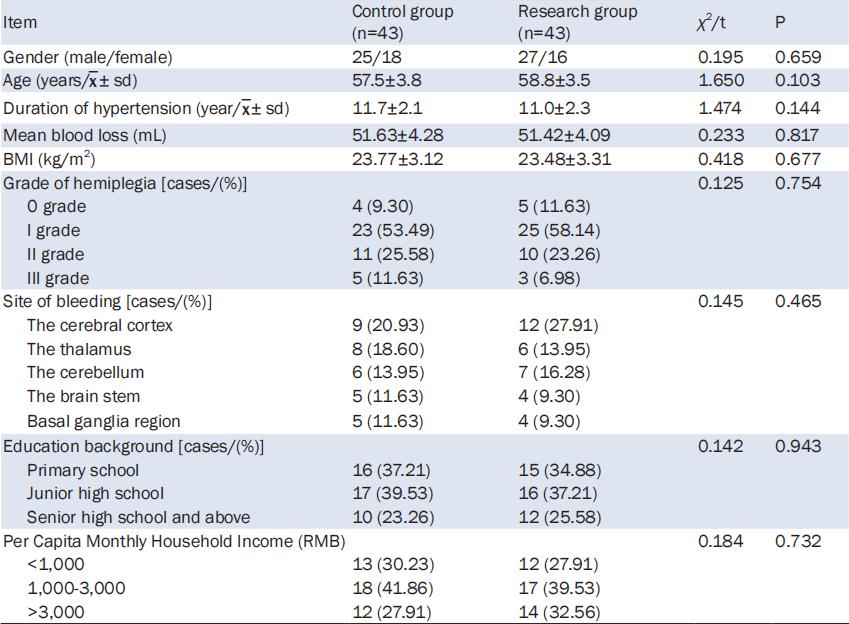
There were no statistically significant differences between the two groups in terms of gender, age, duration of hypertension, mean blood loss, BMI (body mass index), grade of hemiplegia, site of bleeding, education level, or per capita monthly household income (all P>0.05), as shown in Table 1.

Comparison of neurological function indexes
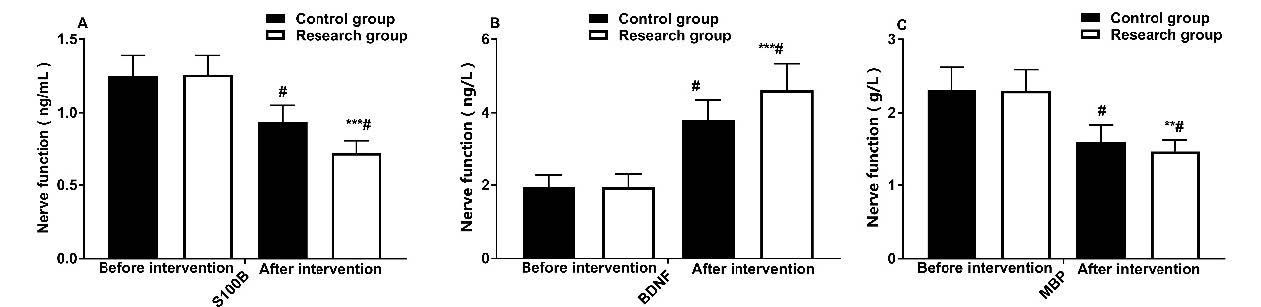
Before the intervention, there were no significant differences in neurological function indexes between the two groups (all P>0.05). After the intervention, levels of S100B and MBP decreased significantly, while BDNF increased significantly in both groups (all P<0.05). Notably, the decreases in S100B and MBP and the increase in BDNF were significantly greater in the study group compared to the control group (all P<0.01), as shown in Figure 1.
Comparison of NIHSS and MMSE scores
Before the intervention, there were no significant differences in NIHSS and MMSE scores between the two groups (both P>0.05). After the intervention, the decrease in NIHSS and the increase in MMSE were significant in both groups (both P<0.05), and these changes were significantly greater in the study group compared to the control group (both P<0.001), as shown in Table 2.

Note: Compared with Before intervention, *P<0.05. NIHSS, National Institutes of Health Stroke Scale; MMSE, mini-mental state examination.
Comparison of limb motor function
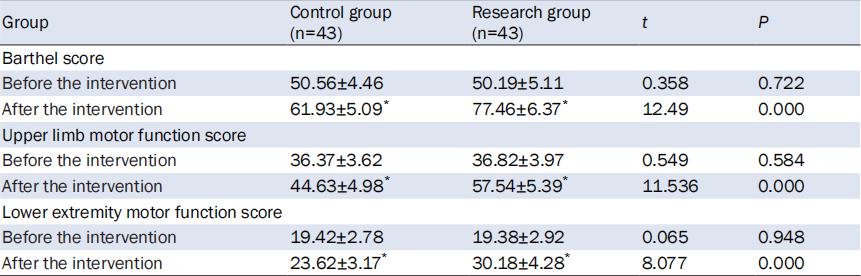
Before the intervention, there were no significant differences in the Barthel scoreslimb motor function indexes between the two groups (all P>0.05). After the intervention, Barthel scores and motor function scores for upper and lower limbs significantly improved in both groups compared to baseline (all P<0.05). The improvements in these indexes were significantly greater in the study group compared to the control group (all P<0.001), as shown in Table 3.
Comparison of muscle strength
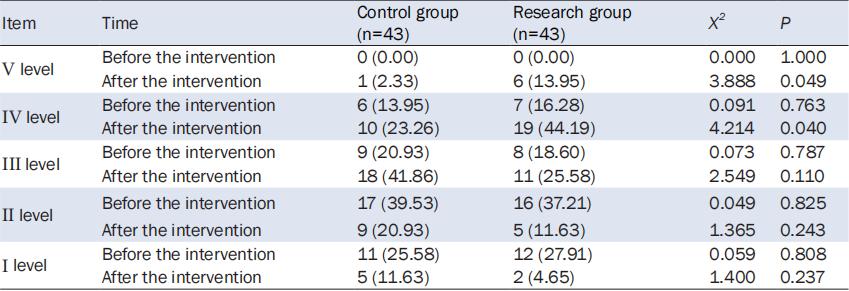
Before the intervention, no significant differences in muscle strength levels were observed between the two groups (all P>0.05). After the intervention, the number of patients with grade V and IV muscle strength in the study group was significantly higher than in the control group (both P<0.05), as shown in Table 4.
Comparison of CD-RISC scores
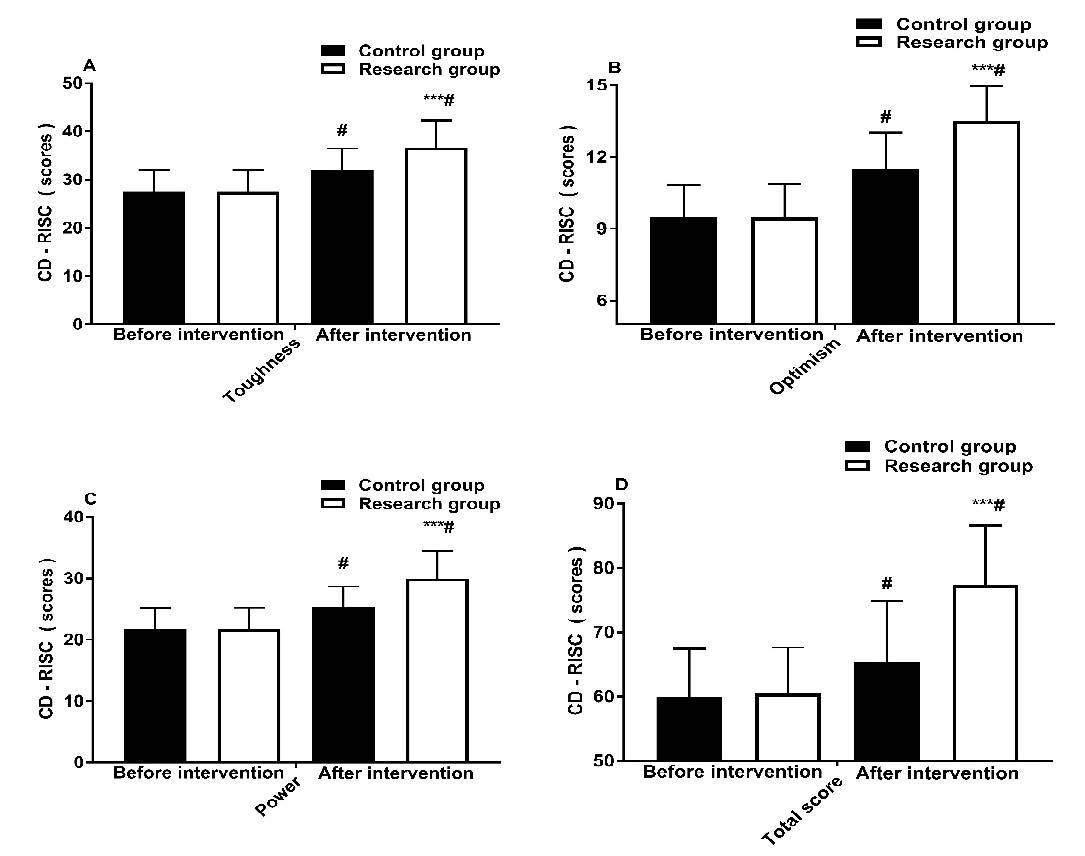
Before the intervention, there were no significant differences in the scores for each dimension or the total score of the resilience scale between the two groups (all P>0.05). After the intervention, both the dimension scores and the total score of the resilience scale significantly increased in both groups (all P<0.05). The study group showed significantly higher scores in tenacity, optimism, and strength, as well as a higher total score of the CD-RISC compared to the control group (all P<0.001), as shown in Figure 2.
Comparison of GQOLI scores
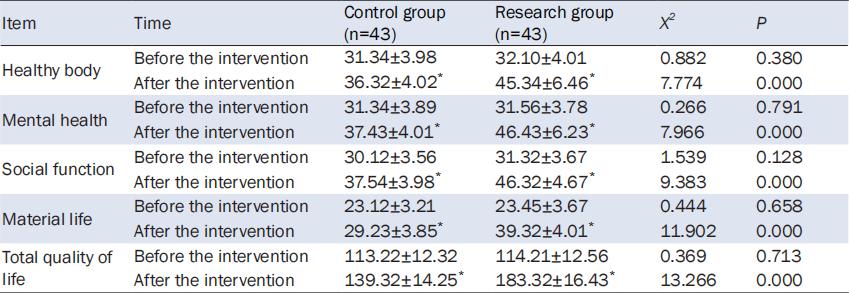
Before the intervention, there were no significant differences in quality of life scores or the total scores between the two groups (all P>0.05). After the intervention, the scores for all dimensions and the total quality of life scores significantly improved in both groups (all P<0.05). The study group showed significantly greater improvements in physical health, mental health, social function, material life, and total scores of the GQOLI compared to the control group (all P<0.001), as shown in Table 5.
Hemiplegia is one of the most common sequelae of HICH, and represents a significant neurological deficit that severely impacts patients' daily activities and motor abilities, leading to poor self-care capabilities [21]. Additionally, due to the extended recovery period, patients often exhibit weak psychological endurance and physical ability. External factors such as economic status, personal quality, and family and societal support contribute to the slow rehabilitation progress of many patients [22]. Therefore, enhancing patients' cognitive abilities and guiding them to establish correct perspectives are crucial for promoting their rehabilitation [23]. Studies have confirmed that the key to recovering neurological dysfunction lies in the reconstruction of synaptic connections related to brain tissue through learning, ultimately reshaping the brain's structure and function [24]. At present, rehabilitation training is the most important approach for hemiplegic patients with HICH to recover from neurological deficits, improve limb function, and enhance self-care abilities [25, 26].
In this study, conventional aerobic limb rehabilitation exercises combined with cognitive intervention were applied to hemiplegic patients with HICH. The results showed that after the intervention, the S100B, MBP levels and NIHSS scores, were significantly lower in the study group compared to the control group. In contrast, BDNF levels and MMSE scores were significantly higher in the study group, indicating that cognitive intervention significantly improved the neurological function of patients.
Moreover, studies have shown that neurological function is correlated with the quality of life and social status of patients, making it a key index for evaluating the prognosis of hemiplegic patients with HICH. Therefore, assessing the rehabilitation effectiveness in terms of neurological improvement is of great significance [27].
The improvement in neurological function is attributed to the implementation of both professional knowledge-based cognitive intervention and psychological cognitive intervention. Professional knowledge-based cognitive intervention enhances patients' understanding of their condition by educating them and their families about disease knowledge, rehabilitation mechanisms, training significance, and potential complications. This foundation supports the effective implementation of aerobic limb rehabilitation exercises [28]. The cognitive and emotional components in the brain are activated through such interventions. These components, part of a specific neural matrix, help residual brain cells fully mobilize their compensatory functions, contributing to the reconstruction or remodeling of brain tissue. Simultaneously, the enhancement of cognitive function stimulates nerve cell proliferation, alleviates ischemia and hypoxia in brain tissue, and improves neurological dysfunction. This finding is consistent with the research by Tomida et al., which confirmed that combined skill and strength training significantly improves neurological and limb motor function in stroke patients with hemiplegia [29].
Furthermore, the results showed that after the intervention, psychological state scores and the total resilience score in the study group were significantly higher than in the control group. This suggests that routine rehabilitation, combined with cognitive intervention, can improve the psychological state of patients. This improvement is closely linked to the enhanced psychological cognition of patients and their families.
Hemiplegic patients often struggle with a lack of confidence and rehabilitation motivation and are prone to negative emotions such as anxiety and depression. Families of such patients may also experience negative emotions like discouragement and despair. Therefore, it is crucial to enhance patients' awareness of the importance of maintaining positive emotions, which can improve their enthusiasm for rehabilitation and their compliance with treatment. This, in turn, helps alleviate negative emotions. These findings align with those of Küçük et al., who reported significant improvements in patients’ psychological status following psychological cognition interventions [24].
Finally, the results of this study also showed that after the intervention, Barthel and Fugl-Meyer scores, as well as muscle strength levels (grades V and IV), were significantly higher in the study group compared to the control group. This demonstrates that cognitive intervention effectively improves the limb motor function of patients.
In addition to professional knowledge and psychological interventions, this study also included cognitive intervention for patients' families. It is essential to raise awareness among patients' families regarding the importance and necessity of rehabilitation training, and to ensure they understand rehabilitation techniques. This enables families to assist scientifically and actively supervise patients during rehabilitation, thereby enhancing the effectiveness of the training. The combination of these interventions improved patients' enthusiasm for and the scientific approach to aerobic limb rehabilitation exercises, ultimately improving the therapeutic outcomes. These findings are consistent with those of Zang et al., which indicated that combining skill training with limb training enhances motor function in hemiplegic limbs [30]. Furthermore, the results showed that the GQOIL score in the study group was significantly higher than in the control group, indicating that cognitive intervention substantially improved patients' quality of life and contributed to better overall prognosis. This aligns with the findings of Umeki et al. [31].
The strength of this study lies in the independent development of aerobic limb rehabilitation exercises for HICH patients with hemiplegia, the innovative integration of cognitive intervention with rehabilitation training, and the relatively comprehensive research outcomes. However, the study is limited by its single-center design, small sample size, and short follow-up period. Therefore, future studies should extend the follow-up duration and expand the sample size for further validation.
In conclusion, combining cognitive intervention with aerobic limb rehabilitation exercises can alleviate neurological damage in HICH patients with hemiplegia, enhance muscle strength, promote recovery of limb and motor functions, and improve psychological well-being and quality of life. These findings suggest that this approach is worthy of clinical promotion.
Author contributions
Yimun Zhang was responsible for testing and writing. Wu Yan and Yang Bo are responsible for summarizing the data. Qianwen Lou was responsible for finding relevant literature.
[1] Hostettler IC, Seiffge DJ, Werring DJ. Intracerebral hemorrhage: an update on diagnosis and treatment. Expert Rev Neurother 2019;19(7):679-694.
[2] Magid-Bernstein J, Girard R, Polster S, et al. Cerebral Hemorrhage: Pathophysiology, Treatment, and Future Directions. Circ Res 2022;130(8):1204-1229.
[3] Rajashekar D, Liang JW. Intracerebral Hemorrhage. In: StatPearls. Treasure Island (FL): StatPearls Publishing, 2023.
[4] Dash A, Dutta A, Lahiri U. Quantification of grip strength with complexity analysis of surface electromyogram for hemiplegic post-stroke patients. NeuroRehabilitation 2019;45(1):45-56.
[5] Wang J, Tian L, Zhang Z, et al. Scalp-acupuncture for patients with hemiplegic paralysis of acute ischaemic stroke: a randomized controlled clinical trial. J Tradit Chin Med 2020;40(5):845-854.
[6] Liu X, Zhang P, Guo C, et al. Effect of rehabilitation therapy and nursing intervention on postoperative recovery of patients with hypertensive intracerebral hemorrhage. Exp Ther Med 2019;17(6):4598-4604.
[7] Bellelli F. Cognitive Interventions: Symptomatic or Disease-Modifying Treatments in the Brain?. JAR Life 2024;13:60-64.
[8] Zhang L, Xu L, Jing S, et al. Efficacy of Neuroendoscopy Surgery Combined With Postoperative Lokomat Rehabilitation Training in Patients With Hypertensive Intracerebral Hemorrhage. J Craniofac Surg 2024.
[9] Jnaid H, Aldosari M, Ahmad MW, et al. Assessment of appropriate utilization of out-of-office diagnostic tools for the diagnosis of hypertension. J Family Med Prim Care 2024;13(11):5083-5089.
[10] Shahid J, Kashif A, Shahid MK. A Comprehensive Review of Physical Therapy Interventions for Stroke Rehabilitation: Impairment-Based Approaches and Functional Goals. Brain Sci 2023;13(5):717.
[11] Pike KE, Li L, Naismith SL, et al. Implementation of Cognitive (Neuropsychological) Interventions for Older Adults in Clinical or Community Settings: A Scoping Review. Neuropsychol Rev 2024.
[12] Tian X, Zhou X, Sun M, et al. The effectiveness of positive psychological interventions for patients with cancer: A systematic review and meta-analysis. J Clin Nurs 2024;33(9):3752-3774.
[13] Amorim H, Cadilha R, Parada F, et al. Progression of aerobic exercise intensity in a cardiac rehabilitation program. Rev Port Cardiol (Engl Ed) 2019;38(4):281-286.
[14] Lyden P. Using the National Institutes of Health Stroke Scale: A Cautionary Tale. Stroke 2017;48(2):513-519.
[15] Devos P, Debeer J, Ophals J, et al. Cognitive impairment screening using m-health: an android implementation of the mini-mental state examination (MMSE) using speech recognition. Eur Geriatr Med 2019;10(3):501-509.
[16] Maze Y, Tokui T, Narukawa T, et al. Impact of the Barthel Index Score and Prognosis on Patients Undergoing Transcatheter Aortic Valve Replacement and Surgical Aortic Valve Replacement. Circ J 2024;88(4):483-491.
[17] Duong Thi Huong Nguyena, Dieu Thuong Thi Trinha. Correlation of the Fugl Meyer assessment, Motricity Index and Barthel Index scales in the assessment of rehabilitation in post-stroke patients. MedPharmRes 2023;7(4):1-10
[18] Lorbergs AL, Prorok JC, Holroyd-Leduc J, et al. Nutrition and Physical Activity Clinical Practice Guidelines for Older Adults Living with Frailty. J Frailty Aging 2022;11(1):3-11.
[19] Kuiper H, van Leeuwen CCM, Stolwijk-Swüste JM, et al. Measuring resilience with the Connor-Davidson Resilience Scale (CD-RISC): which version to choose?. Spinal Cord 2019;57(5):360-366.
[20] Song Y, Wang F, Yang Y, et al. Influence of Evidence-Based Nursing on Psychological Status, Neurological Function, and Life Quality of Patients with Acute Poststroke Depression. Dis Markers 2022;2022:7099908.
[21] Sheth KN. Spontaneous Intracerebral Hemorrhage. N Engl J Med 2023;388(15):1440.
[22] GBD 2019 Stroke Collaborators. Global, regional, and national burden of stroke and its risk factors, 1990-2019: a systematic analysis for the Global Burden of Disease Study 2019. Lancet Neurol 2021;20(10):795-820.
[23] Cicerone KD, Goldin Y, Ganci K, et al. Evidence-Based Cognitive Rehabilitation: Systematic Review of the Literature From 2009 Through 2014. Arch Phys Med Rehabil 2019;100(8):1515-1533.
[24] Küçük EB, Küçük E, Kaydok E, et al. Dry eye in chronic stroke patients with hemiplegia: A cross-sectional study. Top Stroke Rehabil 2020;27(8):630-635.
[25] Cao L, Li X, Yan P, et al. The effectiveness of aerobic exercise for hypertensive population: A systematic review and meta-analysis. J Clin Hypertens (Greenwich) 2019;21(7):868-876.
[26] Kinsella GJ, Pike KE, Wright BJ. Who benefits from cognitive intervention in older age? The role of executive function. Clin Neuropsychol 2020;34(4):826-844.
[27] Elsner B, Kugler J, Pohl M, et al. Transcranial direct current stimulation (tDCS) for improving activities of daily living, and physical and cognitive functioning, in people after stroke. Cochrane Database Syst Rev 2020;11(11):CD009645.
[28] Hishikawa N, Takahashi Y, Fukui Y, et al. Yoga-plus exercise mix promotes cognitive, affective, and physical functions in elderly people. Neurol Res 2019;41(11):1001-1007.
[29] Tomida K, Sonoda S, Hirano S, et al. Randomized Controlled Trial of Gait Training Using Gait Exercise Assist Robot (GEAR) in Stroke Patients with Hemiplegia. J Stroke Cerebrovasc Dis 2019;28(9):2421-2428.
[30] Zang J, Liu AX, Qi L. The cytological mechanism and effects of hypertensive cerebral hemorrhage treatment by citicoline on serum GFAP and copeptin level. Eur J Inflammation 2019;17:205873921986724.
[31] Umeki N, Murata J, Higashijima M. Effects of Training for Finger Perception on Functional Recovery of Hemiplegic Upper Limbs in Acute Stroke Patients. Occup Ther Int 2019;2019:6508261.


 Log In

 On This Page
 CITE
CITE