 Log In
Search




 Open Access
 631138234@qq.com
The dynamic nursing quality feedback model significantly improves psychological flexibility, nutritional status, and self-management abilities in elderly patients undergoing radical resection for colon cancer.
This precise nursing approach enhances patient satisfaction, promotes awareness of postoperative care, and effectively reduces psychological distress.
The findings underscore the clinical value of implementing dynamic feedback systems to refine nursing practices and improve rehabilitation outcomes.
Open Access631138234@qq.comThe dynamic nursing quality feedback model significantly improves psychological flexibility, nutritional status, and self-management abilities in elderly patients undergoing radical resection for colon cancer.
This precise nursing approach enhances patient satisfaction, promotes awareness of postoperative care, and effectively reduces psychological distress.
The findings underscore the clinical value of implementing dynamic feedback systems to refine nursing practices and improve rehabilitation outcomes.
Objective: To investigate the impact of precise nursing care based on dynamic nursing quality feedback model on the postoperative recovery of elderly patients undergoing radical resection for colon cancer, with a particular focus on its effects on psychological flexibility. Methods: Medical records of 124 elderly patients undergoing radical resection for colon cancer at The First Affiliated Hospital of Baotou Medical College between January 2021 and May 2024 were retrospectively analyzed in this study. Based on the received nursing interventions, the patients were divided into a control group (standard nursing care) and an observation group (precise nursing care based on a dynamic nursing quality feedback model). Results: The observation group exhibited significantly higher levels of hemoglobin, prealbumin, and albumin compared to the control group. Additionally, the observation group had lower scores in somatization, interpersonal sensitivity, depression, anxiety, obsessions-compulsions, hostility, phobic anxiety, psychoticism, and paranoid ideation. The observation group also demonstrated higher scores in active coping, self-efficacy, and the management of emotions, life, and symptoms. Improvements were also observed in nursing quality, perioperative intervention, satisfaction with rehabilitation guidance, and awareness of regular re examinations, diet intervention, and complication prevention (all with P<0.05). Conclusion: Precise nursing based on a dynamic nursing quality feedback model can improve nutritional status and medical coping style, reduce psychological issues, and enhance self-management abilities in elderly patients following radical resection of colon cancer. Additionally, it increases nursing satisfaction and raises awareness regarding the importance of regular reexaminations and complication prevention.
Radical resection of colon cancer is a widely used treatment that enables the removal of lesion tissue, which greatly prolongs patients' life expectancy [1]. The surgical indications are broad, and most patients experience favorable prognosis. However, elderly patients frequently present with various underlying diseases and may lack awareness or understanding of surgical procedures and treatment options, which can result in significant psychological fluctuations [2]. Psychological flexibility refers to an individual's ability to adapt to negative life events, such as stress, frustration, and trauma [3]. A study by Wang et al. found that patients with colon cancer had low psychological flexibility scores, and that higher levels of psychological flexibility were positively correlated with better quality of life [4]. Low levels of psychological flexibility can adversely affect the immediate surgical outcomes and postoperative recovery in elderly patients with colon cancer following surgery.
The nursing quality feedback theory is a crucial foundation for refining nursing practices. It provides feedback on issues identified in daily nursing, enabling real-time, dynamic improvements and tailored responses to the patient's age, disease type, and surgical procedures. This approach facilitates the development of a real-time, dynamic, and precise nursing plan, ultimately enhancing the quality of nursing care [5]. Lu et al. demonstrated that applying a dynamic nursing quality feedback model in elderly patients undergoing radical resection for esophageal cancer resulted in significant reductions in the time to first flatus, recovery time for bed mobility, and hospital stay, while also enhancing nursing satisfaction [6]. However, there is a scarcity of research on the impact of this model on postoperative rehabilitation and psychological flexibility in elderly patients who have undergone radical resection for colon cancer [7, 8]. This study aims to analyze the effects of the dynamic nursing quality feedback model on the recovery of elderly patients following radical colon cancer resection.
Data collection
The clinical data of 124 elderly patients who underwent radical resection of colon cancer at the First Affiliated Hospital of Baotou Medical College between January 2021 and May 2024 were retrospectively analyzed. Patients were divided into an observation group (dynamic nursing quality feedback model with precise nursing, n=62) and a control group (routine nursing, n=62) based on the nursing interventions they received.
Inclusion criteria: 1) patients who met the diagnostic criteria for colon cancer [9]; 2) patients scheduled for radical resection of colon cancer with an expected favorable survival post-surgery; 3) patients aged 60 years or older.
Exclusion criteria: 1) patients with coagulation disorders, mental disorders, or other malignant tumors; 2) patients with articulation disorders, blood disorders, or severe liver and kidney dysfunction; 3) patients with distant metastasis, recurrence, or autoimmune diseases. This study was approved by the First Affiliated Hospital’s Ethics Committee of Baotou Medical College.
Intervention methods
Routine nursing care was provided to the control group. Patients' physical status was comprehensively assessed at the admission. Education on colon cancer, including its pathogenesis, clinical manifestations, and surgical plans, was emphasized. Additionally, patients were informed about postoperative rehabilitation and essential precautions to help them gain a thorough understanding of the recovery process, which fostered their cooperation with nursing procedures [10].
Observation group received pricewise nursing care based on the dynamic care quality feedback model [6]:
Establishing a nursing team: The head nurse, in coordination with hospital leadership, formed a dedicated nursing team. Team members were recruited voluntarily and underwent training to enhance their professional skills. Only those who passed the assessment were deemed qualified to participate in the nursing activities.
Preoperative care: Preoperative care involved more frequent visits than usual. Nurses provided individualized care based on each patient's medical history and condition. The laminar flow operating room was prepared for surgery, with the operating room temperature maintained between 22°C-26°C and humidity controlled at 40.0%-60.0%. All drugs and devices were sterilized prior to surgery. Nurses also reviewed previous nursing practices for elderly colon cancer patients undergoing radical resection, identified areas for improvement, and implemented necessary corrections to enhance nursing quality.
Intraoperative nursing: Nurses positioned the patient on an electric shaker bed, assisted in adjusting body position, and supported the work of the anesthesiologist while ensuring proper protection of the patient's eyes. To prevent potential complications, precautions were taken to avoid skin damage and brachial plexus injury. The patient was positioned with the upper leg bent and the lower leg straight, with a soft pillow placed between them to reduce the risk of pressure sores. During the operation, the length of the gastric tube was adjusted according to the surgical needs, and drainage and jejunostomy tubes were properly placed in various body parts such as the neck, abdomen, and chest. The scrub nurse prepared the necessary instruments for the surgery and applied paraffin to lubricate the celiac foramen and surgical devices, minimizing the risk of intercostal nerve injury.
Postoperative care: After recovery from anesthesia, patient's body position was adjusted. Nurses also instructed patients in breathing exercises and initiated dietary interventions, encouraging the intake of nutrient-dense foods to facilitate postoperative recovery. Additionally, patients were guided to perform physical exercises based on their recovery progress. Nursing evaluations were conducted two weeks post-surgery.
Outcome measures
Main outcome measures
Psychological flexibility: Symptom Checklist 90 was used to assess the psychological flexibility of patients, with a total of 90 items divided into 10 categories including somatization, interpersonal sensitivity, depression, anxiety, obsessions-compulsions, hostility, phobic anxiety, psychoticism, paranoid ideation and others. Each item was rated on a 1-5 point scale. Valid questionnaires refer to those in which all 90 items were completed. The total score was summed from each item, and higher score corelated with better psychological flexibility [11, 12].
Medical coping style: The Chinese version of Social Coping Style Questionnaire was used to assess patients' coping styles. The questionnaire consists of 19 items, each scored on a 5-point scale, with scores ranging from 0-3 for each item. The response options were: never, occasionally, sometimes, and frequently. The total score was the sum of all item scores, with a higher score indicating that the patient frequently used the corresponding coping style [13].
Secondary outcome measures
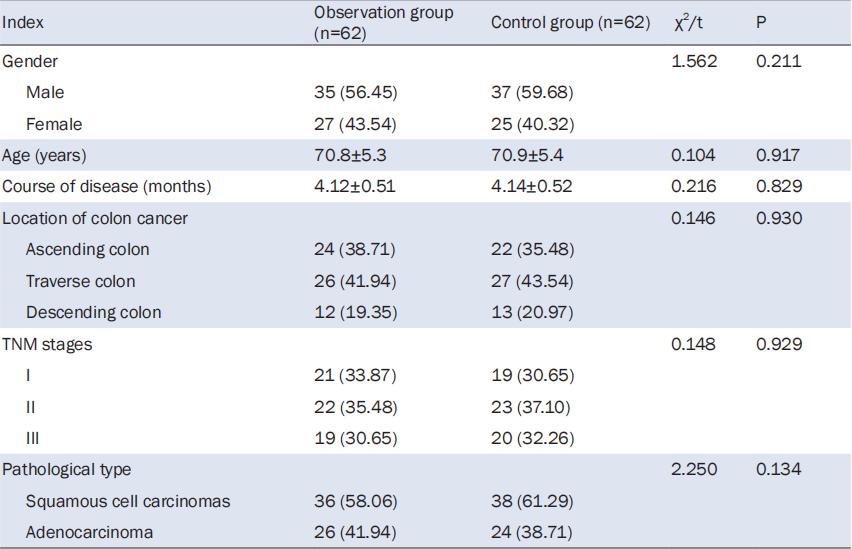
Baseline data: Baseline data, including gender, age, cause of the disease, tumor location, TNM stage, and pathological type, were compared between two groups.
Nutritional status: Nutritional status was compared between the two groups. 3mL of peripheral blood was collected from each patient before nursing and on the next day after 2 weeks of nursing. Hemoglobin, prealbumin, and albumin levels were measured using an automatic biochemical analyzer (Mindray BS-280 automatic biochemical analyzer, Shenzhen Mindray Bio-Medical Electronics, China) after centrifugation.
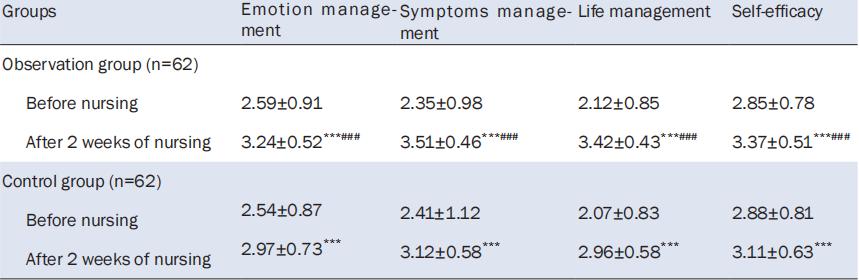
Self-management level [14-16]: The general self-management questionnaire was administered before nursing and after 2 weeks of nursing to assess self-efficacy and the management of patient’s mood, life and symptoms in both groups. The total score was 16 points, with the total score being the sum of all item scores. Higher scores were positively correlated with a better level of self-management.
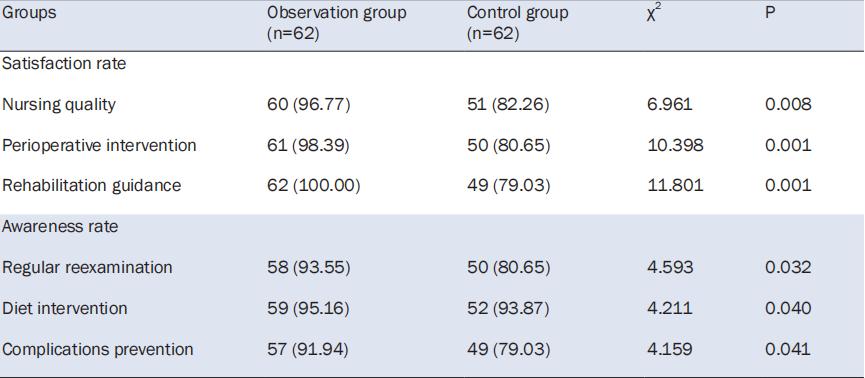
Satisfaction and awareness rate: After 2 weeks of nursing, patients' satisfaction with nursing quality, perioperative intervention, and rehabilitation guidance was assessed, as well as their awareness of regular reexamination, dietary intervention, and prevention of complications. Satisfaction and awareness rate were evaluated using separate questionnaires, each with a total score of 100 points. A score of ≥90 points indicated satisfaction and compliance [17, 18]. The satisfaction rate = the number of satisfied cases / total number of cases * 100%. The awareness rate = number of aware cases / total number of cases * 100%.
Statistical analyses
Comparison of baseline data between the two groups

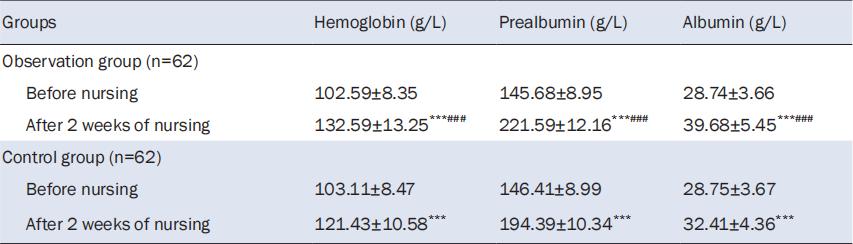
Comparison of nutritional status between the two groups
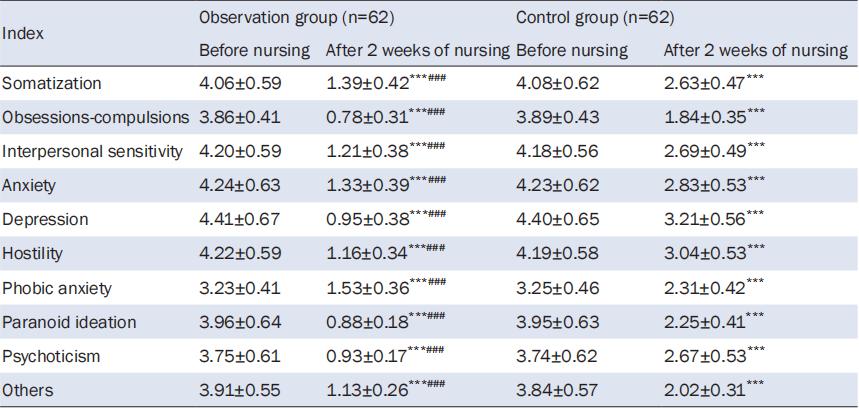
Comparison of psychological scores between the two groups
Before nursing, the psychological scores did not significantly differ between the two groups across various aspects (all P>0.05). After 2 weeks of nursing, the scores for somatization, depression, anxiety, obsessions-compulsions, hostility, phobic anxiety, interpersonal sensitivity, psychoticism, and paranoid ideation decreased in both groups, with the observation group showing more significant reductions (all P<0.001) (Table 3).
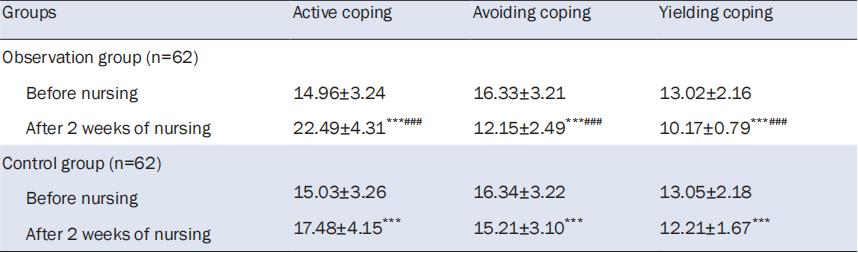
Comparison of coping styles between the two groups
Before nursing, there was no significant difference in coping style scores between the two groups (all P>0.05). After 2 weeks of nursing, both groups showed higher active coping scores and lower avoidance coping and yielding coping scores compared to before nursing. Additionally, the observation group had significantly higher active coping scores and lower avoidance and yielding coping scores than the control group (all P<0.001) (Table 4).
Comparison of self-management scores between the two groups
Comparison of nursing satisfaction rate and awareness rate between the two groups
After 2 weeks of nursing, the observation group demonstrated higher satisfaction rates in nursing quality, perioperative intervention, and rehabilitation guidance compared to the control group (all P<0.05). Similarly, the observation group reported significantly higher awareness rates regarding regular reexamination, dietary intervention, and prevention of complications compared to the control group (all P<0.05) (Table 6).
Colon cancer is a malignant tumor of the digestive tract, characterized by high incidence and mortality rates. Radical resection remains a crucial treatment method, as it can effectively curb disease progression and extend life expectancy. However, surgery may adversely affect patients' psychological flexibility and quality of life. In recent years, the application of precise nursing care based on a dynamic nursing quality feedback model in elderly patients undergoing radical resection for colon cancer has shown significant effectiveness [19, 20].
In this study, after 2 weeks of nursing, the nutritional status indicators—hemoglobin, prealbumin, and albumin levels—in the observation group showed improvement. This suggests that the application of precise nursing based on a dynamic nursing quality feedback model can enhance the postoperative nutritional levels of patients. This improvement is likely due to the real-time monitoring of patients' dietary rehabilitation and ongoing assessment of gastrointestinal function and nutritional intake. Zhu et al. found that in patients with cerebral infarction, those receiving precise nursing care had higher serum albumin levels compared to those receiving routine nursing, a result consistent with our findings [21].
After 2 weeks of nursing, the observation group exhibited significant reductions in scores for somatization, interpersonal sensitivity, depression, anxiety, obsessions-compulsions, hostility, phobic anxiety, psychoticism, paranoid ideation, and other psychological measures, indicating that precise nursing reduces psychological distress and facilitates patient recovery. The dynamic nursing quality feedback model played a pivotal role by analyzing previous nursing issues in relation to the type of surgery, the varying diseases, and the patients' individual physical conditions [22]. This approach enabled continuous monitoring of patients' psychological states, allowing for timely adjustments to the nursing plan. Additionally, the model fostered better communication with patients, providing a platform for timely feedback, which encouraged proactive identification of potential issues by nurses. As a result, precise nursing not only enhances the overall quality of nursing care but also boosts patient satisfaction with nursing services [23-25].
In this study, the observation group showed improvements in active coping, self-efficacy, emotion management, and the management of life and symptoms, along with increased satisfaction with nursing quality, perioperative intervention, rehabilitation guidance, and greater awareness regarding regular reexamination, dietary intervention, and complication prevention. These findings indicate that the dynamic nursing quality feedback model can significantly enhance patients' self-management abilities, leading to favorable nursing outcomes, consistent with the study by Lu et al. [6].
However, this study also has several limitations. It included a small sample size and had a short observation period, which may impact the generalizability of the results. Furthermore, potential biases could have influenced the outcomes. To better assess the effectiveness of the dynamic nursing quality feedback model, further research with larger sample sizes and extended study durations is needed.
In summary, the application of precise nursing based on a dynamic nursing quality feedback model for elderly patients undergoing radical resection of colon cancer has demonstrated significant benefits. It effectively reduces psychological distress, improves nutritional status, enhances coping styles and self-management abilities, and increases awareness regarding regular reexamination, dietary intervention, and complication prevention. These outcomes contribute to higher patient satisfaction with nursing care. Given these promising results, this approach holds considerable value for wider application and promotion in clinical practice.
Author contributions
Jiamei Wu was responsible for writing. Wenxiu Yang and Huiting Ji was responsible for summarizing the data. Additionally, Yu Zhang and Haotian Li was responsible for finding relevant literature.
[2] Aarts MA, Rotstein OD, Pearsall EA, et al. Postoperative ERAS Interventions Have the Greatest Impact on Optimal Recovery: Experience With Implementation of ERAS Across Multiple Hospitals. Ann Surg 2018;267(6):992-997.
[3] Zhang C, Gao R, Tai J, et al. The Relationship between Self-Perceived Burden and Posttraumatic Growth among Colorectal Cancer Patients: The Mediating Effects of Resilience. Biomed Res Int 2019;2019:6840743.
[4] Wang P, Pang X, He M, et al. Effect of stepwise psychological intervention on improving adverse mood and quality of life after colon cancer surgery. Am J Transl Res 2023;15(6):4055-4064.
[5] Glasper A. Strategies to ensure that all patients have a personalised nursing care plan. Br J Nurs 2020;29(1):62-63.
[6] Lu XH, Luo YH, Huang L, et al. The Application Nursing of Accurate Nursing in the Clinical Effect of Esophageal Cancer Patients Based on the Nursing Quality Feedback. J Guangxi Med Univ 2020;37(02):326-329.
[7] Ketelaers SHJ, Dhondt L, van Ham N, et al. A prospective cohort study to evaluate continuous wound infusion with local analgesics within an enhanced recovery protocol after colorectal cancer surgery. Colorectal Dis 2022;24(10):1172-1183.
[8] Carli F, Bousquet-Dion G, Awasthi R, et al. Effect of Multimodal Prehabilitation vs Postoperative Rehabilitation on 30-Day Postoperative Complications for Frail Patients Undergoing Resection of Colorectal Cancer: A Randomized Clinical Trial. JAMA Surg 2020;155(3):233-242.
[9] Master Samip R, Shi Lawrence, Shah Chintan, et al. Adjuvant therapy for stage II and III colon cancer in elderly patients: NCDB analysis. J Clin Oncol 2018:36(4),863-863.
[10] Sousa IFd. Enhanced recovery after surgery in patients with colorectal cancer: a non-systematic summary of the evidence. Cancer Nurs Pract 2020.
[11] Gomez R, Zarate D, Brown T, et al. A Re-Evaluation of the Utility of Symptom Checklist-90-Revised for Measuring the Spectra in the Hierarchical Taxonomy of Psychopathology. Pediatr Rep 2024;16(4):1089-1098.
[12] Gomez R, Stavropoulos V, Zarate D, et al. Symptom Checklist-90-Revised: A structural examination in relation to family functioning. PLoS One 2021;16(3):e0247902.
[13] Zhao J, Chapman E, Houghton S, et al. Development and Validation of a Coping Strategies Scale for Use in Chinese Contexts. Front Psychol 2022;13:845769.
[14] Huang Y, Li S, Lu X, et al. The Effect of Self-Management on Patients with Chronic Diseases: A Systematic Review and Meta-Analysis. Healthcare 2024; 12(21):2151.
[15] Byrne G, Keogh B, Daly L. Self-management support for older adults with chronic illness: implications for nursing practice. Br J Nurs 2022;31(2):86-94.
[16] Xin CX, Wang W, Huang SY, et al. Current status and influencing factors of self-management ability of colostomy patients. J Pathol Clin Res 2020:40(02);403-410.
[17] Zhang WF, Zhang WR, Li YQ, et al. Impact of Comprehensive Nursing Intervention on Rehabilitation Adherence, Nursing Satisfaction, and Quality of Life in Patients with Chronic Heart Failure. MEDS Public Health Prev Med 2024;4(2):47-53.
[18] Ataro BA, Geta T, Endirias EE, et al. Patient satisfaction with preoperative nursing care and its associated factors in surgical procedures, 2023: a cross-sectional study. BMC Nurs 2024;23(1):235.
[19] Harrington L. Precision Nursing. AACN Adv Crit Care 2021;32(3):243-246.
[20] Ielapi N, Andreucci M, Licastro N, et al. Precision Medicine and Precision Nursing: The Era of Biomarkers and Precision Health. Int J Gen Med 2020;13:1705-1711.
[21] Zhu YT, Liu ZY, Wang F, et al. Clinical Value of Precision Nursing in Enteral Nutrition Support for Patients with Cerebral Infarction. Chin J West Med 2020;32(09):1391-1394+1398.
[22] He K, Li Q, Hou Y, et al. Effect of a refined nursing model based on nursing quality feedback on the postoperative mental state of patients with laryngeal cancer. Am J Transl Res 2021;13(6):6525-6533.
[23] Mohammed Alhussin E, Mohamed SA, Hassan AA, et al. Patients' satisfaction with the quality of nursing care: A cross-section study. International J Afr Nurs Sci 2024;20:100690.
[24] Walløe S, Beck M, Lauridsen HH, et al. Quality in care requires kindness and flexibility - a hermeneutic-phenomenological study of patients' experiences from pathways including transitions across healthcare settings. BMC Health Serv Res 2024;24(1):117.
[25] Alharbi HF, Alzahrani NS, Almarwani AM, et al. Patients' satisfaction with nursing care quality and associated factors: A cross-section study. Nurs Open 2023;10(5):3253-3262.


 Log In

 On This Page
 CITE
CITE